
Among the many characteristics that Portugal and Greece have in common, from Mediterranean culture to population, passing through economic level, the annual film production is quite similar in terms of feature films. There is also a prevalence of independent cinema, which is the only one with even minimal international visibility. The references, however, are different.
Different, too, is the Thessaloniki Film Festival, with a scale and a budget greater than any Portuguese festival, and a longevity that turns it into an institution: 65 years (the oldest in Portugal is Cinanima, with 48).
But let’s get to the films. , the young director of Riviera, confessed to us that one of his greatest inspirations was the work of Pedro Costa. We did not find clear points of connection. If anything, one might think of Miguel Gomes, but it seemed to us much closer to George Lanthimos, the leading reference in contemporary Greek cinema.
Indeed, thinking of the most internationally known names in Greek filmmaking, Lanthimos is a recurring reference, while Angelopoulos is barely glimpsed and Costa-Gavras only with a great deal of goodwill.
Riviera, a film set in one of the bays off Thessaloniki that speaks of gentrification between the lines, was one of the most pleasant surprises among the Greek films, despite not belonging to the group of three nominated for the International Competition. In his first fiction feature, Peretzis makes a bold, summery coming-of-age film, with powerful metaphors and well-constructed characters. The film took home three awards.
If it is difficult to direct animals and children, what must it be like to direct a tree? That was what we asked Peretzis, who immediately told us about the lengthy process of transporting and characterizing that enormous palm tree, an essential element of the narrative, which ended up being the most expensive décor in the production. It was worth every cent; without the tree, the film would not be the same.
It is a tree that predicts the future, silently answering the questions Alkistis asks it, as if it were an oracle. The tree is falling apart, its end imminent, but as we know, trees die standing.
The tree withers at the same time that damp seeping into one of the walls of the house where the mother intends to live reaches monstrous proportions. Everything that grows, or decays on the outside, also happens inside Alkistis, an unruly, half-punk character who does not accept her father’s death (and above all the end of her mother’s mourning) and ends up in an impetuous relationship with an adult man. The film has a dazzling mise-en-scène and is full of strong images, very much in the style of Lanthimos’s Dogtooth.
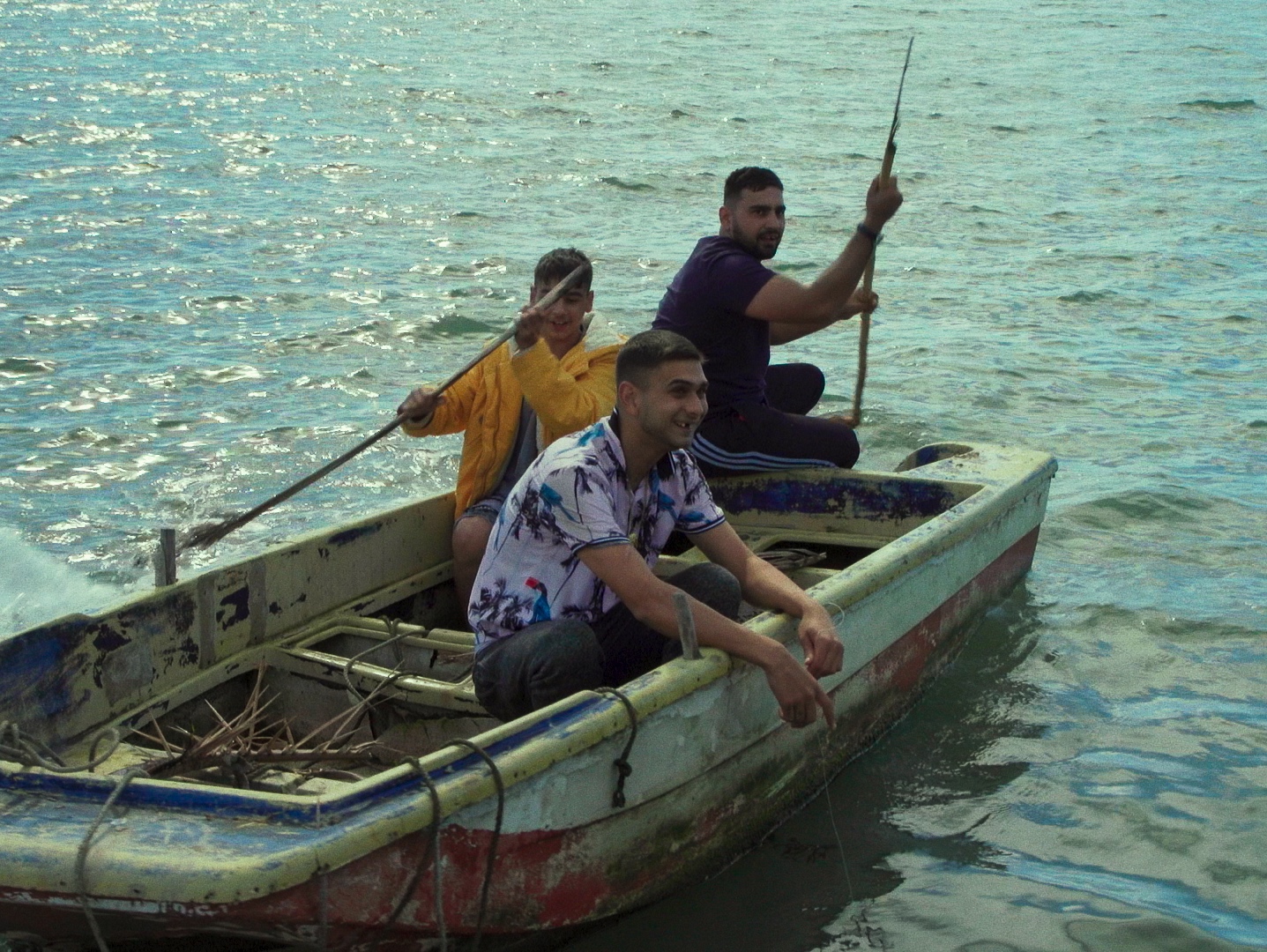
There is also something of Lanthimos in Kyuka Before Summer’s End, a film by an even younger director, Kostis Charamountanis, which received several awards (the Thessaloniki Festival’s prize list is immense). In a looser story, also in a summer setting but around the lake that Greece shares with North Macedonia, the film follows two siblings who find their biological mother.
The construction is always rather ethereal and diffuse, though not as much as in Arcadia, by Yorgos Zois, perhaps the most aesthetically stimulating and daring work, with a few echoes of Angelopoulos. A transcendent film about mourning, with the presence of a ghost, set in a rich universe where Eros and Thanatos walk side by side. Above all, it is a difficult work, but with masterful shots and a setting that serves it well.
Grief, death, and life beyond death seem to be recurring issues in Greek cinema, as seen in other films, such as those by Penny Panayotopoulou, one of the rare Greek women directors in competition. Or Maldives, by Daniel Bolda, in which this obsession with transcendence ends up ruining an otherwise well-shot feature whose main plot centers on a music teacher who lives a quiet life in the mountains with his dog.
Meat, by Dimitris Nakos, another of the most awarded works, tells a more prosaic story with a hint of social drama. It follows an Albanian butcher’s assistant who is asked, in exchange for money, to take the blame for a murder committed by the owner’s son. A moral and ethical dilemma with socioeconomic contours that mark Greek reality.
Immigration is, moreover, an important topic for a country that is on the front line of welcoming refugees. In Utópolis, we witness a kind of triangle of relationships and conflicts between an African migrant, a Russian and a Greek nationalist, pushed to the limit.
In To a Land Unknown, a film by the Palestinian Mahdi Fleifel, though shot in Greece, we are shown, without any varnish, the flip side of the coin: the delinquency of young Palestinians who fight for survival, or for a passage to the center of Europe, on the streets of Athens.
Another film by a Palestinian director, Happy Holidays, by Scandar Copti, won the main prize in an international competition in which On Falling, by the Portuguese Laura Carreira, was also included (Joana Santos won the award for Best Actress).
In a more caricatural register, The River, by Haris Raftogiannis, portrays a cultural clash, with a highways engineer as its protagonist. His job is to put up stickers that scare birds away from the motorway, and he is patiently battling a community that has set up its shantytown on the roadside and amuses itself by ripping the said stickers off. The plot promises more than it is able to deliver.
Within the typologies on offer there are three films about filmmakers making films. Killerwood, by Christos Massalas, is the least successful. The Philosopher. I Have Something to Say, by Stratos Tzitzis, which tells the story of a director and writer trying to get a book published, has the charm of ending with the launch of a book that actually exists and has become a bestseller in Greece.
The most accomplished is The Sock, by Kyros Papavassiliou, a slow-paced film. The beginning is strong and hilarious. The director himself breaks his leg while attending a performance by an alternative artist. From there he re-establishes a relationship with the performer, but also grows closer to a cousin who suffers from severe scoliosis and therefore also lives in a wheelchair.
Completely off the rails is She Loved Blossoms More, by Yannis Veslemes, a film with gory details, futuristic and psychedelic, with elements reminiscent of Jeunet & Caro. And there was also a period film, Giannis in the Cities, by veteran Eleni Alexandrakis, with a few interesting touches.
In the Greek cinema shown in Thessaloniki – a significant part of the country’s fiction output – there was also room for downright absurdities, such as Café 404, by Alexandros Tsilifonis, a third-rate Robert Rodríguez knock-off, with nothing to hold on to.
And even for a futuristic, computer-made animated feature, Magic Trap, by Nikos Vergitsis. But, in that department, it must be said plainly: the Greek feature falls far short of the two recent Portuguese animated features. Then again, we’re not here to see who gets there first – cinema is not an Olympic sport.