
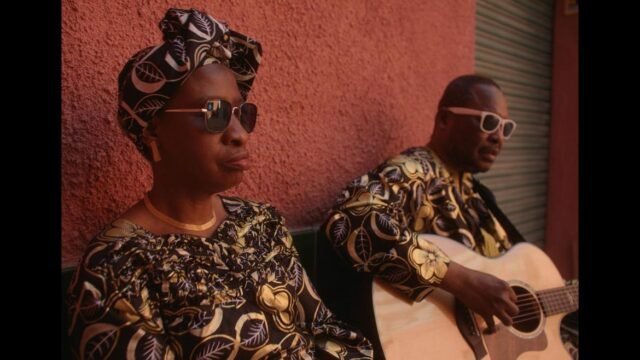
The Blind Couple from Mali delves into the music, story and intimacy of one of Africa’s most celebrated musical duos: Amadou & Mariam. In this interview, Canadian director Ryan Marley discusses the filmmaking process, his approach to portraying the blind musicians, and how he responded to Amadou’s death. A film that aims to be more a documentary about two musicians than a music documentary
WAH: You have made many television series and documentaries, though relatively few music documentaries. What drew you to this project?
Ryan Marley: I did not know it at the time, but Amadou and Mariam were on a world tour promoting Dimanche à Bamako. In 2006, I was working in television at CBC, the Canadian Broadcasting Corporation, on a show called The Hour, a kind of current-affairs programme for young people — a cool, hipster series. I was walking along the lakeshore in Toronto when I came across Amadou and Mariam performing a free concert to promote the album. In the English-speaking world, they were not very well known, so I suppose the idea was to put on a free concert and see who showed up.
WAH: Was that when you fell in love with them?
Ryan Marley: I was immediately drawn to them — to the music and to them as people. When you see Amadou and Mariam for the first time, you ask yourself: who are they? Who are these people? I do not speak Bambara, and they speak only a little English. I speak a little French. So, in that moment, I began a kind of ten-year relationship with them through their music. I loved the way the music made me feel, even though I did not know what they were saying.
I also found myself looking online for more information about them, trying to understand who they were, but it was very difficult to find anything beyond the ten things they seemed to say in every interview about how they met. The conversation felt the same from interview to interview. They had found a certain narrative about their lives that they were comfortable with, and they repeated it wherever they went. That made me even more curious about them, although at the same time I was doing a great deal of other work.
WAH: That was in 2006. How long did it take for the film to become a concrete project?
Ryan Marley: For a number of reasons, I became interested in disability storytelling — both physical and neurological disability — and made several television series and documentaries in that field. But I always had Amadou and Mariam in the back of my mind. I kept thinking: how amazing would it be to make a film with them? My producing partner and I talked about the idea for a couple of years. She eventually contacted their management and record label, and that began a five-year journey to make the film.
WAH: How open were they? Did access come easily, or did you have to fight for it?
Ryan Marley: There was a little of that. When you are dealing with famous people, there are always others around them, and you have to bring everyone on board. In the beginning, the challenge was not so much Amadou and Mariam themselves as their label and management. Other people had tried to make films with them in the past, but those projects had not worked out. We had to prove that we were legitimate, that we could secure the funding to carry the project through and that we had a clear vision.
Eventually, they became comfortable with the idea of us filming the beginning of a new album recording in Barcelona. We went there for a few days and shot those opening moments: the long shot of them walking to the studio for the first time, and their first experiences inside it. We then put together a proof of concept showing how the film might look and feel. On the strength of that, everyone decided that it made sense for us to make the film together.
From the first second, Amadou and Mariam were extraordinary: open, warm, beautiful, unique, very generous and incredibly authentic. They were not affected by the camera in any way. That is a large part of why, if the film feels authentic to an audience, it is because the filmmaking is genuinely observational — true fly-on-the-wall cinema. They simply existed as they were, and they gave us the access to capture those moments.
From the first second, Amadou and Mariam were extraordinary: open, warm, beautiful, unique, very generous and incredibly authentic. They were not affected by the camera in any way
WAH: Music is central to the film, but you also approach blindness with unusual openness, without reducing it to an obstacle to be overcome. How did your previous work on disability shape that approach?
Ryan Marley: What was important to me — and this is something I learned from working in this field — was never to treat disability as an inspirational story. The wrong approach, I think, is to make the story about overcoming disability and ultimately succeeding, so that the able-bodied audience can say: “Look how amazing this is.” That was not my approach. I think it is the wrong way to tell these stories.
What interested me was the remarkable group of people around Amadou and Mariam who support them, and the accommodations that are made to enable them to work. But the story is about how Amadou and Mariam themselves arrive at the point where they are recording an album in a studio, or find themselves alone in a hotel room on tour, in a place they do not know.
We interviewed their producers about the differences between working with Amadou and Mariam and working with artists who can see, but we removed that material from the film. As far as possible, I wanted the film to remain within Amadou and Mariam’s point of view. I did not want other people explaining how they do what they do.
WAH: Filming people who cannot see raises particular ethical questions, because the camera can occupy a position they cannot monitor. What principles guided you?
Ryan Marley: There is not a single moment in the film when we had not asked Amadou and Mariam whether it was all right to film, or when they did not know that we were there. What is interesting is that they always knew we were filming, but they did not know exactly where we were. That gave us the opportunity to work with wide-angle lenses and to be as close to them as I am to my screen now.
A great deal of documentary filmmaking relies on long lenses: you move out of the way, zoom in and try to minimise the crew’s impact so that the moment feels more authentic. In our case, we would say through a translator: “Amadou and Mariam, we are ready to begin. Is it all right for us to start filming?” The answer was always yes.
Once we started rolling, our cinematographer, Paul Duck, could be extremely close to them with the camera. That gave the images real immediacy and intimacy, while Amadou and Mariam were not distracted by the camera because, although they knew we were filming, they did not know precisely where we were. It created a very unusual opportunity.
There is a moment in the film when you can hear me asking whether it is all right to film Mariam with her glasses off while she is having her make-up done. The woman with her, Georgia, asks Mariam, and Mariam says yes. That intimacy is very powerful for an audience, but it is not something they would ordinarily share publicly. I therefore felt it was essential to include the moment in which we ask for permission. It adds a layer and a texture that mattered in the edit. We never wanted it to feel as though we were taking advantage of the fact that they could not see where we were. There is no moment in the film in which that happens.
WAH: Amadou’s death must have come as a profound shock. How did you respond to it within the film, when one of its central figures was suddenly no longer there?
Ryan Marley: We had already finished editing the film. The original ending was very different. There are several re-enactments in the film, and the young people who appear in them are all blind Malian children with an interest in music. I cast them on the day we visited the Institute for the Blind, and then had half a day with them on the following day to film those gentle re-enactments.
I had created what was almost a tribute to Amadou and Mariam, and to all the people in the film, accompanied by an uplifting piece of their music. That was the ending. Then Amadou passed away, which was devastatingly sad.
Many different views emerged about what we should do. Some people suggested fading to black and adding a title saying that Amadou had died; others proposed a montage of his life. But I felt that the film could not end with Amadou’s death. We had to wait five months, but I believed the ending had to be the first time Mariam returned to the stage and continued forward, singing about the kinds of love that she and Amadou had always sung about: love of country and love for one another.
So we waited until she was ready. Then we filmed her walking on stage for the first time after Amadou’s death. I am deeply grateful that we did. Even though it is difficult to experience my own film as an ordinary audience member, I find that moment profoundly rewarding. It honours who Amadou and Mariam are far more than an ending defined only by grief would have done.
WAH: Mariam is also deeply political and committed to activism, which becomes another important strand of the film. How did you balance its many dimensions — the music, the international collaborations, the situation in Mali, their life in France and the recording sessions in Barcelona — and bring them together into a coherent whole?
Ryan Marley: Balance is exactly the right word. The most difficult question was how to address what is happening in Mali without allowing the film to turn into a geopolitical documentary about the country.
The moment you begin talking about Mali, you are dealing with extremism, Russia and colonialism. The subject becomes a monster because it is so vast. We therefore approached Mali through Amadou and Mariam’s love for their country, their concern about what is happening there and the music they write in an effort to contribute positively to the situation. The film never says: “Here is what is happening in Mali.” Everything is filtered through Amadou and Mariam’s point of view, and it always returns to the music.
In a sense, the film is a love story before it is anything else. It is about the love between Amadou and Mariam, but also — and as a Canadian I am deeply envious of this — about their love for their country. Their love for Mali is extraordinarily pure and beautiful. They love its people, and that bond is real. It is not the performative “I love my fans” language of celebrity. It is a genuine commitment, and their purpose is to inform, contribute to and inspire their people.
As long as we approached Mali through that filter, rather than through political commentators explaining the country to the audience, we could remain with Amadou and Mariam’s perspective and show how all these elements shaped their music, their choices and their impact, both in Mali and around the world.
WAH: And how did you approach the international dimension, with prominent figures such as Damon Albarn and Manu Chao?
Ryan Marley: There are devoted Amadou and Mariam fans who love their music, understand where they come from and know West African music and artists. We wanted to serve that audience, but we were also introducing Amadou and Mariam to people who had never heard of them — particularly an English-speaking audience. We had to consider those viewers as well. That is why the film includes figures they recognise, such as Chris Martin and Damon Albarn, speaking about Amadou and Mariam in a way that makes a new audience sit up and take notice. It is partly a way of opening the door.
The music documentary is such a familiar, tired and predictable genre. As someone who does not necessarily love the way many music documentaries are made, I wanted to follow my own creative path. But I also had to respect the need for archival footage that could trace the story from beginning to end, and for particular moments and voices that helped us tell it.
Ultimately, I was always trying to tell the story from Amadou and Mariam’s point of view. It is an observational documentary, searching for truth as honestly as I can. In every scene and every editorial decision, I tried to rely on what they had to say, on their reflections and on their perspective.
I simply did not think of it as a music documentary. To me, it is a character-driven story. I am interested in Amadou and Mariam as people: in the intimate moments and in their reflections on who they are
WAH: One of the dangers of a music documentary made by a fan is that it can turn into an extended promotional film, with a succession of people declaring that the artists are brilliant. You clearly admire Amadou and Mariam. How did you resist that tendency?
Ryan Marley: I simply did not think of it as a music documentary. To me, it is a character-driven story. I am interested in Amadou and Mariam as people: in the intimate moments and in their reflections on who they are. What is the magic of Amadou and Mariam? Why does their music make me feel the way it does, even when I do not understand the words?
Now that I understand those words through translation — the older songs in Bambara, some of the newer material and all the songs in French — I realise that there is another entire layer. I am interested in the messages in their music, the lineage from which they emerge in Mali, the impact they have on their country, the crisis their country is experiencing, and the experience of becoming blind at an early age and having to find purpose in an environment where people did not even imagine that a blind person could build a meaningful life.
Those aspects interest me far more than the fact that they won awards or received acclaim. I am interested in the collaborations with Manu Chao and Damon Albarn because I want to understand where Amadou and Mariam’s contribution begins and ends, where that of the international producers begins and ends, and how the minute details of those collaborations shaped their success. Those are the things that make me curious.
I love their music, but I am not a musician or a music scholar. I do not feel qualified to discuss music at an intellectual or technical level. My strength lies in character-driven, emotional storytelling with real stakes. That is what I do, and what I am drawn to. I am drawn to the people, not simply to their output.
WAH: What about the film’s visual dimension? What kind of language did you want to create?
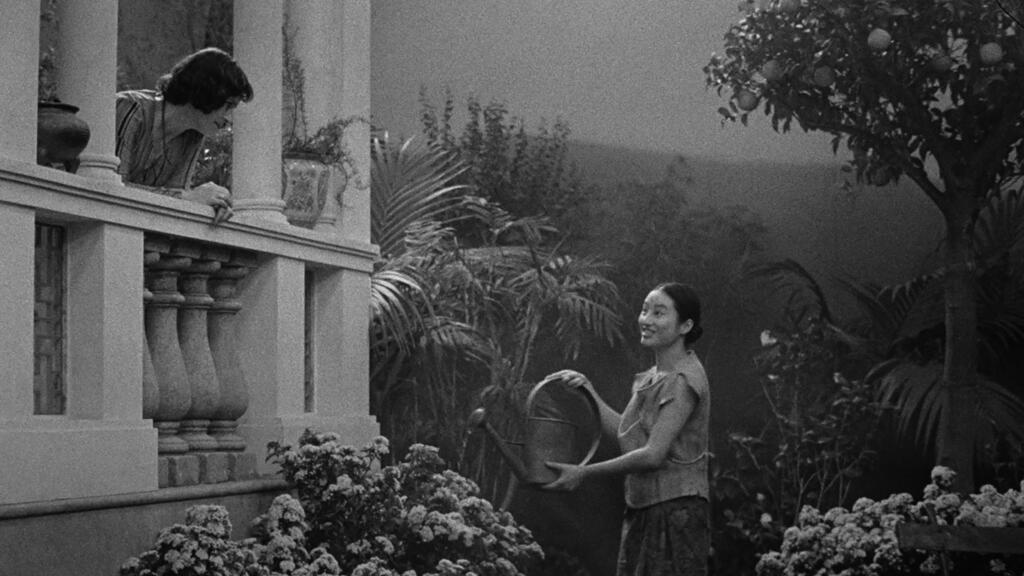
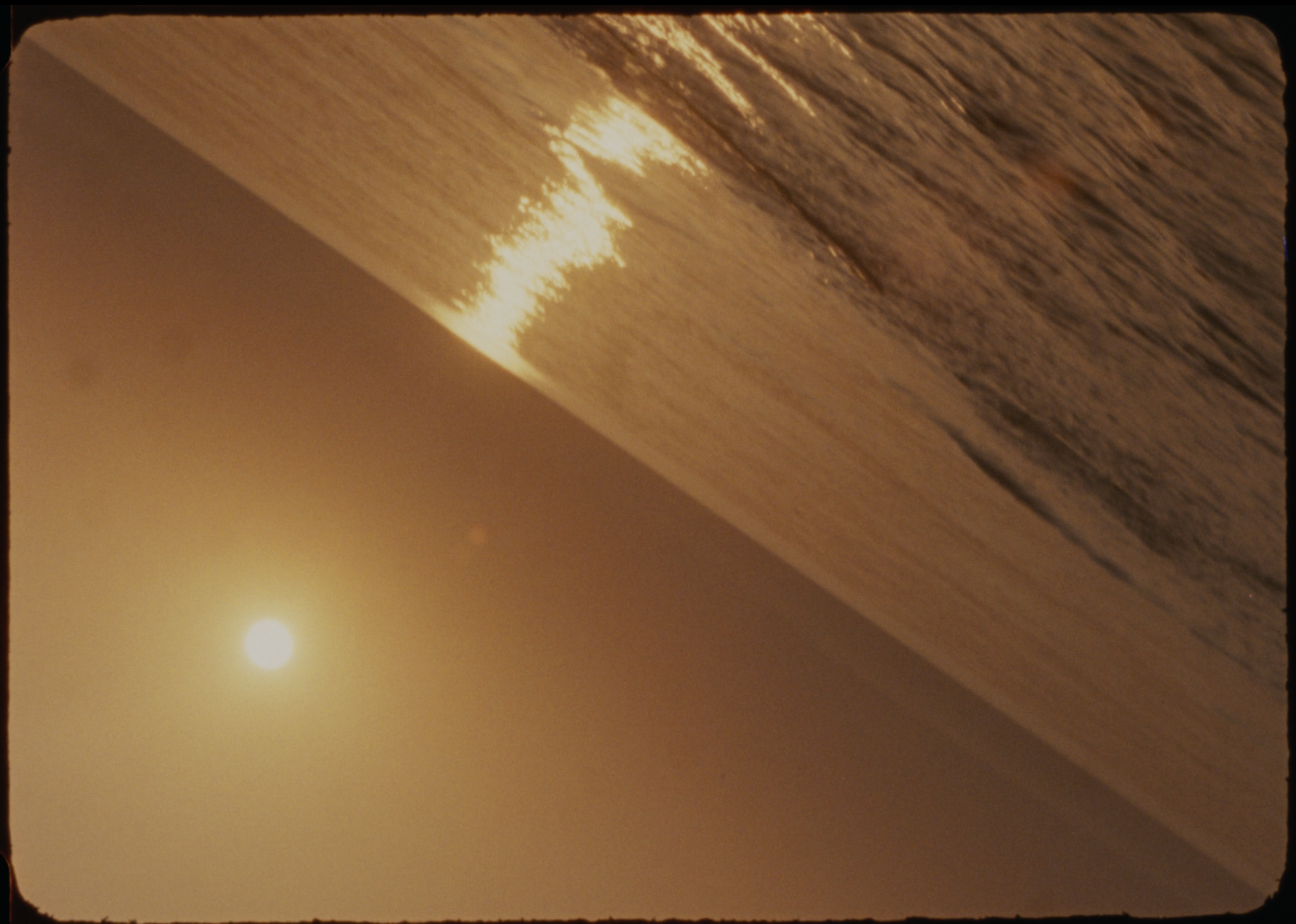
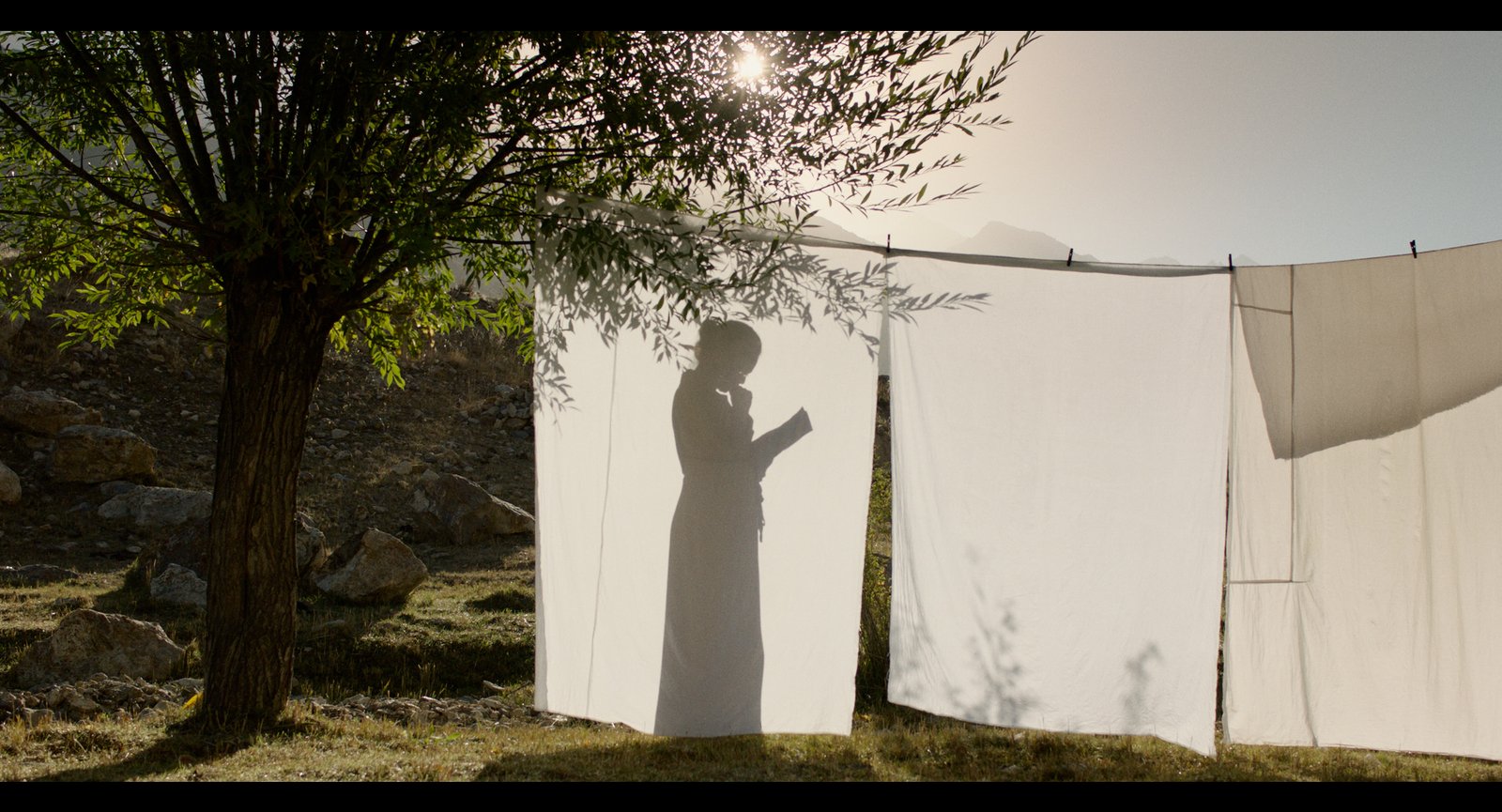
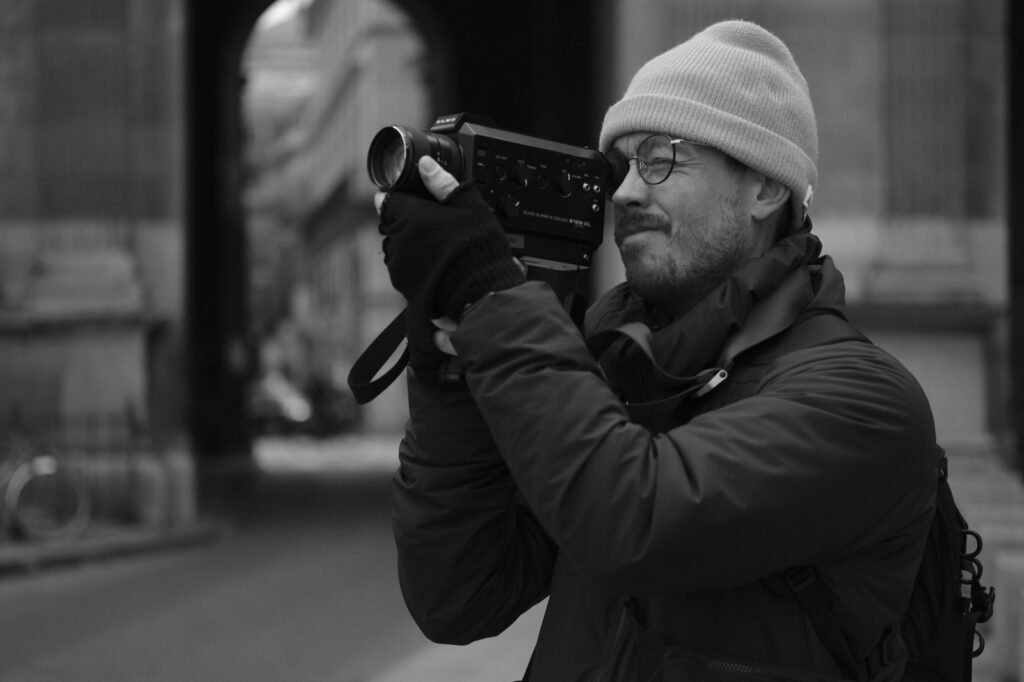
Ryan Marley: There was almost no archival footage of Amadou and Mariam from before they arrived in France. So the question was: how do we tell the story of their early years? We filmed on Super 8 in Mali and France with the young people who appear in the re-enactments. We asked ourselves: what if documentary filmmakers had been in Mali in the 1960s and 1970s? How might they have captured these moments? What would the images look like if they had existed — as though we had discovered exactly the archival material we needed?
That idea inspired the way we filmed the young Amadou and Mariam, as well as landscapes and other elements we wanted to incorporate. At the same time, I imagined the film as 50 per cent documentary and 50 per cent music video. We shot with Alexa Mini LF cameras, dollies and Ronins, trying to create the most beautiful possible contemporary images of their lives, while also creating images of their early years and intercutting those different visual registers.
Another important element was the collaboration with a West African animator, Jamal, who hand-painted the animation. My contribution to his work was to propose that we imagine Amadou and Mariam’s earliest visual memories. Mariam lost her sight when she was very young; Amadou a little later, in his early teens. They retain visual memories of their childhoods, but, as with all of us, memory changes and becomes distorted over time. They have had no new visual references for decades. So what might those visual memories now look like inside their minds? I said to Jamal: your challenge is to represent that through animation. I think he did an extraordinary job.
For the vérité material, I was excited by the possibility of using wide-angle lenses and placing the camera inside the scene, close to Amadou and Mariam, with a strong sense of immediacy. They are usually kept at a distance: on stage, observed by others. Before making the film, I had always felt somewhat removed from them. I could not see their eyes; they did not move very much physically; and I could not fully connect with what they were saying because I did not speak their language. The visual strategy therefore became: let us get as close to them as possible. Let us be present with them, and allow the audience to connect with them more fully as characters.