

Old Pond
A Frog Jumps In
Sound of Water
It is Matsuo Bashō’s most celebrated haiku (1686). On the surface, it looks like a simple scene from nature. But it holds deep meaning.
The old pond stands for long silence and stillness. It feels ancient and calm. The frog’s jump is a small but sudden action. It breaks the silence for a moment. Then comes the sound of water. The sound rises and quickly fades away. Bashō shows how even a small change can awaken us. But soon everything returns to silence. This reflects the Buddhist idea of impermanence. Nothing lasts forever.
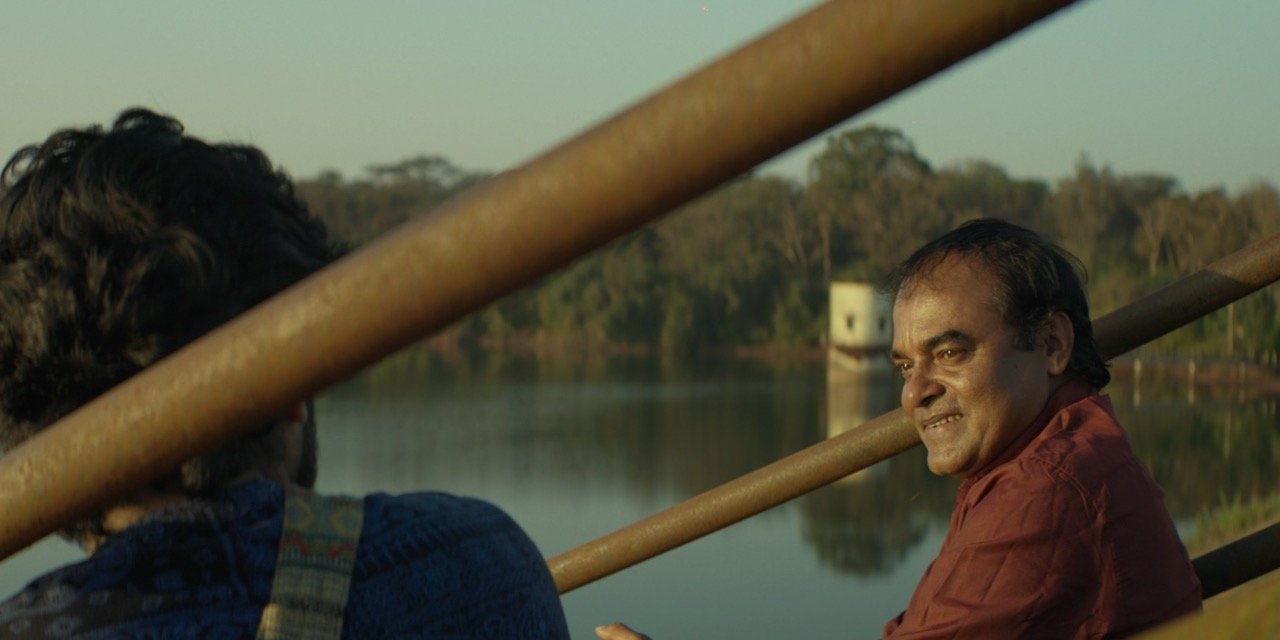
Debutant director Abhishek HK’s Kannada short film ‘Ulididdu Sampige Matra – Only The Flower Remained (2026)’, connects beautifully with this haiku. It is a modern and touching story. Manjanna lives alone in quiet isolation. He carries painful memories of a lost love and unresolved grief. Years have passed, but he remains trapped in the past. One day, a young painter notices him sitting by the lake, lost in thought. He makes a sketch of him. This gives Manjanna a new sense of hope. He has a damaged photograph of his lost love. He approaches the painter and asks him to recreate her image. He carefully describes her face and features from memory. When he finally receives the finished portrait, he is overwhelmed with emotion. For a brief moment, she feels alive again. Then an unexpected encounter changes everything. A mysterious stranger appears. Their meeting leads to an intense emotional exchange. This conversation takes Manjanna toward an unexpected conclusion.
Manjanna’s lonely life is like the old pond—still, deep, and filled with old sorrow. Time has not healed his heart. Instead, it has made the silence heavier. The damaged photograph is like the frog jumping into the pond. It disturbs his quiet world. By talking to the painter, he brings back old memories and emotions. Receiving the portrait is like the sound of water—a brief but powerful ripple. Then the stranger creates even bigger waves. These waves may finally help him move forward.
The film’s title, Only The Flower Remained, is deeply meaningful. It suggests that beauty, love, and memories can remain even after everything else has faded away. This idea matches Bashō’s thoughts on impermanence. Through Manjanna’s journey, the film gently explores longing and grief. It asks whether we can ever truly let go of love, or whether its essence remains with us in a different form.
Furthermore, ‘Ulididdu Sampige Matra – Only The Flower Remained (2026)’, also reminds us of Gulzar’s poem Kacche Rang. The Academy Award-winning Indian poet and lyricist Gulzar beautifully expresses the feeling of longing in these lines:
The bridge stood visible in the mist,
yet its ends could not be seen.
At times, it seemed
both ends lay on the same side.
At others, it felt
as though the bridge had no end at all.
Evening was slowly fading into darkness,
and nowhere was there the faintest sound
of the one I was waiting for.
Abhishek uses the bridge, the pond, and the red-orange evening sky to express the pain of waiting. These images reflect Manjanna’s inner world. The audience can easily feel his loneliness and his longing for his lost love. This emotion is created not only through the story but also through the film’s visual language. As a result, the short film becomes more moving and emotionally engaging.
It is hard to believe that this is Abhishek’s debut film. The short film is produced by National Award-winning Indian filmmaker Sagar Puranik. Deepak Rai Panaje also deserves special praise. His performance as Manjanna is quiet, natural, and deeply moving. He brings honesty and emotional depth to the character.