
From the Tarifa Film Festival, it is possible to see Africa. The statement is absolutely literal: all it takes is two steps outside the Teatro Avenida to find the silhouette of Morocco. On the other side lies Tangier. Directly opposite is the modern port of Tangier Med; further to the right, the city itself. One can take a boat and, in about half an hour, land in Morocco and find oneself, por supuesto, looking back at the silhouette of Spain. Tarifa has this geographical blessing. It is a hinge-like place, where no literal bridges have yet been built, but where cultural, historical and affective bridges continue to be renewed, inherent to this edge where the two continents almost touch.
The Tarifa Film Festival is fully aware of the place in which it takes place, and for that reason it has embraced this idea of the border, of awakening curiosity about what happens on the other side of the Mediterranean. And, symbolically, it has incorporated the name of Tangier into its own designation: officially, it is called the African Film Festival of Tarifa and Tangier. Even though the part held in Morocco functions more as an extension, much like others on this side of the Mediterranean.
In this case, more important than knowing that, in the intervals between screenings, one can glimpse the silhouette of Africa — clearly, but somewhat abstractly — is understanding how Africa is seen from inside the cinemas. The festival’s continuous effort, after 22 years of existence — or persistence — is to offer a wide-ranging portrait, aware that there is no single African cinema, just as there is no single European cinema, by making a diversified selection while maintaining principles of quality. We will not see Nollywood works there, even though Nigeria has one of the largest film industries in the world, nor the blockbusters of Egyptian or South African commercial cinema. Cinema is privileged as a language, beyond its dimension as entertainment.
In a certain kind of African cinema, especially the so-called auteur or independent cinema, there is a question that has continued to arise over time: not so much who makes it — the festival accepts films by African directors in general — but whom it is made for, and how that is reflected in the final product. To explain: much of so-called African auteur cinema is financed externally, above all by European countries — with France at the forefront — that co-produce these films, with or without the support of funding schemes. The producers do so with a deliberate strategy of taking the films to major festivals, often feeding the perspectives or themes that European festival audiences expect to see represented in an African film. These are politically very relevant themes, such as refugees or human trafficking. There is nothing to object to, as long as one does not lose sight of the space that must be left for peoples, directors and screenwriters to tell the stories they want to tell.
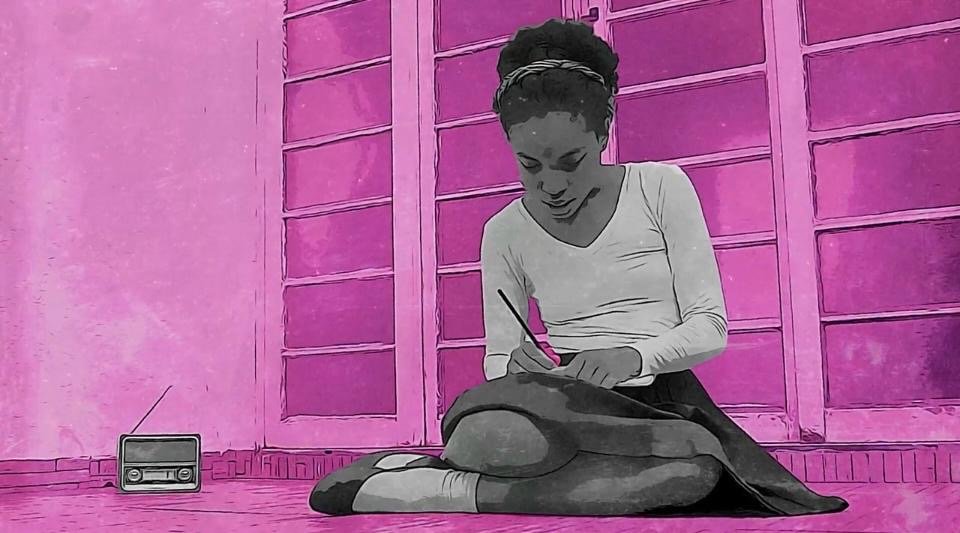
This question is summed up very wittily in Samra’s Dollhouse, by Tunisian filmmaker Maissa Lihedheb, definitely one of the funniest short films in competition. It tells the story of an actress and producer who holds a casting session to hire an actor, a dancer, with whom she will act in a romantic film. She is abusive, manipulative, overbearing: the irony works well in this reversal of roles. At a certain point, faced with her constant aggression, he gives up and wants to leave. She tries to convince him to stay, tempting him with the promise of success in Europe and trips to film festivals. He replies that he is very happy working with his local company. She laughs.
For whom films are made is a question that also runs through some European filmographies, including the Portuguese one, but in some African countries it becomes glaring and frustrating. Damien Hauser, an Kenyan filmmaker based in Switzerland, who made a film with no resources or support, reveals that this may be his first film to be released in his homeland — the film deserves an article of its own. Meanwhile, Angolan actress Yohana Selei, the protagonist of The Adventures of Angosat, sadly says that the film was screened only three times in Angola. The path is mostly traced through Europe.
Federico Olivieri, one of the festival’s directors — this year the festival adopted a horizontal structure — explained to WAH that the festival makes a major effort to find African cinema that is less dependent on Europe, but still cinematographically strong.
We can look at three examples, in addition to Princess Mumbo, which we will discuss separately.
One Woman, One Bra, by Vincho Nchogu, although cinematically poor, has the merit of overturning some African clichés. There is a latent misunderstanding between the settled Europeans and the people of Sayit, in Kenya. It is an almost insurmountable barrier, measured by the Westerners’ disconnect from reality. But, at the same time, the film draws a disconcerting portrait of the people — perhaps through European contamination — in which the principles of communal solidarity fail to function and there is a surrender, on their own scale, to consumerism. It is almost an anti-African Africa.
In some ways, the opposite is true of Promis le Ciel, by Erige Sehiri, which tells a story of Ivorian refugee women and resistance in Tunis, through an evangelical church. It is the story of three women and a child who had begun to build the prospect of a better world, and who have to confront xenophobia, police abuse and corruption. The film manages to create the right tension, but seems unable to resist a formula of peaks of intensity and emotion, somewhat in the style of Netflix formulas.
Stronger is the documentary The Woman Who Poked the Leopard, by Patience Nitumwesiga, above all because it has the privilege of closely following a figure as wild as she is relevant and courageous. Stella Nyanzi is a poet, feminist and opponent of the Ugandan regime, who speaks out vehemently, with determination and creativity, against the dictator. She is imprisoned and eventually goes into exile. Reality reveals the filmmaker’s ability to film her up close, in both political and family intimacy.
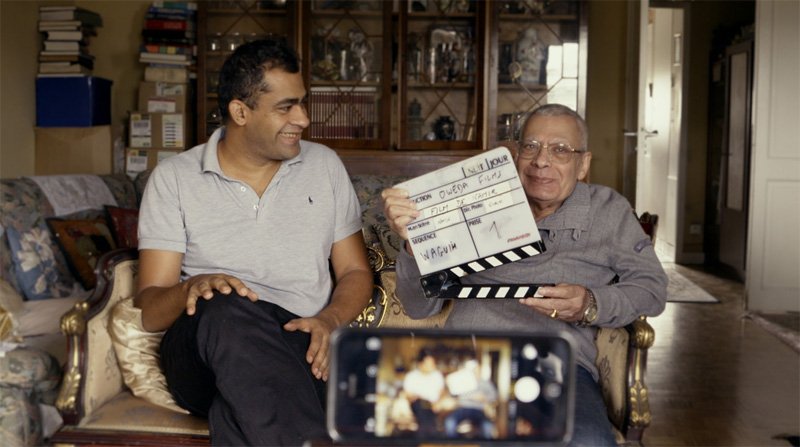
A sublime work is La Vie Après Siham, by Egyptian filmmaker Namir Abdel Messeeh. The film can easily be placed within the subcategory of filmed family diaries, which at times almost seem to deserve a section of their own at documentary festivals. Messeeh sets out to make a film with his mother, accepting her challenge, but she dies suddenly and he ends up making a film about her absence. An absence found in memories, in the relationship with his father, in the shadowy lover. It is also a film about a director’s obsession with his own camera, in which he turns mourning into a filmed object, leaving no room for off the record.