

MIMO went to the cinema. Or perhaps cinema came to MIMO. In the first edition of the festival held in the city of Guimarães — the 61st festival Lu Araújo has organised under this banner — there was room for a small film programme, closely connected to the musical programme, which remains the main course of the event. From the outset, this broadening of scope is welcome in a festival that champions social and humanist causes and regularly opens its programme to other areas, such as the visual arts or the Ideas Forum, where important issues concerning culture and the world are discussed.
Rather than being selected primarily according to criteria of cinematic quality, the films were chosen in order to establish this dialogue with the concerts, creating a complementarity that works well. Watching Fernanda Abreu’s vibrant concert, celebrating the 30th anniversary of her emblematic album Da Lata (1995), after seeing Paulo Severo’s documentary explaining how Fernanda and that particular album shaped the Brazilian music scene of the 1990s, gives the performance even more energy. It is like moving from theory to practice.
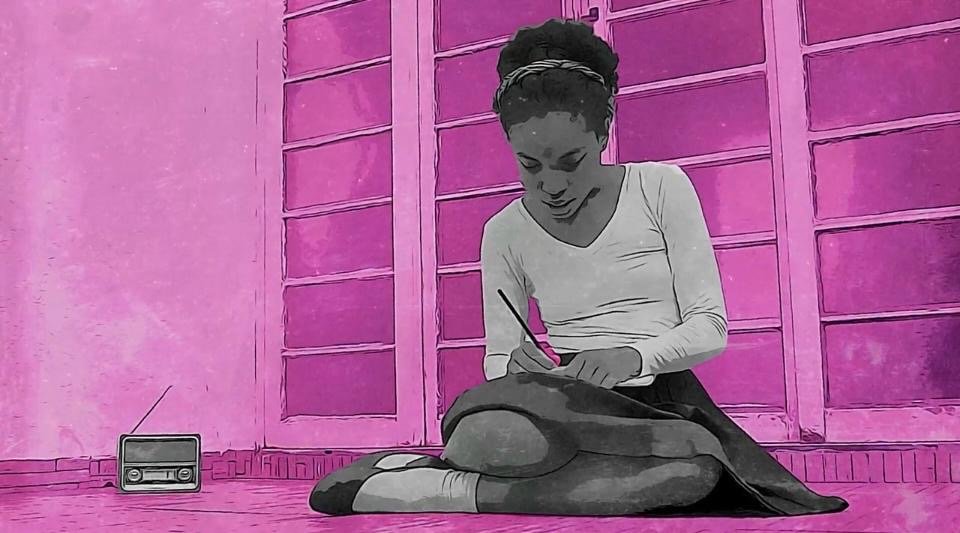
Likewise, listening to the intimate concert by Alaíde Costa, a living legend of Brazilian music, after seeing Liliane Mutti’s documentary A Noite de Alaíde, gives the animated images a physical presence with an almost mystical dimension.
Despite the clear and praiseworthy intentions and advantages of including cinema in the programme of a music festival, this selection raises a few considerations.
One obvious fact is that musical and cinematic quality do not necessarily go hand in hand. We know excellent films about mediocre musicians and terrible films about musical geniuses. The quality of the cinematic object — the music documentary — is independent of the quality of the musician it portrays. Of course, there is nothing worse than watching a bad film about a mediocre musician: not even the musical interludes can save us.
In the music video industry, which became an autonomous and popular format with the emergence of MTV in the 1980s, image is subordinated to music, reversing cinema’s more common tendency to subordinate music to image. Music videos are made with the aim of promoting their soundtrack. This, naturally, does not prevent some music videos from being extraordinary works of art.
In the field of music documentaries, there is also an entire category of films that are virtually indistinguishable from promotional videos: either because they are, in fact, commissioned for that purpose, or because the director is such a great admirer of the musician being portrayed that they cannot conceal it. It almost seems to be part of the rules to collect testimonies filled with superlative praise, so as to make the genius of the subject absolutely clear, turning admiration into outright idolisation.
Something of this sort happens in Fernanda Abreu — Da Lata, 30 Anos. It is a poor cinematic object, made up of a barrage of testimonies in a basic talking-heads format, with relevant figures stressing the importance of the album and its creator. Its greatest asset is the archive footage. Fernanda Abreu’s samba-funk deserved a better accessory. In truth, it hardly needed one at all.
Ryan Marley’s The Blind Couple from Mali occasionally falls into the same trap: the testimonies excessively praising the qualities of Amadou & Mariam were entirely dispensable, not least because their music speaks for itself and is contextualised within the broader universe of Malian music. The major difference is that Marley goes further. He tries to give us access to the inner world of the Malian couple, to their own perspective, following them in an almost intimate way and openly treating blindness as a central theme beyond the music itself. Marley, who is not a music documentary filmmaker, wanted to reach the core of these characters and, at certain moments, succeeded. The echo of the film could be found in the sublime concert given in Guimarães by Oumou Sangaré, another giant of Malian music, always maintaining a civic and committed stance, particularly in her defence of women’s rights.
A still different and more interesting case is A Noite de Alaíde. Liliane Mutti, who has worked around major Brazilian musicians, fell in love with Alaíde and wanted to tell her story. She did not resort to testimonies; instead, she used Alaíde’s own voice-over and creatively interspersed the documentary with elements of docufiction in animated cinema, recreating significant episodes from the singer’s life. It is a pity that the screenplay was not developed a little more, particularly in these animated episodes. But as a whole, the film achieves what it sets out to do. And it is genuinely magical to witness live the grandeur of this discreet figure of Brazilian music, whose importance stands alongside that of Elza Soares.
Rezem Vekrom and Mark Serena tried something different again in As Aventuras de Angosat, which they claim to be the first Angolan musical film — a debatable assertion. Basically, it is a sequence of music videos linked by a deliberately naïve storyline, but it also has a cinematic concept: the entire film is shot in a single take. The narrative thread connecting the musical moments is the idea of Angosat, an Angolan satellite, imagining that it also made possible the launch of the country’s first astronaut into space, the rapper Man Ré.
Cinematically, however, the result is poor — not because of its low budget or amateurish appearance, but because the single-take device should not be an end in itself and ultimately restricts the camera’s freedom of movement, leading it into certain excesses, such as the overuse of zoom. None of this undermines the good intentions of a film that, through hip-hop, advocates inclusion.
Standing apart from all of this is The Nova Convention, centred on Beat Generation poet William S. Burroughs. There is an indirect connection to the city, since one of its directors and producers, Rodrigo Areias, is from Guimarães and established there one of Portugal’s most dynamic production companies, Bando à Parte.
The film is literally set miles away — and in a different time as well. Rodrigo Areias and Aaron Brookner gained access to rare archival footage and previously unseen material from the Nova Convention, a poetic, political and artistic initiative organised by William Burroughs in 1970s New York. The re-editing gives us access to historically valuable documentary images, shaped by an engaging rhythm. Alongside close contact with Burroughs himself, we are offered performances by Patti Smith, Allen Ginsberg, Frank Zappa, Laurie Anderson, John Cage, Philip Glass and Merce Cunningham, among many others.
Five Musical Moments Plus One (slideshow)
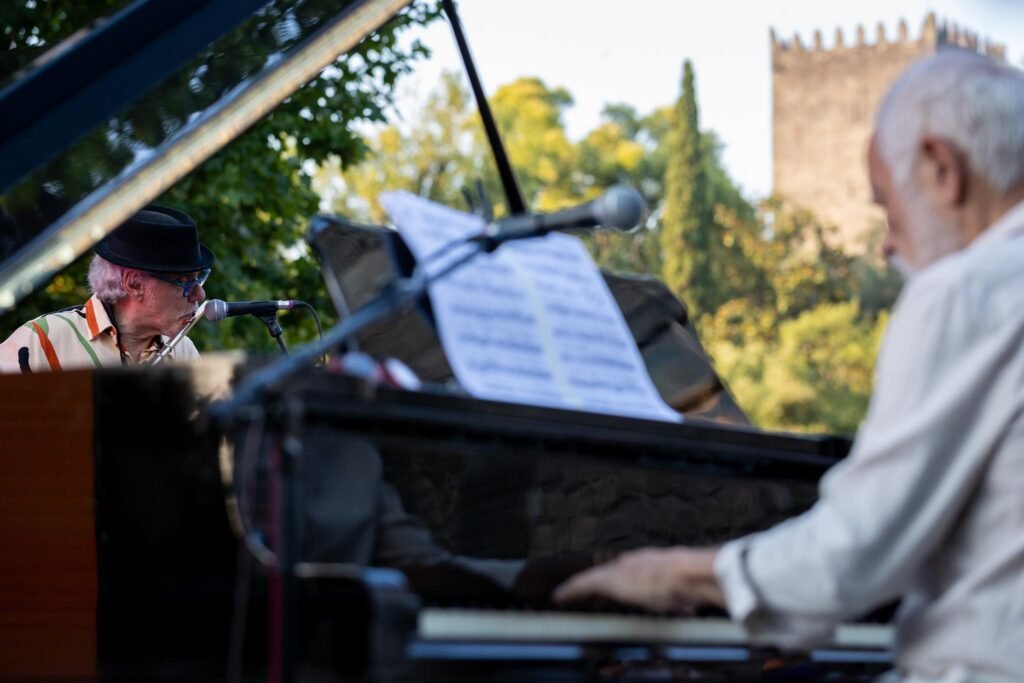
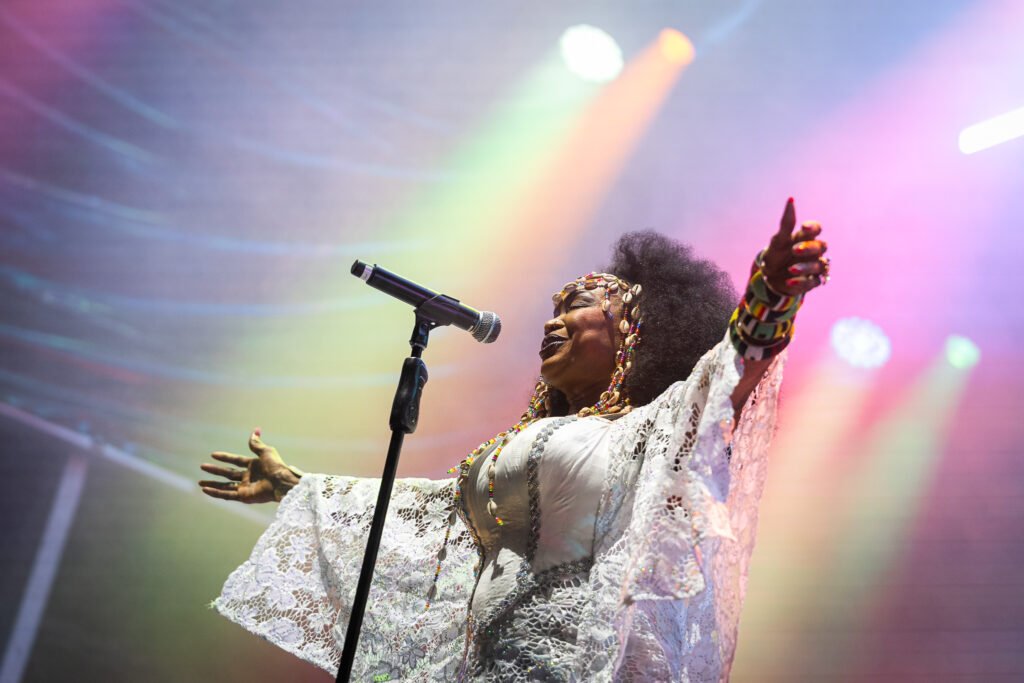
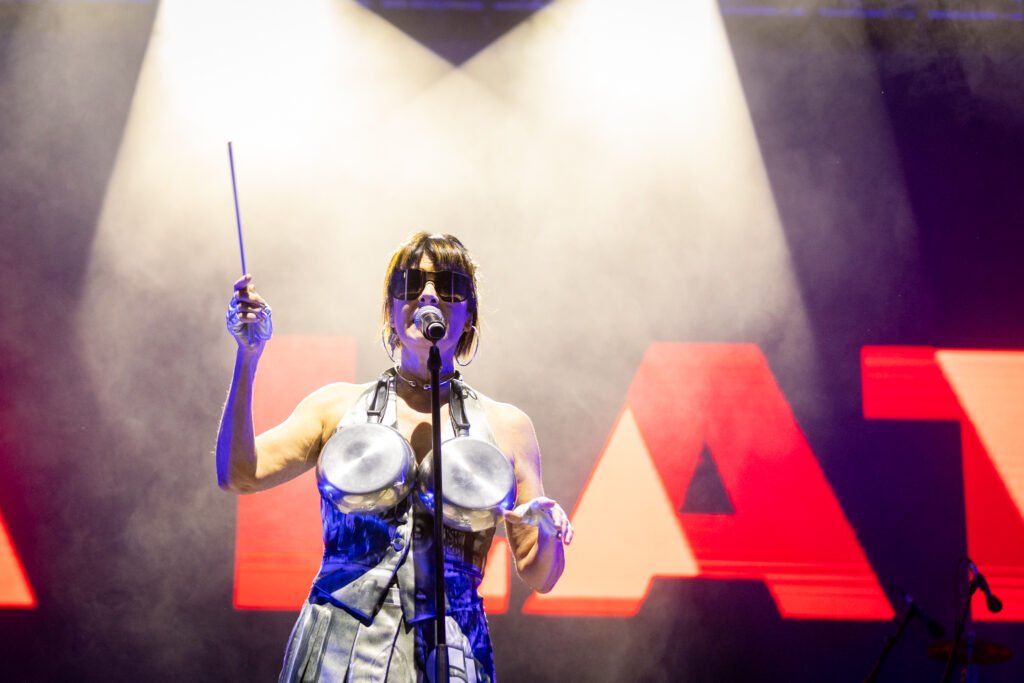
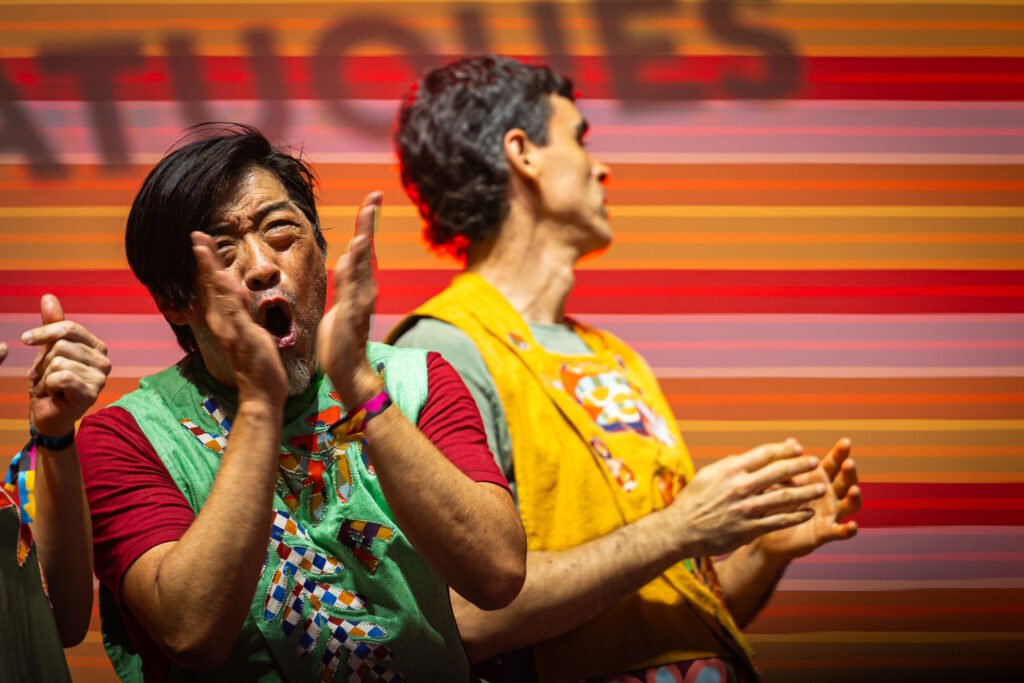

Photos by André Henriques and Hugo Sousa