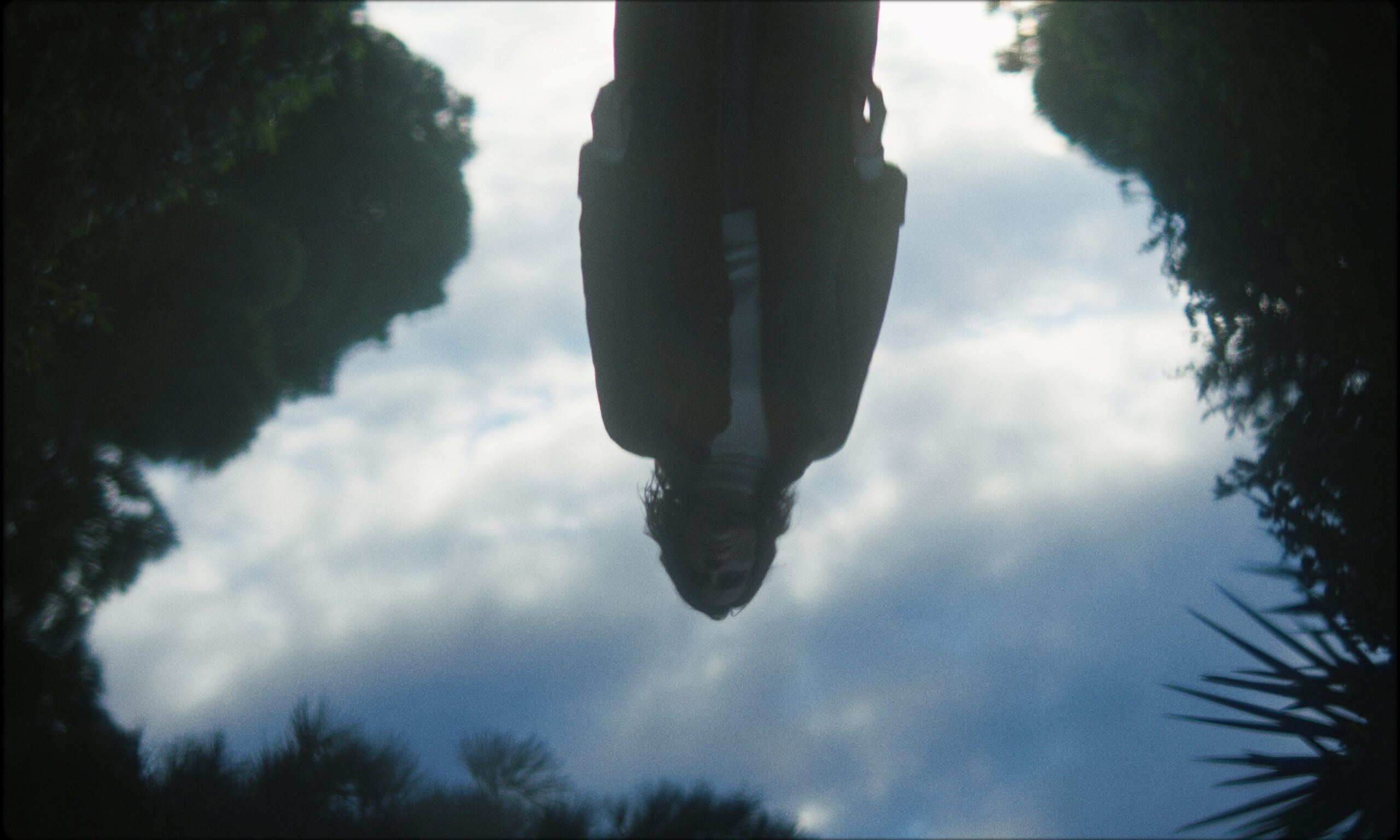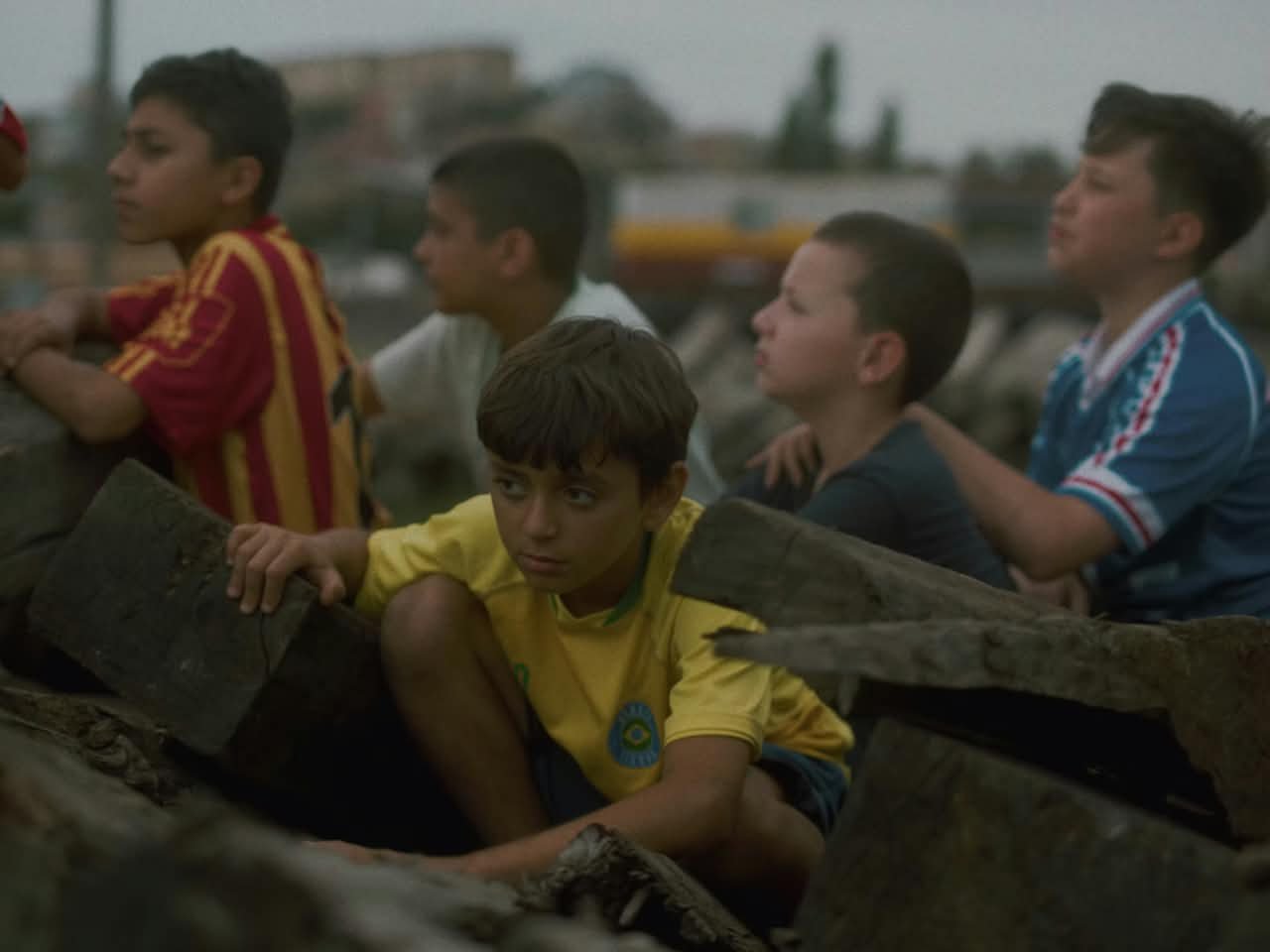


Some films plant trees. This year, CineEco made the symbolic gesture of creating a woodland, planting 32 native trees — hawthorns, Portuguese laurels, birches and rowans — at Quinta da Nogueira in Seia, near the football stadium. The ambition is considerable: to create a natural amphitheatre where, among other activities, films from the festival itself might one day be screened.
Now 31 years old, CineEco is one of Europe’s oldest environmental film festivals. It has been held in Seia since 1995, in the heart of the Serra da Estrela mountains, on the way to the highest point in mainland Portugal.
Its programme is diverse, extending beyond cinema and seeking to engage with its local and regional surroundings without losing sight of national and international perspectives. The programming reflects certain dilemmas, particularly the tension between cinematic quality and the relevance or prominence of environmental causes, compounded by the need for local engagement. In other words, good causes can make terrible films, and excellent films may champion no cause at all.
This year’s edition offered a little of everything, although most films struck a good balance between these two dimensions. Take Derek vs Derek, by James Dawson, an entertaining British film that explores two opposing visions of agriculture and land use, and the potential for conflict between them. It won the festival’s top prize. Or A Praga, by Sarah Arnold, which demonstrates how, with a slightly broader set of criteria, even a crime comedy can find a place in a festival addressing problems affecting wildlife and agriculture in France.
From this extensive programme, we have chosen to highlight three documentaries with a journalistic approach, varying in cinematic quality but united by their determination to shout out messages the world needs to hear.
The Tea We Drink Is Tainted by Colonial Violence
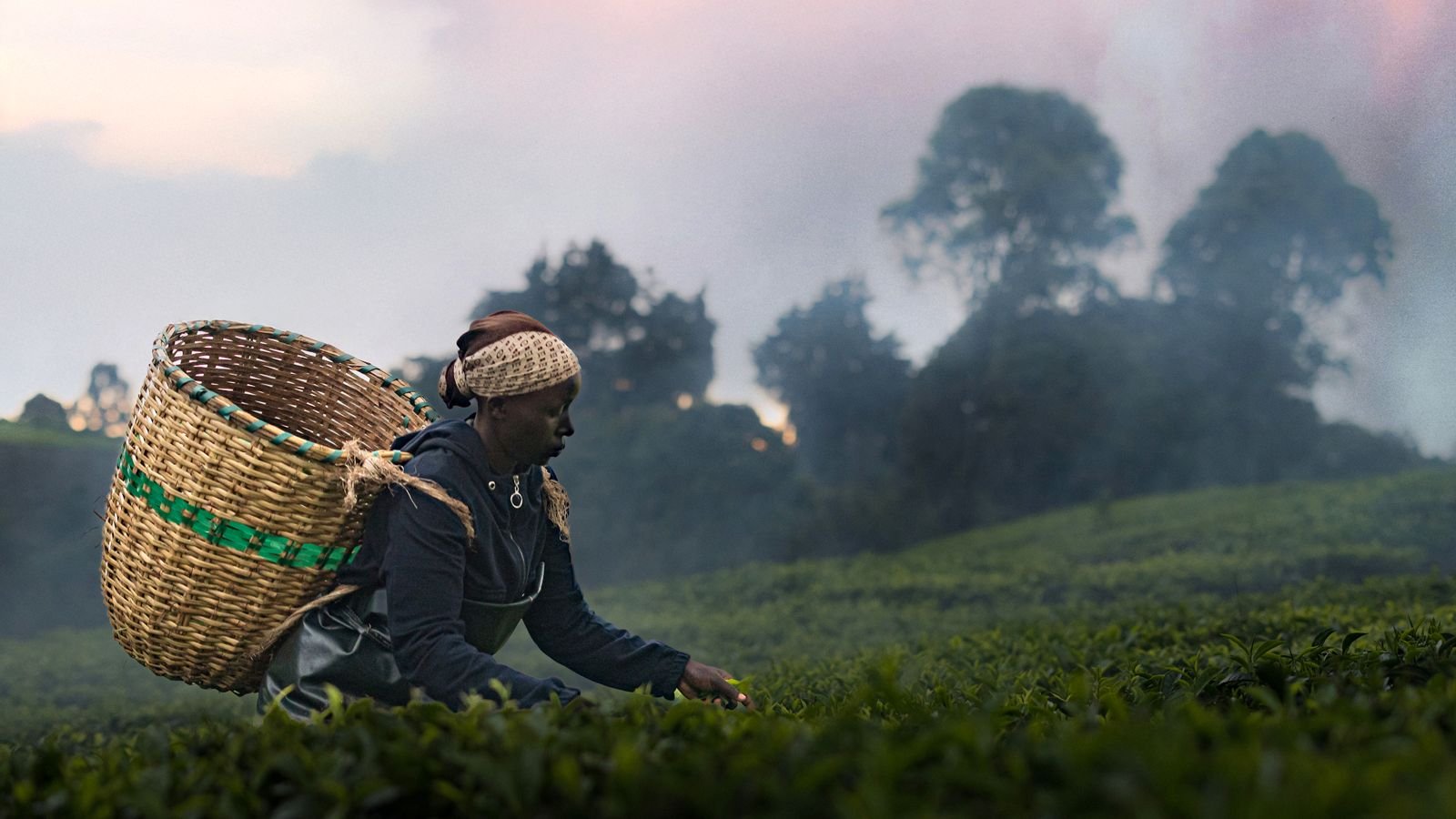
Kikuyu Land primarily follows the investigative work of journalist Bea Wangondu, who also co-directs the film with Andrew H. Brown. Bea investigates the exploitation of Kenya’s vast tea plantations, owned by well-known multinational corporations.
The investigation begins with the question of land ownership. Mr Mungai, an engineer with aspirations to become a musician and a lawyer, brings a lawsuit against the Kenyan state to reclaim land that once belonged to his ancestors. It is an almost impossible struggle, both symbolic and extremely dangerous. Along the way, we discover that the tea plantations perpetuate practices of violence and semi-slave labour inherited from colonial times. All this unfolds in an atmosphere of violence, involving murders and other serious crimes, against a backdrop of entrenched power structures accustomed to a longstanding system of corruption. At one point, someone claims that African leaders who refuse to fall into line with the former colonial powers end up dead.
It is a film of denunciation, much like Naza, seeking to accomplish what conventional legal and political mechanisms have failed to achieve. It also attempts to convey the adrenaline of a journalistic investigation.
Otherwise, Kikuyu Land follows a fairly conventional structure, relying on Bea’s voice-over, her doubts and her achievements. It has several weaknesses. The strangest and most unnecessary is the opening disclaimer stating that the filmmakers do not necessarily endorse the statements made by their interviewees. Still, when a film so explicitly reveals the life-threatening risks its makers have taken to expose an outrageous situation, cinematic considerations inevitably become secondary.
The Lithium Rush Threatens Bolivia’s Indigenous Peoples
The new gold rush is no longer driven by cowboys and explorers, but by major international corporations equipped with cutting-edge technology and sophisticated propaganda tools. Popular opposition has succeeded in halting some lithium exploration projects on European soil, prompting Europe, increasingly aware of the metal’s growing value, to look for alternatives beyond its borders.
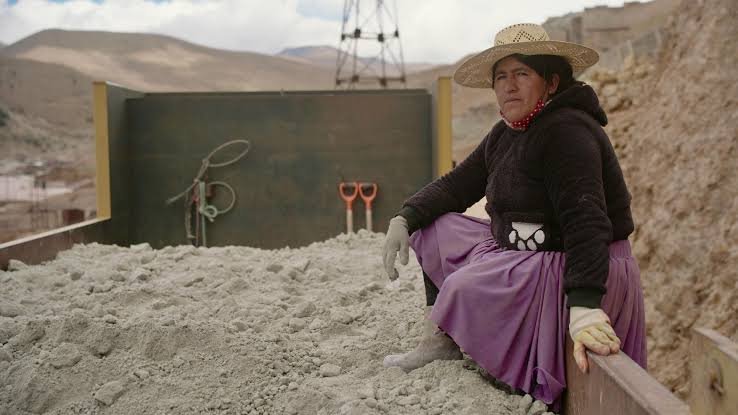
Bolivia has once again become a particularly attractive target, thanks to its enormous lithium reserves. Indigenous communities, whose ancestors were decimated by Spanish colonisers bewitched by the lust for gold, now find themselves confronted with expeditions by European companies seeking to extract lithium from their lands.
Materia Prima is the result of an extraordinary and thorough investigation by German filmmaker Jens Schanze. The director succeeds in painting a broad picture rich in revealing details. He films activists and Indigenous communities, but also members of the teams working for international corporations, even gaining access to meetings where strategies for achieving their objectives are discussed with remarkably little pretence.
Unlike Kikuyu Land, Materia Prima is not a militant film, in the sense that it attempts to construct a perspective that is not one-sided. It exposes the great dilemma facing these communities: the promise of wealth and an escape from financial hardship, set against the possible degradation of their ancestral lands. Nor is the film categorical about the solution. It does not directly advocate banning lithium extraction in those mountains, but rather calls for environmental impact assessments and consultation with local communities. Of course, its impartiality is only apparent, but as a rhetorical device it may prove all the more effective.
Cinematically, it is powerful. Schanze has a filmmaker’s eye: he knows where to place the camera and develops a distinctive visual language. Narratively, he employs an ingenious device: voice-over readings from the chronicles of Felipe Guamán Poma de Ayala, an Indigenous writer who addressed a lengthy letter to King Philip III of Spain, denouncing the abuses of colonisation. A surprisingly contemporary echo of the colonial era.
The conclusion is similar to that of Kikuyu Land: political independence in Africa and South America has not prevented the emergence of new forms of colonialism.
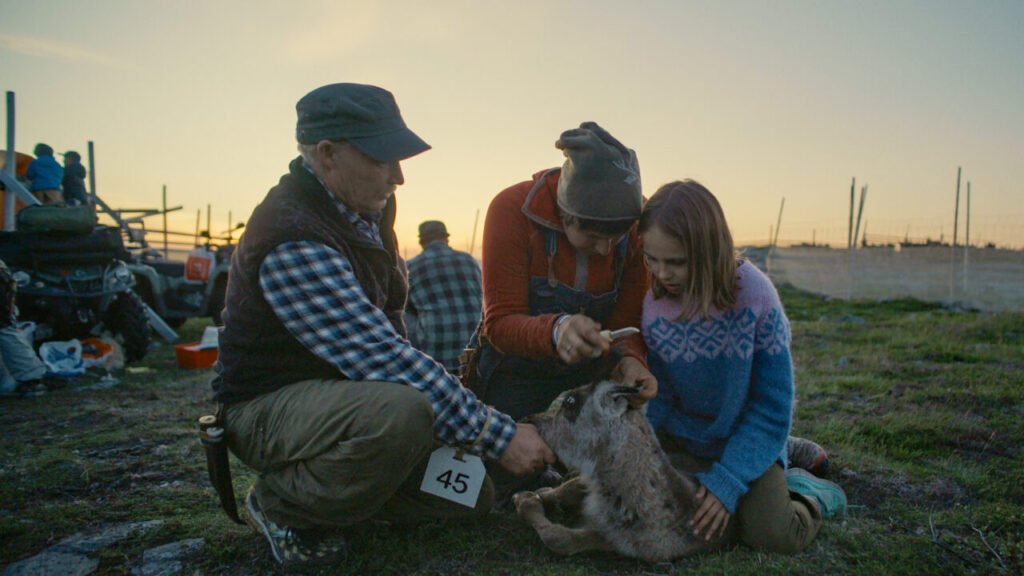
The Norwegian Government Occupied Sami Lands with Wind Turbines
From supposedly civilised Norway, one of the wealthiest countries in the world, comes a surprising story. With the authorisation of the Norwegian state, private companies installed enormous wind turbines on the traditional reindeer-grazing lands of the Sami people in the Fosen region. Construction went ahead before the courts reached their final decision, which ultimately ruled in favour of the reindeer herders. Yet the favourable judgment did not result in the removal of the turbines.
Let Our Mountains Live, by Håvard Bustnes, is a committed documentary following the struggle of Sami activists. It makes no attempt to offer a balanced account of events, seeking instead to convince us of the justice of their cause. In part, it is a courtroom documentary, following the mounting legal proceedings and arguments surrounding the case, in which the Norwegian government emerges in a particularly poor light. At the same time, it brings us close to the activists, their motivations and the strategies behind their struggle, including demonstrations that culminate in the occupation of the Ministry of Energy.
As in Materia Prima, the film presents a conflict between opposing interests: on one side, renewable energy production and wealth creation, with their environmental and economic benefits; on the other, the Sami people’s right to their ancestral lands, where they practise reindeer herding, also for commercial purposes.
The film is highly competent in cinematic terms and conveys a certain air of civility surrounding the conflict. There is an imperative of courtesy and civic-mindedness that seems deeply ingrained in Norwegian society. Even during the most heated exchanges, civility is never entirely abandoned, nor is a certain sense of humour. Even the police seem extraordinarily gentle and considerate as they lift the female activists from the floor at the entrance to the ministry and carry them away in their arms.
But however civilised the conduct of the dispute may be, the fundamental question remains: what is the value of a court ruling upholding the rights of an Indigenous people when the state itself resists implementing it? And the story is far from over.
Kikuyu Land (2025)
Kenya / USA · Directed by Bea Wangondu and Andrew H. Brown · 94 min · Documentary
Materia Prima (2026)
Germany · Directed by Jens Schanze · 90 min · Documentary
Let Our Mountains Live (2026)
Norway / Finland · Directed by Håvard Bustnes · 100 min · Documentary