The Divine Ideal of Killing, by AriobarzaN, is almost a cinematic UFO. A refreshing and intriguing work that departs from the style of acclaimed Iranian cinema that usually reaches European audiences. It does not conform to conventional narrative structures and possesses a degree of abstraction that makes its entire discourse more elusive than concrete. Everything is written between the lines and remains open to multiple interpretations; nothing even allows us to state with certainty that we are watching an allegory of the Iranian regime.
The film’s most explicit connection to the reality of the country is found in the voice-over preceding the opening credits. There are no other concrete elements that directly support such a reading and, in truth, what we see could serve as a metaphor for multiple realities. The filmmaker openly prefers to regard the film as an artistic object rather than as a specific and targeted political gesture. The synopsis itself points towards a philosophically abstract path: “The only way to deal with an unfree world is to become so absolutely free that your very existence is an act of rebellion” (Quote by an unknown author, often attributed to Albert Camus)
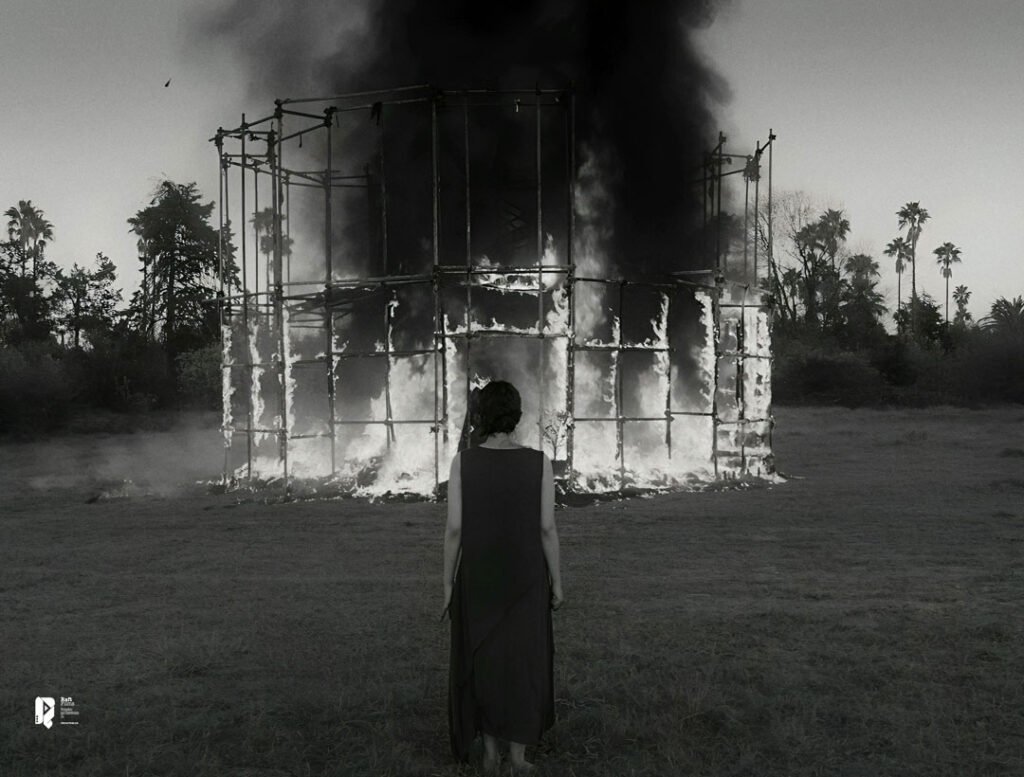
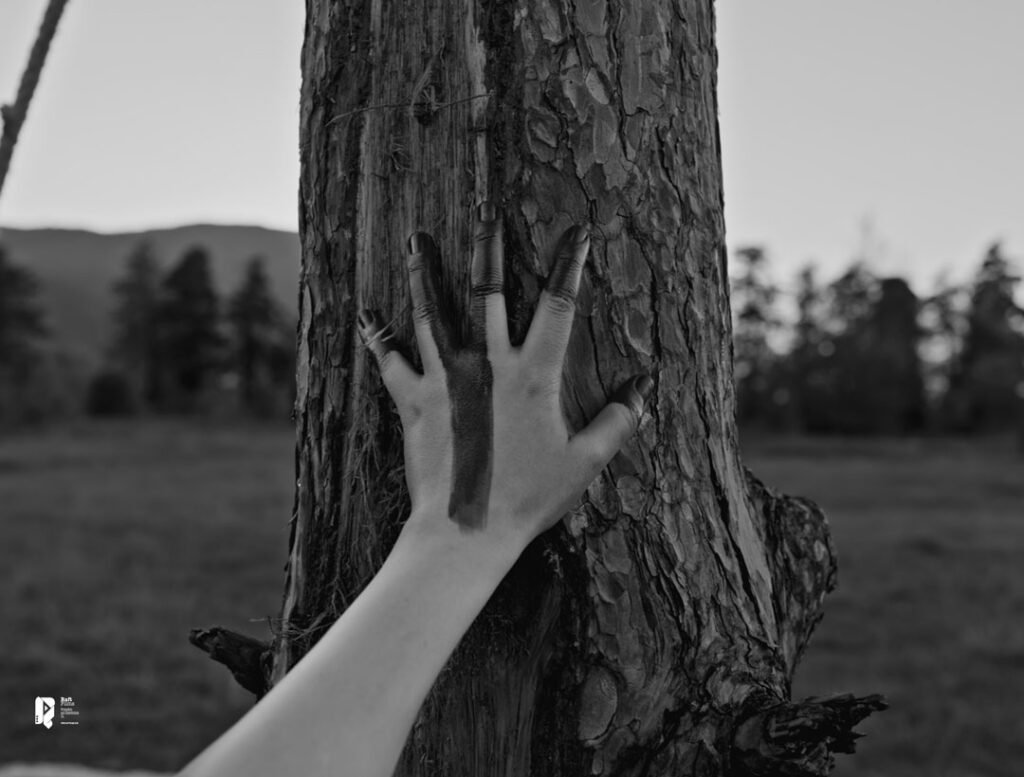
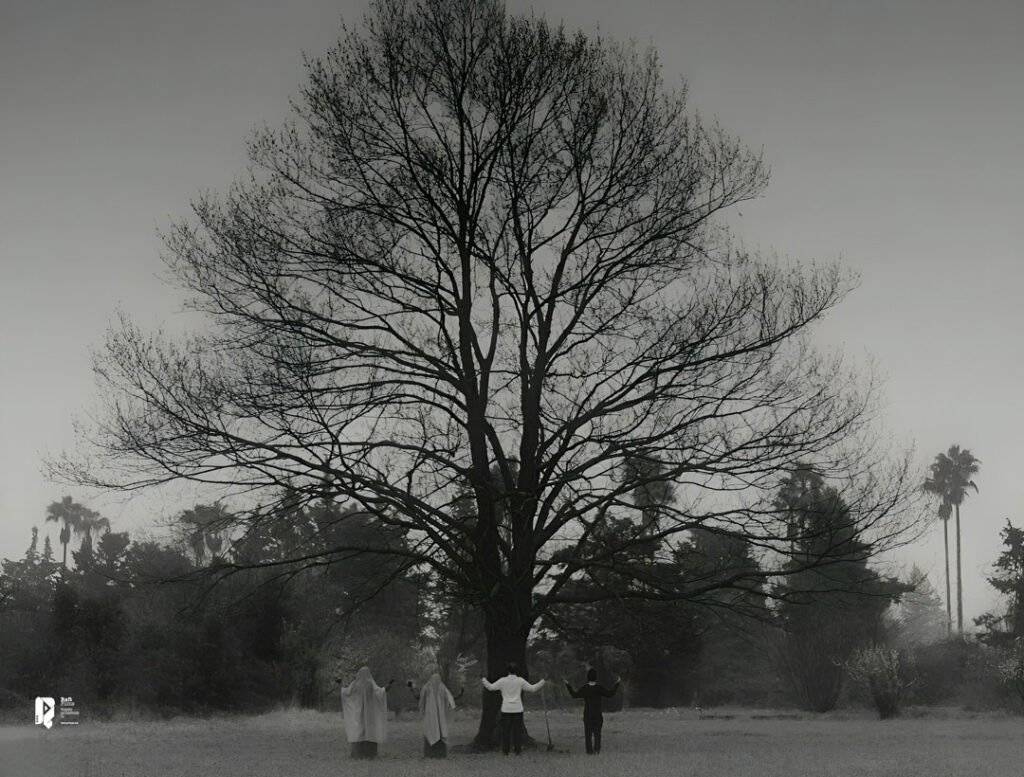
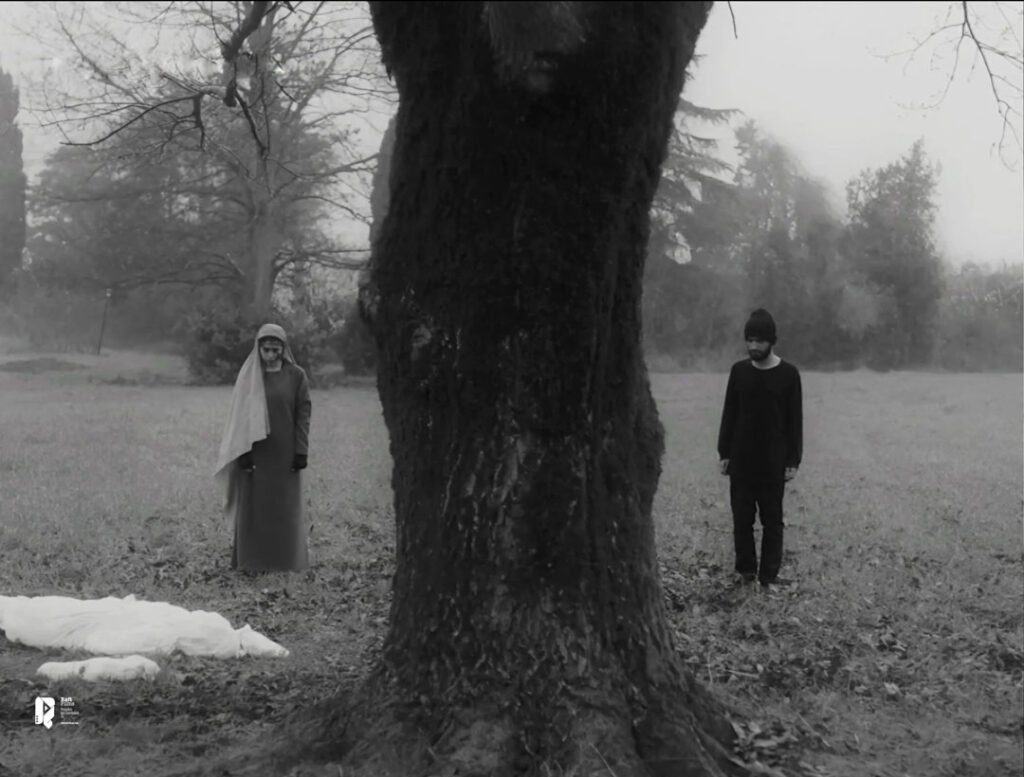
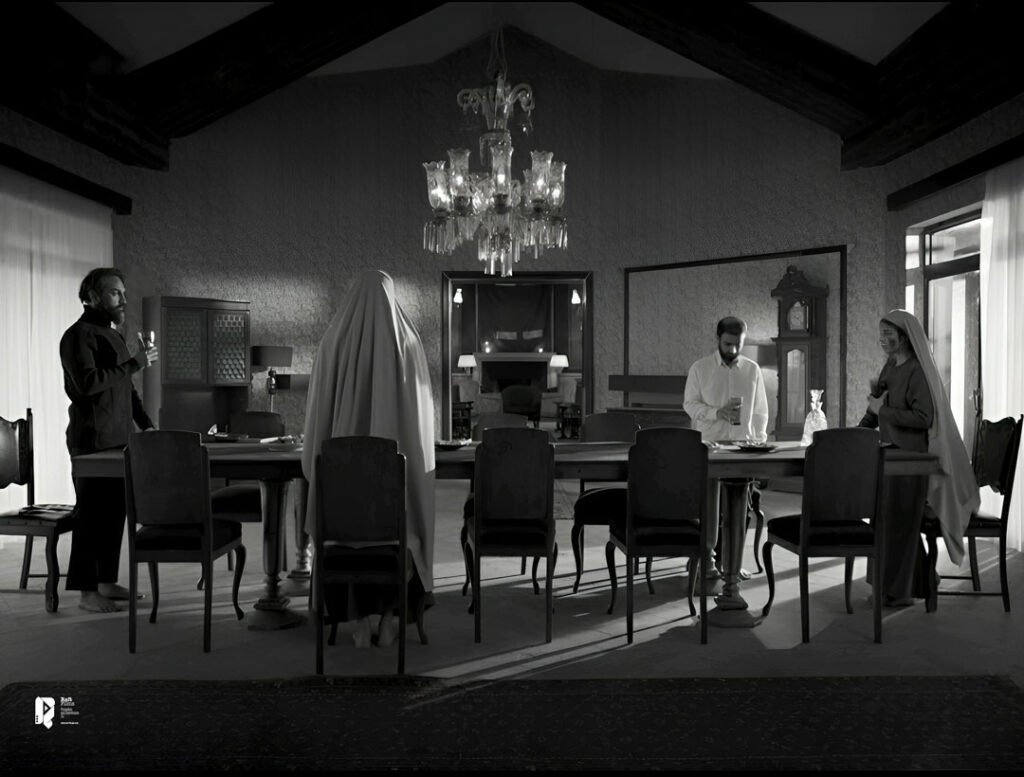
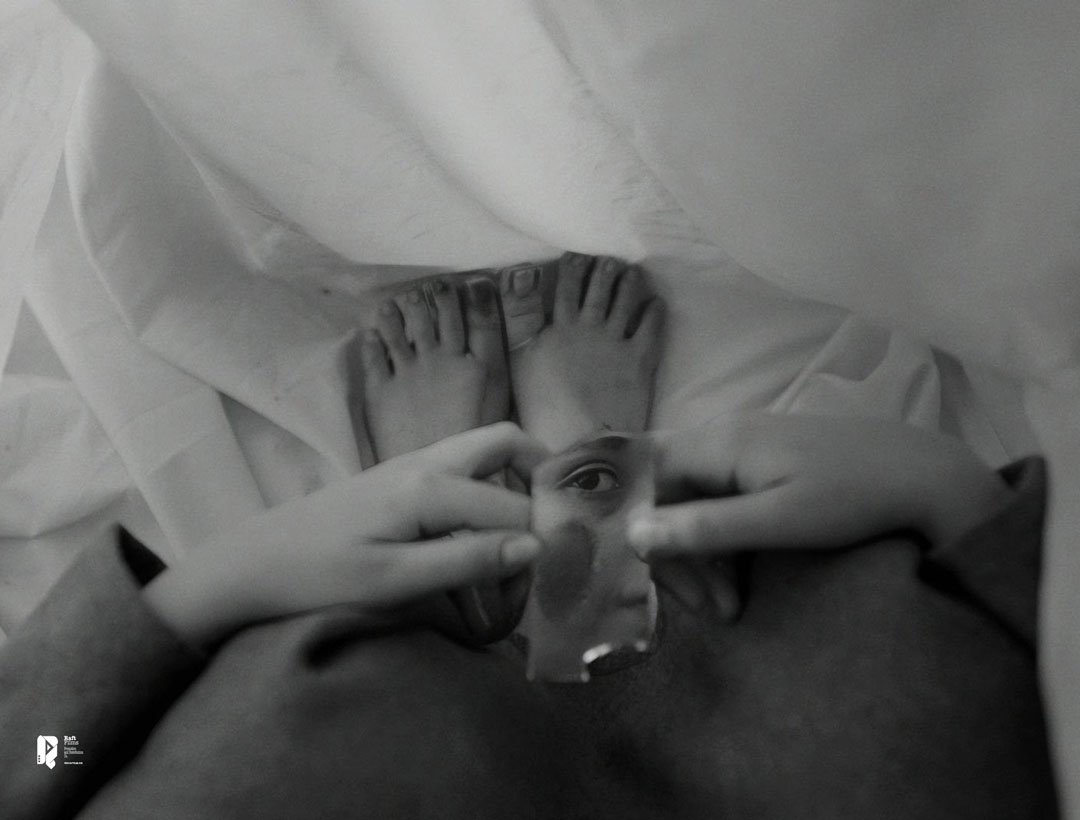
Shot in black and white, in a non-place, with meticulous attention to framing and light — the work of someone who considers every frame in detail — The Divine Ideal of Killing places us within a kind of clandestine sect, marked by horrifying rituals. We might be in a world parallel to that of Charles Manson, or of any other American religious and tribalist fanatic capable of gathering followers willing to do anything at his command. Yet what we are ultimately confronting is something as simple as a family that isolates itself from the world and its rules, subverting them in an atrocious manner. This gesture of freedom also becomes a self-inflicted act of anarchy or moral tyranny.
Its visual language is closer to Northern European cinema than to what we are accustomed to seeing in Iranian film. At times, it recalls Carl Theodor Dreyer in the austere and rigorous way it films faith — although what is being filmed here is oppression rather than faith itself. At other moments, it evokes Bergman or Béla Tarr; or, with a geographical turn, Carlos Reygadas, who invokes Dreyer in his masterpiece Silent Light (2007), a portrait of a Mennonite community in Mexico. It’s definitely closer to Dyer than to Abbas Kiarostami.
This distance also manifests itself in formal terms. The film contains an encrypted philosophical and moral message, and, for that very reason, one that remains open to interpretation. This contrasts with other films, such as Nader Saeivar’s Hijamat, which premiered at Karlovy Vary, where the cause being defended appears to take precedence over the screenplay and the film’s other formal and aesthetic dimensions. Here, the communication of a concept or the defence of a cause becomes secondary to a more ethereal and subjective value: a distinctive idea of cinema as art.
Although it may seem abstract because it is intangible, this idea constitutes a valuable political and moral gesture of defiance: an artistic insurrection by someone who refuses to submit to the parameters of a pre-established cinema and who confronts, in his own way, its norms and expectations, divided between the urge to escape and a kind of Stockholm syndrome.
AriobarzaN, a young filmmaker presenting his first feature, dazzles us with his formal audacity. He offers us a rigorous and visually arresting work of art, filled with meticulously composed shots, which speaks to us of a terrifying world that exists tangentially to our own.