

No, this is not some shameless exercise in self-congratulation on behalf of the critic’s profession. Critics play an indispensable role in the ecosystem of art, but that is not what this article is about. I am talking instead, perhaps also somewhat hyperbolically, about The Critics, a collective of Nigerian teenagers (who have since grown into young adults), creators of a YouTube channel that went viral not only in Nigeria but around the world.
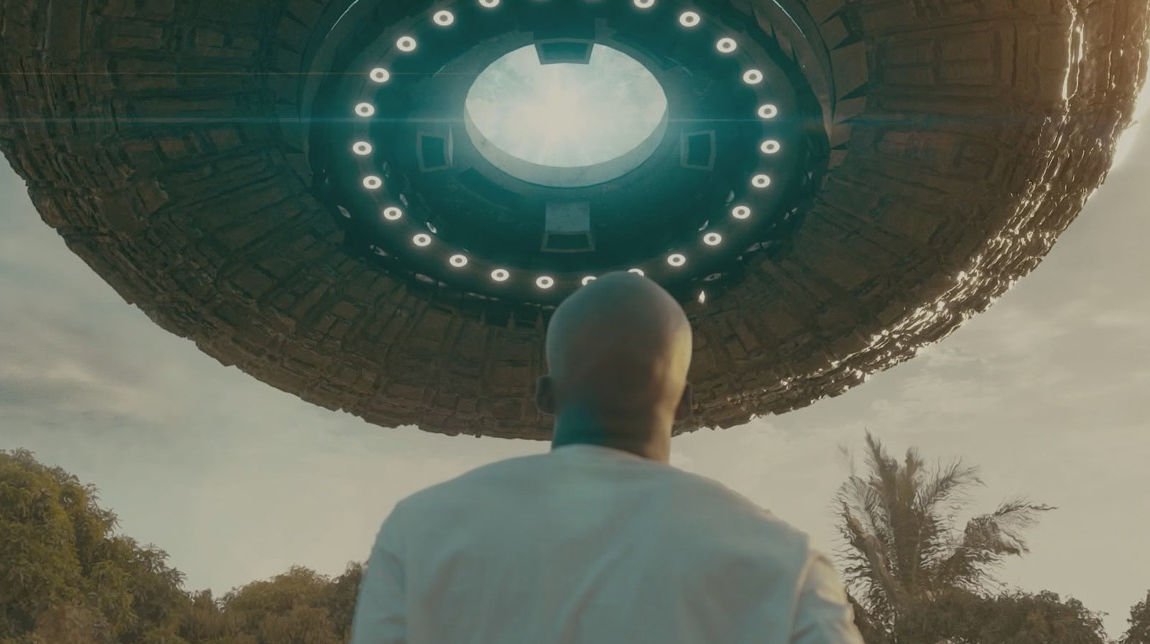
They make science-fiction shorts that move from their own microcosm into outer space. Their films are as much a document of the particular reality of life in Kaduna, Nigeria, as they are transcendent. They have everything it takes to become cult objects. And, in a way, they already have.
Although their plots may reveal a certain simplicity or naivety, The Critics’ films are not crude objects in the manner of Ed Wood. The investment in special effects is serious and carefully executed, and there is nothing rudimentary about the filmmaking, especially in the more recent films. The only thing they share with the man who earned the epithet “the worst director of all time” is the idea of an untameable passion for cinema.
Shorts such as Ogun Ola: War Is Coming (2022), Redemption (2016) and Timothee (2021) are little sci-fi gems, somewhere between Roger Vadim, Robert Rodriguez and Ousmane Sembène. They are anchored in a specific local reality, which then dissolves or reconstitutes itself through superpowers and transcendental imagery, in a kind of Nigerian magical realism in which the transcendent is available from the outset as a way of safeguarding reality.
The gesture is also political in many of its elements, in its assertion of a visceral, adolescent cinema marked by an irrepressible desire to make films. And, at certain moments, more concretely so, by exposing situations of social injustice or abuses of power in a country governed by its own laws.
Nigeria, as is well known, has one of the largest film industries in the world. Nollywood produces thousands of films every year and is frequently cited as one of the world’s largest cinemas in terms of production volume. One of Nollywood’s major recent successes was Everybody Loves Jenifa, a story threaded through with drugs and corruption and involving fake humanitarian organisations. There is, indeed, a major tradition of popular cinema in Nigeria.
The work of The Critics, however, has little to do with that. It is a dedicated and amateur exploration — in the best sense of the word — of genre cinema, with remarkable technical quality and special effects achieved without recourse to Artificial Intelligence. The films, freely available on their YouTube channel, overflow with enthusiasm and passion for cinema itself. So much so that the channel is supplemented by tutorials made by the group, in which they discuss techniques or, for instance, explain the importance of film scores.
The brilliance of The Critics was such that it attracted the attention of international figures. One of the most notable was Morgan Freeman, who was so taken by their freshness that he not only lent his voice to the trailer for Ogun Ola: War Is Coming, but also persuaded producers to donate equipment, giving the group an important technical boost.
Susanne Pfeffer, director of the MMK (Museum für Moderne Kunst) in Frankfurt, also recognised the collective’s exhibition potential and invited them to take over several rooms in the museum she directs.
Meanwhile, New Zealand filmmaker Pietra Brettkelly also became aware of the phenomenon and set out to make a documentary (Crocodile) together with the collective itself.
Crocodile, which premiered at the Berlinale, follows the group’s trajectory in a pertinent and restrained way, moving through several critical moments, such as the expulsion of one of its older members over alleged sexual harassment, as well as the exhibition in Frankfurt. The film is particularly effective in showing the dynamics and professionalism of a group which, contrary to how it may appear from the outside, takes itself very seriously and displays a capacity for self-reflection, and even for political thought.
The story of The Critics, so beautiful and genuine in its origins, also raises a number of questions. They were already phenomenal before the West discovered them. And yet it seems that some form of Western endorsement is always required — whether from an American producer or a German gallery — before true validation can take place. As if only the West possessed the seals of quality.
Brettkelly is particularly effective in the ending of the film she co-directs with The Critics. She avoids the mistake of ending it at the height of their success in Germany, or in Paris, where one of the members secures a contract with a record label. She insists on returning to Nigeria.
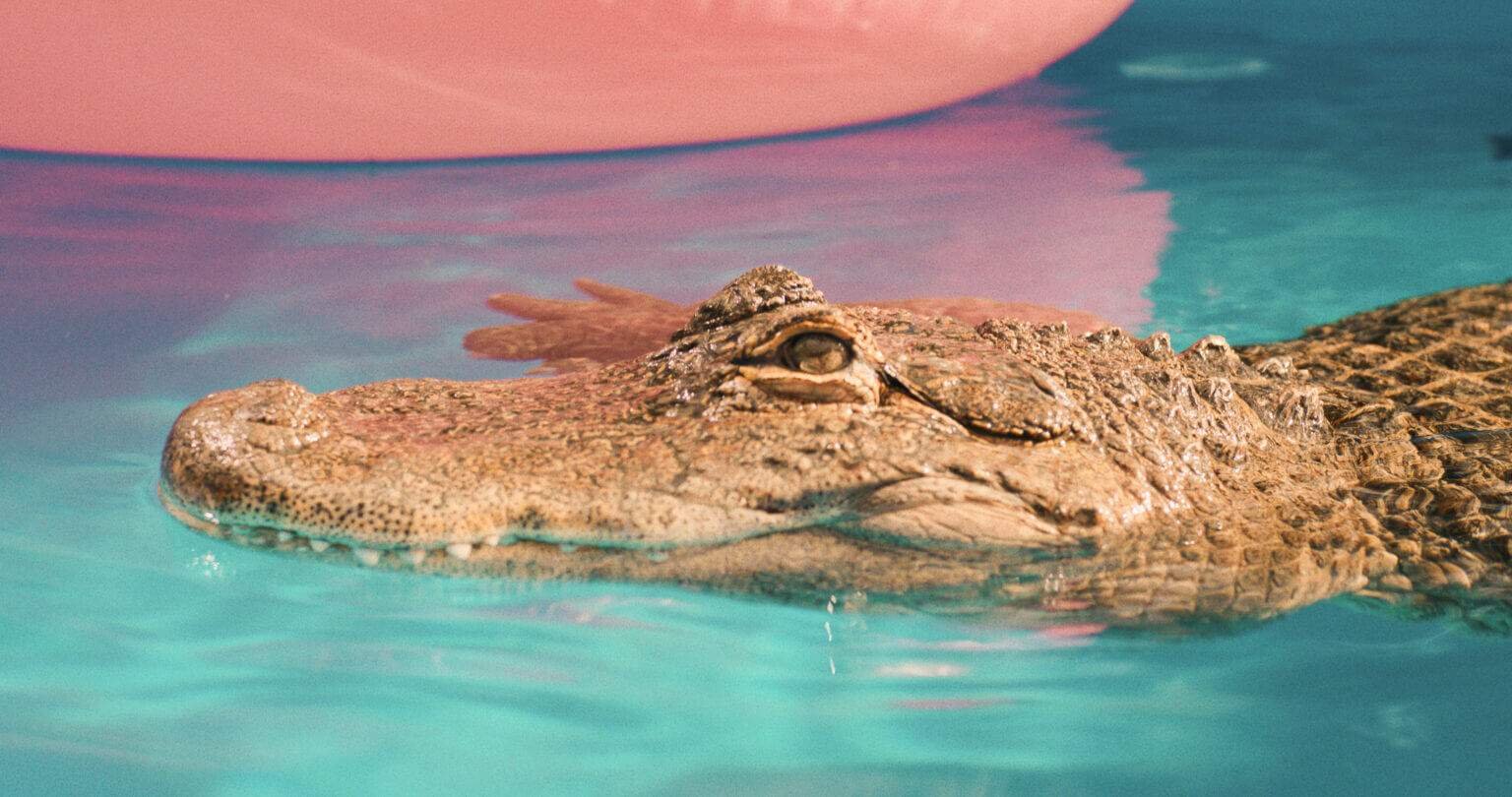
They all return to their homeland in search of a crocodile that never appears. A crocodile that stands for memory, for a primordial Nigerian essence, for the (in)genuineness of their projects. The crocodile is everything The Critics must never lose sight of.
Even for those who are not particularly fond of the more kitsch side of science fiction, their infectious enthusiasm offers hope for the future of cinema.
Crocodile (2026)
Directors: Pietra Brettkelly, The Critics
Countries: Nigeria / New Zealand
Runtime: 101 min
Screenplay: Pietra Brettkelly
Producers: Pietra Brettkelly, The Critics
Cinematography: The Critics, Rachael Yusuff, Basile Carre-Agostini, David Wills Augustin
Editing: Cushla Dillon, Chia Chi Hsu, Nicolas Chaudeurge
Music: Tom Third
Languages: English, Pidgin English, Hausa, Yoruba
The critics are: Raymond Yusuff, Ronald Yusuff, Richard Yusuff, Godwin Josiah e Victor Josiah.