
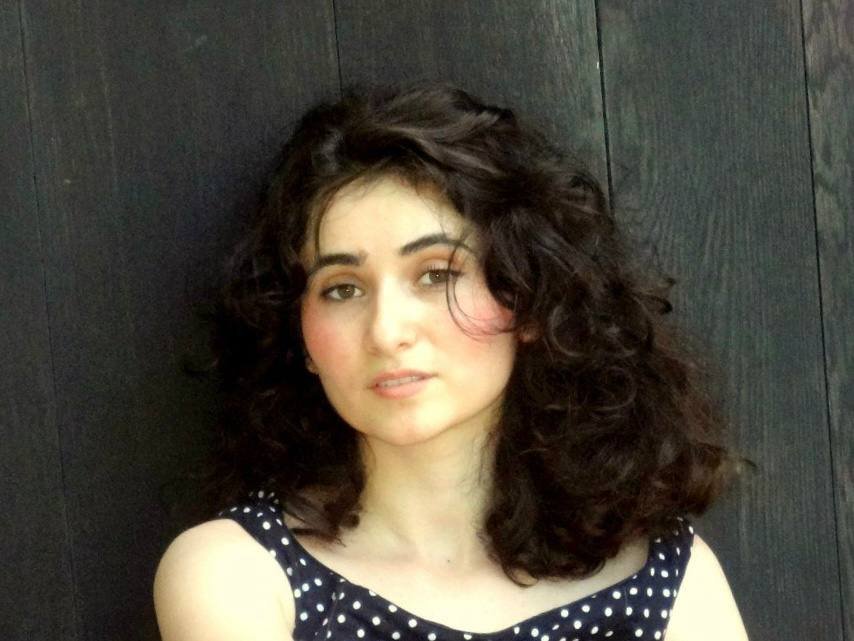
Tajikistan has a new filmmaker, and the world should know her. Based in the United States, Isabelle Kalandar shot her debut feature in her mother’s village in Tajikistan. A film about absent men and those who stay behind — women, children and the elderly who endure and resist. The cast is made up of Kalandar’s own siblings, while the director herself plays the role of the mother. Another Birth, which won the FIPRESCI Prize at the 4th Bishkek International Film Festival, marks the first chapter of a planned trilogy.
Wild at Heart: Many war films are, in fact, films about women. About the women who stay. Your film also feels, in a way, like a war film, because the men are all absent. Where are the men?
Isabelle Kalandar: It is interesting, because I grew up in the aftermath of the fall of the Soviet Union, which led to mass male migration. A lot of children in my country grew up without a father figure, and I saw that around me. I saw many children in that situation, and I saw what it did to them.
That is the background of the story. But I did not want to anchor the film too directly in that explanation — to say, for instance, that the father is absent because he migrated, never returned, and is somewhere in Russia, where many Tajik migrants go. I wanted to make it more universal. So I removed that detail. For viewers from outside, it is not entirely clear where the father is. But for people from Tajikistan, they immediately know.
In the initial script, there were phone calls. The father would call and speak to the daughter, and it was clear that he was somewhere working as a seasonal labourer and that he might return one day. But in the final version I removed all those phone calls. We never actually shot them; they were only in the script. I am glad I removed them, because it gave the film a more fairy-tale-like quality. We live in a world where people are constantly migrating and moving everywhere, and I wanted to get rid of one specific place — the idea that Tajik men only move to Russia.
Wild at Heart: So the men are in Russia working?
Isabelle Kalandar: Yes, but the interesting thing is that there are all kinds of situations. Some men return every six months, some return every three years, and some never return. I chose to write the story about one particular man: one of those who do not return for a long time, and then come back with a new family.
Wild at Heart: In that way, the film also shows the strength of women.
Isabelle Kalandar: Not just their strength. What I really wanted to express came from resentment. What I saw happening to children and women was tragic. I have friends and cousins who would say to me, “I never really knew my father. I do not know who my father is.” Sometimes they would say it jokingly, but I could see the pain behind it.
A friend of mine once said, “I got to know my father when I was eighteen.” That is a tragedy. In our culture, we are taught to revere the father figure, to love him regardless. But there is no bond between a child and an absent father. They are told that they have to love him, but they do not have that bond.
I wanted to examine that. It came from my own resentment and my own pain. I wanted to talk about it because nobody talks about it in Tajikistan. Nobody really questions what happens to these children, or to the women who are constantly alone.
Imagine being married and spending your entire life without love, without physical or emotional support from the person you love. It angered me to see these lonely, abandoned women and children. The film may seem, at first, to be about a child, but towards the end we understand that it is also about the mother’s pain and her withering away.
Wild at Heart: At the same time, you mentioned the idea of a fairy tale. In some aspects, the film does feel like a fairy tale. Hope seems to become something that belongs to the children. It is also almost mixed with religion, as if religion too could be a fairy tale. The children believe in these kinds of miracles.
Isabelle Kalandar: Yes. Pairi is a mythological figure in Persian culture. Tajikistan and Afghanistan are part of the Persian world, and Pairi is a fairy-tale figure. She has the power to help people or to go against them.
In Badakhshan, where we shot the film, people truly believe in this figure. I did not grow up there, but I went there as a child, and I would meet people who said, “Pairi appeared to me.” Usually men would say that. You can sense the confidence behind it, because Pairi is believed to appear only to good people. So when someone says, “Pairi appeared to me,” it is also a way of saying, “I am a good person,” or “I am a beautiful person.” Pairis are also believed to fall in love with beautiful people.
My grandmother would say, “No, they are lying. Pairis do not come to this village anymore because it is no longer clean. People are no longer pure-hearted.” I was fascinated by the fact that people still believe in that magic and mythology. It still exists in that part of the world.
I was fascinated by the fact that people still believe in that magic and mythology. It still exists in that part of the world
Wild at Heart: That’s why you use the figure of Pairi in the film?
I wanted to use the figure of Pairi because, since childhood, the father has told everyone that Pairi appeared to him, which implies that he is a good person. The daughter also believes that he is good because her grandfather keeps telling her that Pairi appeared to him and that she must not question her father.
Towards the end, the mother is already jaded. She does not believe in Pairi and tells her daughter that it is all imagination, that Pairis do not exist. But, ironically, it is that same Pairi who saves her towards the end. For me, the ending is hopeful. Some people see it as open-ended and think she is perhaps somewhere in heaven, imagining it. But that was not my intention. I used this mythological figure to show the irony of these men who think they are good, and to show that, in the end, Pairi saves the mother. It is her rebirth through Pairi.
Wild at Heart: Somehow, poetry also saves them all.
Isabelle Kalandar: Poetry is very important. I know people say the film is poetic, but when I was making it, I was also trying to honour my culture and to honour Forough Farrokhzad.
Badakhshan is such an isolated place. A long time ago, there was no formal education, no universities. People received their education through poetry — Persian poetry. The more poetry a person knew, the more revered that person was.
People would gather together. There was no electricity. They would play a kind of game by reciting poems to one another. For example, I would say two lines, and the poem would end with the letter “N”. The next person would have to begin a poem starting with that letter. It would continue like that, and the person who lasted the longest, the person who knew the most poetry, would win.
Poetry is so embedded in that culture. We breathe it. We read it every day. We received our emotional education and even our formal education through poetry. Poets were always revered. If I were having an argument with you and you did not believe me, I could say, “Do you know what Saadi said?” — Saadi being a Persian poet — and then recite a poem that supported my argument. That would be it. The argument would be over.
Wild at Heart: You would have won the argument.
Isabelle Kalandar: Exactly. That is how revered poets are. I also wanted to use that in the film. The mother has almost no dialogue. She rarely speaks. She has no one to whom she can convey her pain. So, through the poetry of Forough Farrokhzad, she tells her daughter what she is feeling. If you notice, the poems are very dark. They are not age-appropriate for the child. And yet she makes her daughter read them because it is her way of communicating with her.
Why Forough? Because, for me, she was such a brave poet. She died tragically at the age of thirty-two, but her poetry perfectly captures the pain I wanted to convey: abandonment, loneliness, the pain of women. I also wanted to honour her because she had a huge impact on me, both as a filmmaker and as someone who loves poetry. She herself made a great short film, The House Is Black, one of the greatest documentaries ever made — and a very poetic one.
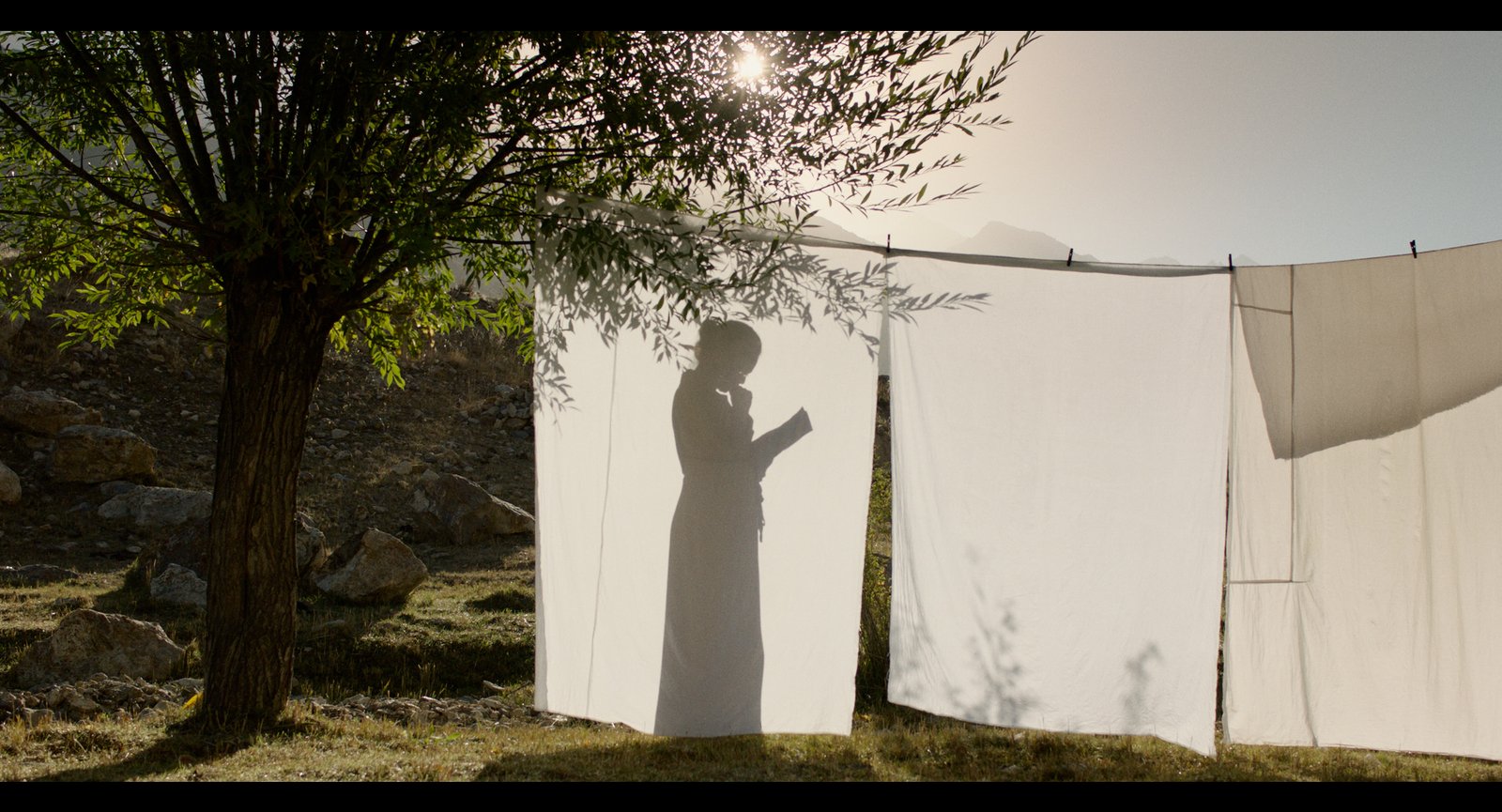
Wild at Heart: Tell me a little about the cinematography. The film has many doors that are not fully open, and we see through them only partially. What were you trying to do with that?
Isabelle Kalandar: My cinematographer was Janis Brod, a Berlin-based cinematographer from Germany and an incredibly talented person.
Poetry is so embedded in the culture. We breathe it. We read it every day. We received our emotional education and even our formal education through it
In that part of the world, children are often not allowed into the spaces where adults are. We do not usually talk to children. Talking to a child as a human being, not merely as a child, is a very Western concept, and I admire it. That theme is very well captured in Abbas Kiarostami’s Where Is the Friend’s House?, where the child wants to return his friend’s notebook, but the mother insists that he has to do his homework. No matter how much he tries to argue, she does not take him seriously.
In my film, I worked with a similar idea. Children are not allowed into adult spaces. They are not spoken to. The girl does not know where her father is or why he is absent. She only knows that he is absent.
There are many things she does not know, many spaces she is not allowed to enter. So what do children do? They peek. They secretly observe. They overhear things they are not supposed to hear.
Wild at Heart: Is the village where you shot the film your hometown?
Isabelle Kalandar: It is the village where my mother was born. I returned there because we had almost no budget. I shot the film in her village, and every single person in the film is related to me. The two girls are my cousins; my aunt is in the film; my grandmother and grandfather are in the film. Basically, my entire family is in it.
Wild at Heart: How was it to direct your family?
Isabelle Kalandar: My grandmother would say, “I do not know what this is. Why am I doing this?” And I would say, “Please, just help me.” They could not really say no.
The children were obviously very happy. At first, Shukrona, who plays Parastu, could not do something I needed. I told her I would replace her with someone else, and she started crying. After that, magically, she became Parastu.
But I guess it was not too difficult because I did not really invent anything in the film. They had lived it. I changed their names and made them reenact what they do every day.
Wild at Heart: You also have the experience of living abroad. How does that connect with the film? I imagine your next film will show the other side.
I shot the film in her village, and every single person in the film is related to me. The two girls are my cousins; my aunt is in the film; my grandmother and grandfather are in the film. Basically, my entire family is in it
Isabelle Kalandar: Yes — those who left, and what migration did to them. It is not one-sided. Obviously, there are men who never return, but there are also men who are lost. The psychological impact of migration on them is also very great. They are lost. They do not know what to do. They do not have the power to change things because the circumstances are against them. I wanted to examine that side of migration as well.
Wild at Heart: Do you feel that society is changing, or is it still like that?
Isabelle Kalandar: Sadly, I do not really know. I went there to make the first instalment of my On Exile trilogy, about the implications of migration for children and women. But I made two films back to back.
When I went back the following year to make the second instalment, Life Says Still We Must Live, it seemed to me that, over the past thirty years of mass male migration, very little had changed.
There was a little girl who appeared in my second film. She was one year old. When we were shooting, she was full of joy, dancing. Then, in March this year, when we went back to shoot some additional material, she had completely changed. She was sitting in the corner. Both her father and mother had left. She had transformed from a joyful child into a very shy child.
So, to answer your question: has anything changed? I do not really know. It feels as if it is still happening. Before, it was usually the man who went abroad for a season. Now it seems women have also joined them. I do not know the statistics, to be honest, but that is what I saw.
It is still happening, though in different ways. Sometimes both parents leave, leaving the children behind. There is also a new tendency: whole families move. They take the children with them and migrate fully. But the problem is still there.
Wild at Heart: Will your next film be set in the United States?
Isabelle Kalendar: No, it is set in Tajikistan. Because it is a trilogy, they are all set in Tajikistan. The first one is about abandoned children and women. The second is about those who leave and come back, and what migration did to them. In the third, I want to touch upon what this whole situation did to the intellectuals in the country. Then I hope to conclude my own exile trilogy and move on to different projects.I do actually have something I want to shoot in New York. I am working on it.