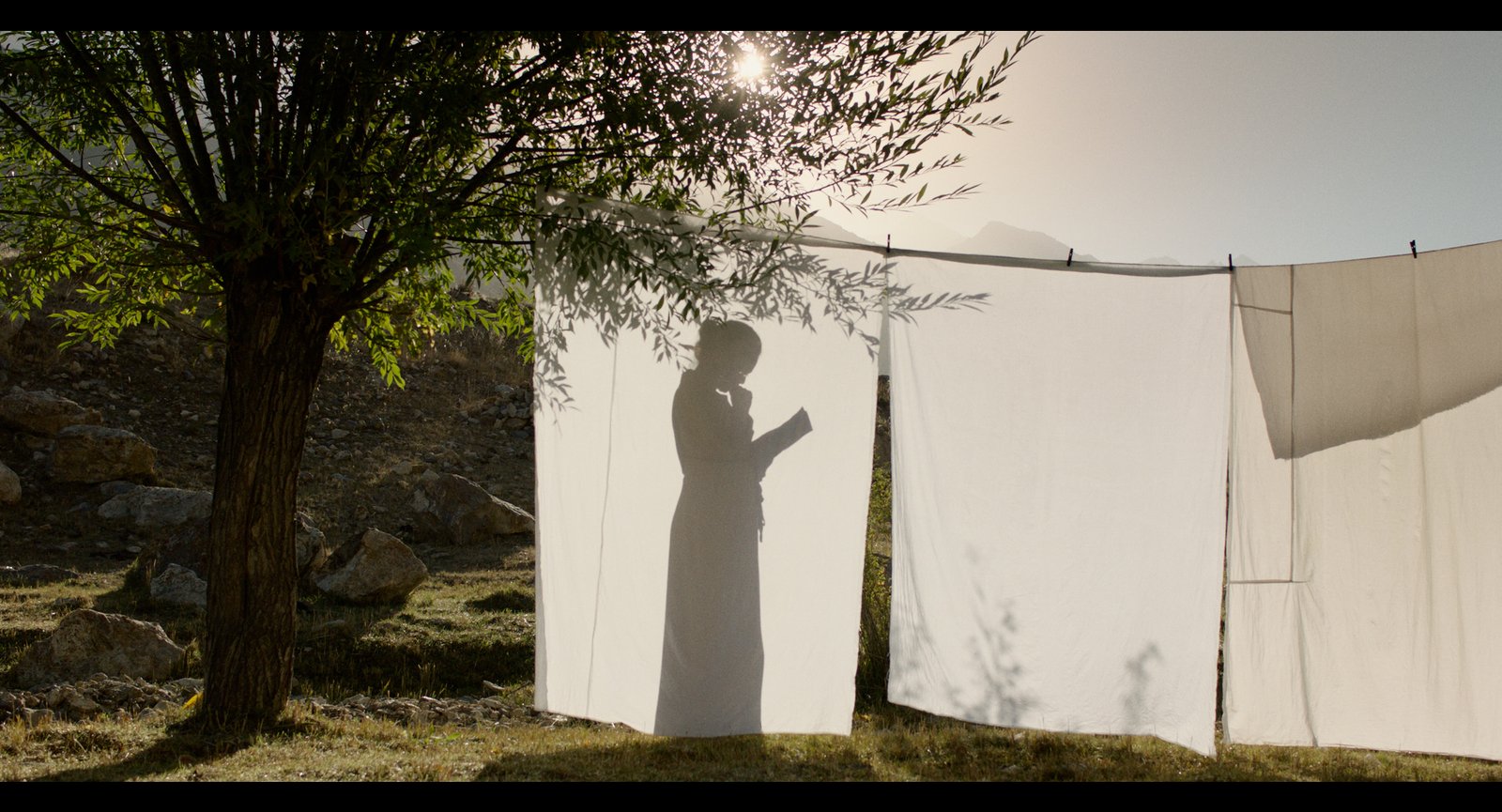
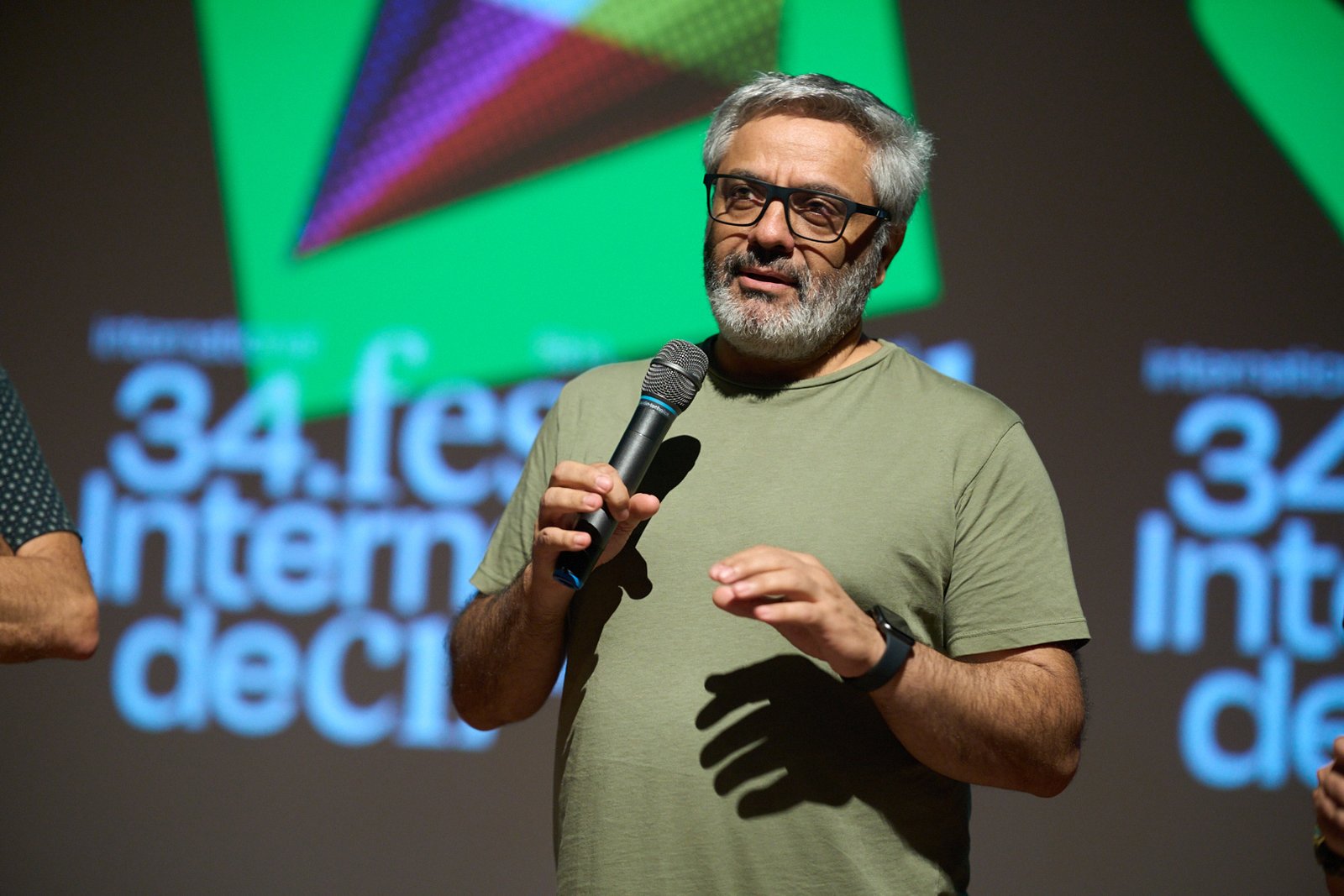

In Iran, heroes are behind the camera. During a public conversation at Curtas Vila do Conde, moderated by João Araújo, Mohammad Rasoulof spoke about his cinema, his life and his exile. He also made a stark confession: “I haven’t felt freedom yet.” The festival presented an extensive retrospective of his work, including his latest short film, Sense of Water (Jens-e Aab, 2026), made in exile and reflecting on the condition of displacement in which the director now lives.
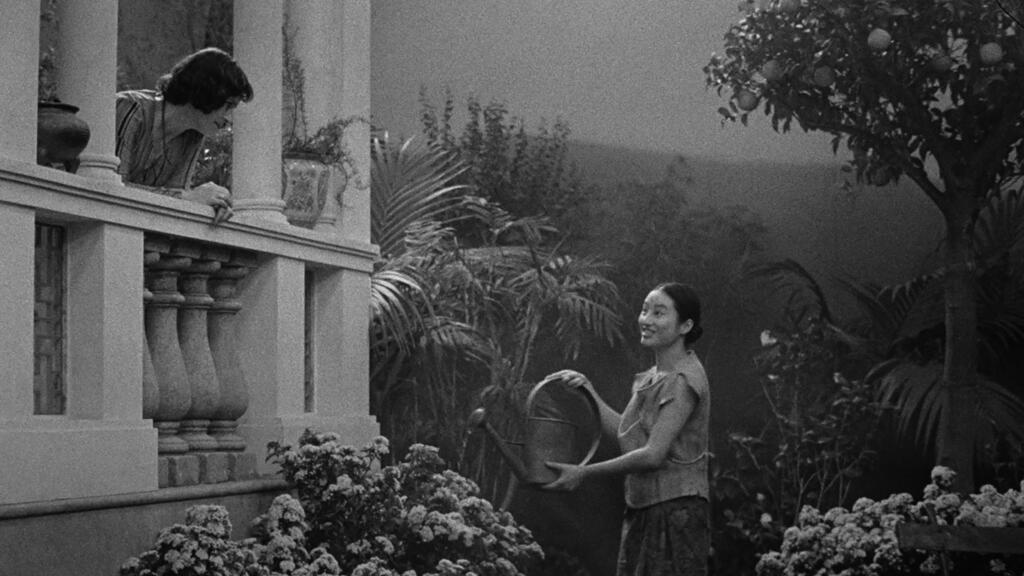
Mohammad Rasoulof has challenged the tyranny of the Iranian regime through powerful works such as Iron Island (2005), The White Meadows (2009), Goodbye (2011), Manuscripts Don’t Burn (2013), A Man of Integrity (2017), There Is No Evil (2020) and The Seed of the Sacred Fig (2024). He has paid a heavy price: he has been arrested twice and sentenced to prison on three separate occasions. His most recent sentence, handed down in 2024, included eight years in prison, flogging, a fine and the confiscation of his property.
In this masterclass, filled with deep emotion and sensitivity, but also marked by an extraordinary sense of humour, Rasoulof recounted three revealing episodes from his time in prison. We reproduce them here, in a version that seeks to remain as faithful as possible to his own words.
1. Changing the cinematic language
When I made The White Meadows, I believed that metaphorical language could protect me, that it might keep me from being arrested or subjected to greater pressure.
Around that same time, however, a protest movement began in Iran. In 2010, during those protests, I was arrested while shooting another film.
Solitary confinement gives you a great deal of time to think about yourself and about what you have done. There, I asked myself: I had always tried to work with metaphorical language precisely so that I would never reach this point. Yet now I was here. What was I going to do from then on?
That was the moment when I decided to change my cinematic language.
While I was in prison, I also began to wonder whether the metaphorical language I had been using was itself a form of censorship that I was imposing on myself. It was as though I had censored myself before anyone else could censor me.
From that moment on, I decided that I had to be very direct, very frank, and bring everything into my stories. I did not want to participate in censorship; I did not want to be part of the censorship apparatus.
I think that, in a society under the pressure of authoritarian rule, every action is political, even choosing not to be political.
Continuing to work within censorship merely in order to protect myself was therefore not a way of ceasing to be political. No: that, too, was a political choice.
I think the most important promise I made to myself was to remain faithful to who I am and to what I believe in as a filmmaker.
2. Watching There Is No Evil with the Guards
When I was in prison in 2022, there came a time when I had to be transferred to hospital for surgery.
Usually, when you are taken from prison to hospital, three guards surround you in the room. When you are lying in a hospital bed with three people constantly around you, you find yourself wishing you were back in prison. That is how difficult it is.
On my first day in hospital, one of the prison soldiers came over to me and quietly asked, ‘Are you a film director?’ I said yes. He then said, ‘I heard you made a film about the soldiers who work in prisons.’
I told him, ‘No, the film is not about prison soldiers, although prison soldiers do appear in it.’ He pointed to his pocket and said, ‘I have the film here, in my pocket. I downloaded the file from the internet. I think it would be great fun to watch it together here.’
There was a television in front of my bed. When night came, he spoke to the other two guards and they decided that all of us would watch the film together.
The guards changed every twenty-four hours. When the first team left and three new guards arrived, I realised that they had passed the USB drive on to their replacements. The new guards also asked, ‘Can we watch the film with you?’ Unfortunately, for seven nights I had to watch the same film with seven different groups of guards.
It sounds absurd, and we can laugh about it now, but it was another consequence of living under an authoritarian system. I was lying there, almost handcuffed to the hospital bed, forced to watch the film with them while they reacted: ‘Wow, what an interesting film. This is really good.’
What they wanted, in fact, was to explain to me that they were not the ones who had imprisoned me. They were merely guards and soldiers carrying out the duties assigned to them.
That is where the question begins: if you find yourself in such a position, what happens to your individual responsibility? This is precisely the question I have wanted to explore in my films.
3. An invitation to make a film in prison
Mr Panahi and I spent six months living together in a cell with eight other people. One day, we heard our names being called over the prison loudspeakers.
The two of us went to find out what they wanted. We were taken to a room that we knew was used by the person responsible for cultural affairs in the prison. Eight, nine, perhaps ten people were already there, waiting for us.
I remember that, while Mr Panahi was in prison, one of his films was screening in Venice and had just won a prize – I think it was No Bears. Everyone congratulated him on the award.
We sat down and asked what they wanted from us. They talked for a while: ‘We know your films. You are very good filmmakers, and we are very sorry that you are here.’
Mr Panahi and I knew that none of this was normal – although, of course, everything there was abnormal. Under the table, we kept nudging each other with our feet, silently asking: ‘What are they talking about? What are they planning?’
After a few minutes, they said: ‘We invited you here to propose that you make a film inside the prison.’ We were genuinely astonished. We said, ‘You arrested us to prevent us from making films, and now you are asking us to make one here?’
They replied, ‘There is no problem. We will provide whatever you need to make the film.’ We asked, ‘Where are we supposed to find actors? Where are we supposed to find a cinematographer?’ They said, ‘Whom do you want? We will bring you anyone you need.’
We became frightened. We thought they might arrest our colleagues and bring them into the prison to help us make the film. We said nothing. We simply looked at each other, completely bewildered, and eventually said that we needed some time to think before giving them an answer.
They asked how many days we needed. I no longer remember exactly what we said – perhaps a week. After that week, they kept sending us messages: ‘Have you thought about it? Have you made a decision?’
I think that people who collaborate with power in authoritarian systems always find a reason to justify what they are doing. Many of them enter the apparatus of power believing that they are doing something different from what power expects of them.
At that time, the Woman, Life, Freedom movement began in Iran. I remember that, when the movement had reached a very powerful stage and even from prison we could sense how effective the protests outside had become, one of the guards took me by the arm, pulled me aside, and asked: ‘If something happens, will you tell the others that we did not mistreat you?’
I think power can always bring with it that part of society which is unwilling to reflect on responsibility and make a decision about it. There are many people who do not want to accept responsibility for their thoughts and actions.
That is what allows a system as frightening as the Islamic Republic to continue for almost forty-eight years.