

About fifteen years ago, I wrote an article for JL entitled “Not All Romanians Are Quirky”, after being surprised by the variety of Romanian films presented at TIFF. I must have seen a significant proportion of the Romanian feature films produced that year.
Naturally, I found good, bad and average films (the majority), encompassing a range of genres and formats that extended far beyond the Romanian New Wave, rightly celebrated at international festivals through filmmakers such as Cristi Puiu, Cristian Mungiu, Corneliu Porumboiu and Radu Jude.
The truth is that this magnificent wave of New Romanian Cinema has continued to produce aftershocks and reverberations over the years, if we want to use seismic terminology. Unlike most national cinemas, the Romanian films that travel internationally seem to gravitate around a common language, as if there were a shared awareness of movement and identity: a genuine school. These films pursue a kind of Romanian magical realism, if not magical then at least caricatural, made with low budgets and a naturalistic aesthetic. They reveal the remarkable ability Romanians have to laugh at themselves.
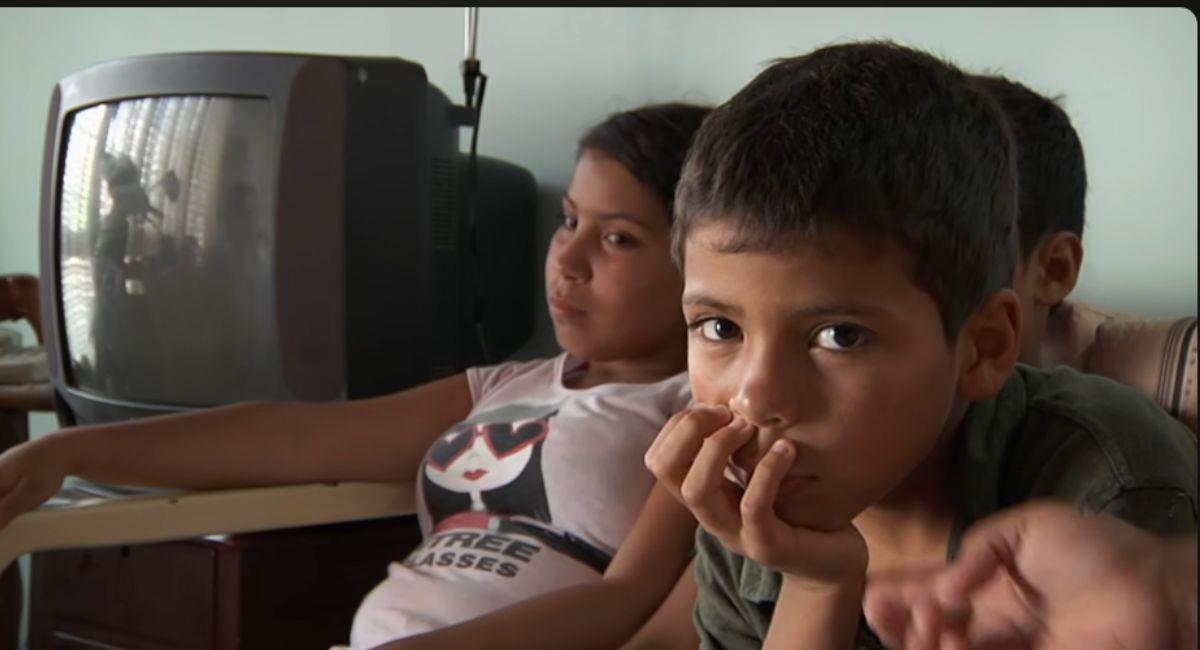
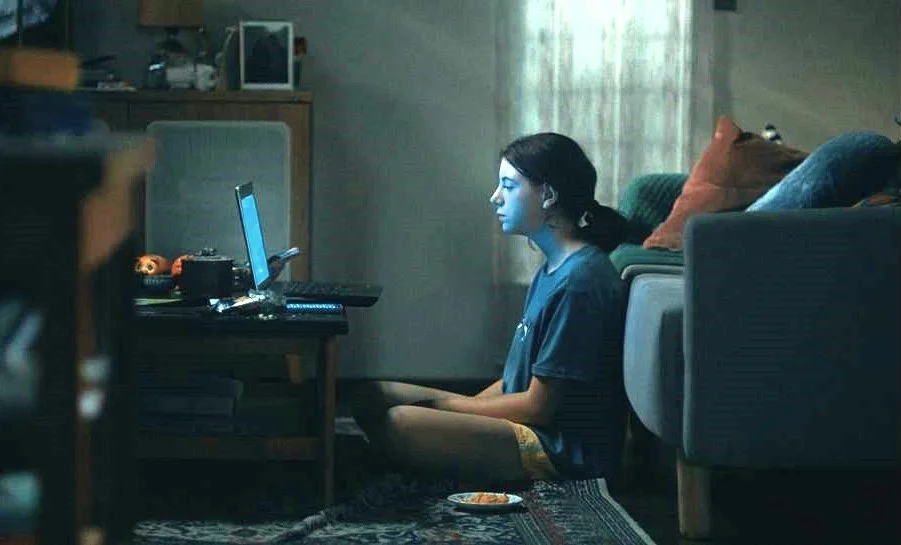
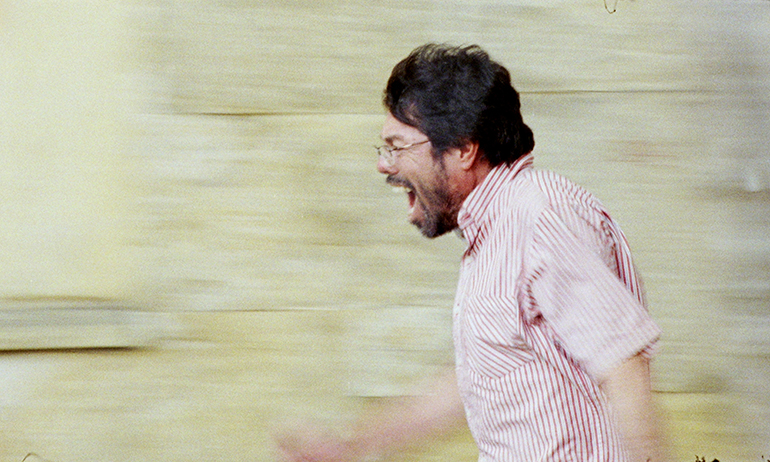
Florin Șerban’s You Don’t Belong Here (2026), winner of the Golden Leopard at the Locarno Film Festival, clearly belongs to this school. There has, of course, been a change of context. The humour surrounding the communist era and its consequences has already been exhausted. Yet, while reflecting social transformations, the cinematic perspective continues to inhabit a territory of its own. In other words, there is an awareness of social change and emerging conflicts, but the cinematic lens remains situated within a comparable aesthetic and narrative space, leaving channels of communication open with important works of Romanian cinema.
Up to a certain point, You Don’t Belong Here may resemble a kind of B-side to Cristi Puiu’s The Death of Mr. Lazarescu (2005). The national health service does function in this particular setting, but largely because of the extraordinary dedication of one professional: Marius Călimănescu (Adrian Văncică), a highly regarded surgeon who also runs a small provincial hospital. He saves lives almost in defiance of the system itself.
The national health service, however, is a subplot that quickly becomes secondary within the narrative economy of You Don’t Belong Here. Above all, the film addresses a generational conflict, shaped by the prejudiced and somewhat desperate way in which an older generation looks upon those who are about to enter the labour market.
As in Radu Jude’s Bad Luck Banging or Loony Porn (2021), the plot’s central event is revealed in the pre-credits sequence. In Jude’s film, it was an erotic or pornographic recording of a couple that spread uncontrollably across the Internet. Here, we witness a clumsy xenophobic raid that culminates in the murder of a Roma man. From the outset, we know what happened. Șerban places the climax of the action before the opening credits to make room for other questions, especially how and why it happened, and to show us how the characters deal with the event. This is a complete subversion of the logic of the police procedural. What matters here is the human and social fabric.
The humour within this drama comes mainly from the characters, their interactions, particularly their dialogue, and a form of realist nonsense that Romanian cinema explores extremely well, at times approaching the burlesque.
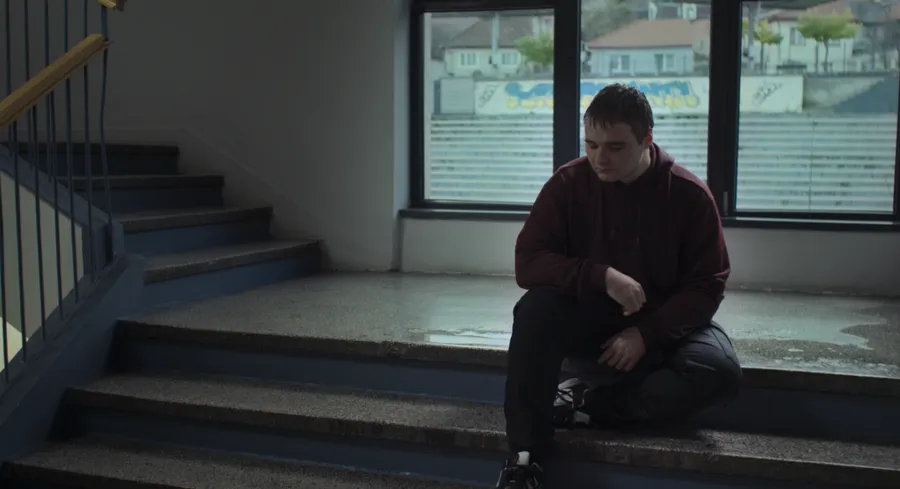
The film focuses on a generation that lived under communism and that, amid the hopes and disappointments of what followed, retained a broad and cohesive social conscience, but now sees a lost inheritance in its children. This is not only the extreme case of Ioan Călimănescu (Teodor Butănescu), a young man seemingly devoid of virtues, but an entire generation. The film repeatedly adopts a critical attitude towards the hospital interns, the young police officers and, more generally, those preparing to assume positions of social responsibility. It explores the idea of a lost generation, amorphous and disengaged, or guided by inverted values and principles.
The widowed doctor is exceptionally competent in his profession and possesses an ethical outlook compatible with the sociological diversity around him. Yet, in his own words, he lacks something that would make him a great man. It is precisely this absence that makes him a great character. Despite appearing to do everything correctly, Marius lacks the emotional and relational ability to reach other people, particularly his son.
This inability gives rise to several caricatural scenes because the few relationships Marius maintains are marked by a strained and effortful quality. His son, meanwhile, is an ethical and moral void embodied in a profound emotional deprivation. Silviu Obădău (Alex Conovaru), the police officer and Marius’s friend, represents a kind of inverted ideological stronghold. Perhaps the only possibility of escape that Florin Șerban offers us lies with Dana (Cristina Richter), the woman who loves Marius but is not loved in return.
In constructing the film’s drama, Florin Șerban drew inspiration from a quotation attributed to Hannah Arendt: “The most radical revolutionary will become a conservative the day after the revolution.” Here, this happens, and so does its opposite. It is an extremely pessimistic film that locates the end of the world not in an ecological or military apocalypse, but in the emotional and relational apocalypse of a lost generation. The ethical dilemma Marius confronts at the end leads him towards moral and psychological self-destruction. The light at the end of the tunnel becomes possible only through psychotic fabulation.
YOU DON’T BELONG HERE (NU E LOCUL TĂU AICI)
Romania, 2026, 154 min.
Written and directed by Florin Șerban
Cinematography by Liviu Mărghidan
Edited by Florin Șerban
Art direction by Bogdan Ionescu
Costume design by Cosmina Croitoru
Music by Marius Leftărache and Nikita Dembinski
Produced by Florin Șerban
Executive producer: Minodora Șerban
Production company: Fantascope Films
International sales: Reason8
Cast: Adrian Văncică, Teodor Butănescu, Cristina Richter, Alexandru Conovaru and Izdrailă Janir