
For those who are always searching for the alternative to the alternative, I have to say that I attended a festival so underground that it makes any other niche event look like Big Brother or a Hollywood blockbuster. And, if you really want to know, I highly recommend the experience.
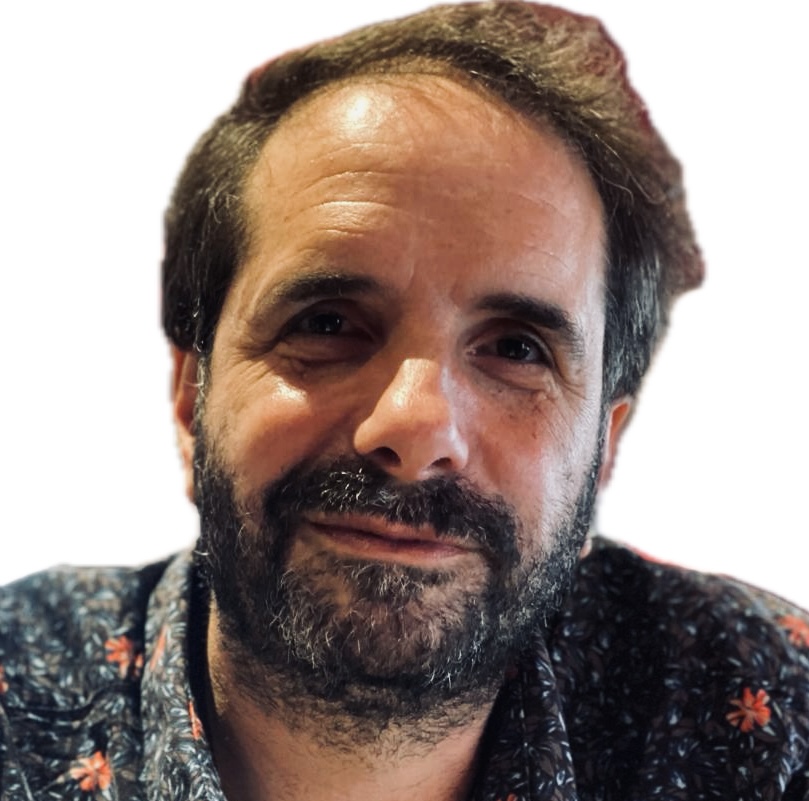
I met Dieter Wieczorek in Vila do Conde and then ran into him again in Locarno. A German cinephile who has been living in France for many years, he wrote my name down in a notebook so he could invite me to join the jury of his festival.
The Signs of the Night festival takes place, at least, in Paris and Lisbon, and has now reached its tenth Portuguese edition. As a journalist who has worked in the field for more than twenty years, I confess I felt embarrassed never to have heard of such an event in my own city. But then again, the cultural offerings have become so abundant that many things slip through my fingers… or simply remain out of sight.
For its tenth Lisbon edition, the festival took place at Desterro, a bar and cultural association to which I have occasionally paid membership fees but rarely visit. It’s an alternative space, with alternative programming and a cool, alternative crowd.
The festival didn’t take place during the venue’s usual opening hours. Desterro opened its doors early to welcome Dieter and anyone willing to join him. There weren’t many.
I conscientiously fulfilled my duties as a juror in the Transgressions section, which involved three screenings over a weekend, and I saw hardly anyone besides my fellow jury members. Communication problems? Almost certainly.
A literally underground festival, since it took place in Desterro’s basement. One of those places where nobody needs to be smoking for your clothes to end up reeking of tobacco. A few folding plastic chairs, a projector with a poorly adjusted image and a bluish colour cast, and the excitement of doing something clandestine, like Christians in the catacombs or communists under Portugal’s Estado Novo dictatorship. In reality, we were merely watching films, with no danger of the police coming to arrest us.
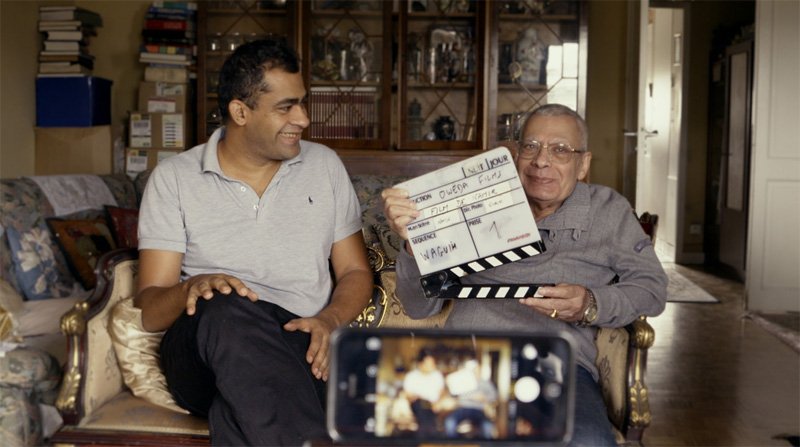
Dieter runs the festival without any kind of support, and without any particular knowledge of or talent for matters beyond cinema itself, such as promotion and publicity. He organises it because he feels an urgent need to show these films. And his choices reveal an aesthetic sensibility and a deep cinephilia. He doesn’t do it out of arrogance, or in pursuit of money or recognition, but simply out of generosity and love of cinema. A cinephilic and poetic gesture that genuinely moves me.
I watched experimental films, many of which could be exhibited as video installations or serve as material for a VJ set in a nightclub, and which may well have appeared in the experimental sections of larger festivals. Yet there is a clear curatorial vision running through the selection, a language of its own.
In an attempt to extend Dieter’s beautiful gesture, I’d like to highlight a few films that particularly impressed me.
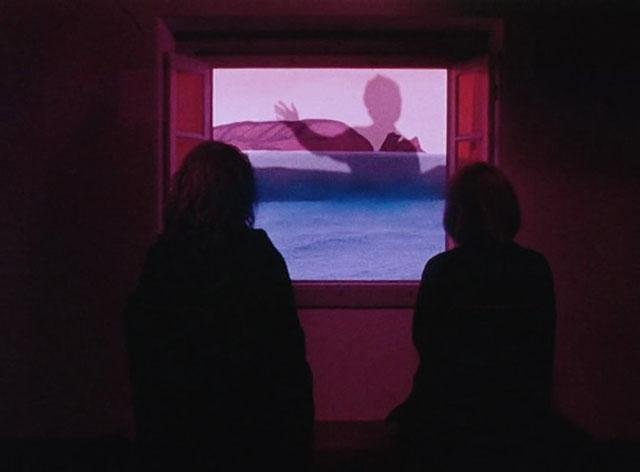
Perhaps the film most explicitly concerned with cinema itself is GodCocteauTheory, by Neil Harvey and Jon Hammerbeck. It revisits Jean Cocteau’s ideas about art, spirituality, death and free will, in which art emerges as a kind of demigod, interweaving them with the words of Jean-Luc Godard and Chantal Akerman. All this through a visual composition pushed to the limits of its own existence, as though cinema were tearing itself apart, announcing its own death. There is a correspondence between the distortion of what we hear and what we see, as though the roles of observer and observed were constantly shifting. It is the accomplished result of two free-spirited artists who understand and complement each other through the parallel languages of sound and image.
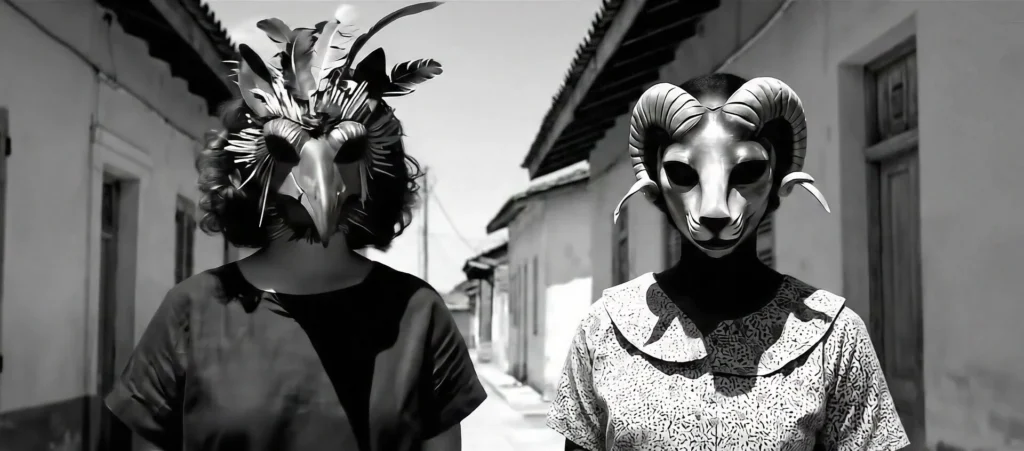
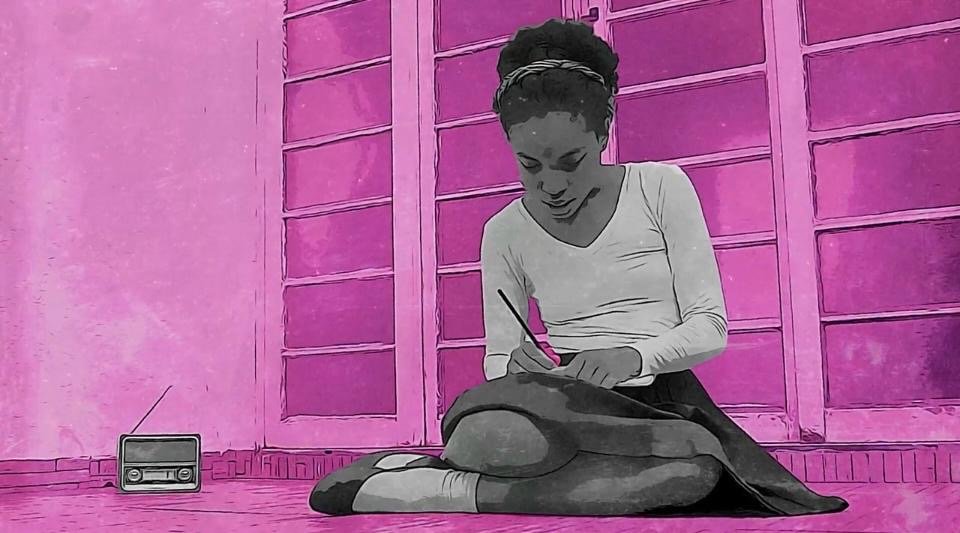
Still on the subject of cinema, Organising Principles of Experience, by Brazilian filmmaker Gabriela Tropia, reveals an alternative and genuinely artistic use of artificial intelligence. The entire film is a love letter to Maya Deren, the Ukrainian-American experimental filmmaker. Artificial intelligence performs a miracle by bringing her back to life. It gives her a voice and a body. It allows for a conversation, even an argument. More than that, it enables Deren herself to describe three film projects, often surrealist in nature, which then take shape before our eyes, almost like an instant recipe.
I say “almost” because, like any good illustrator, the images avoid the obvious illustration. These are elaborate prompts addressed to an algorithm with a strong will of its own (although, in truth, this is precisely where the filmmaker’s creative intervention becomes evident). At times, it recalls Wes Anderson, in its surrealising ability to create fantasies out of concrete stories. Technically, however, the resources of artificial intelligence are far more limited than the American filmmaker’s animations. Still, Organising Principles of Experience is a fine example of how, despite all its dangers, AI can be used in a thoroughly personal and authorial way.
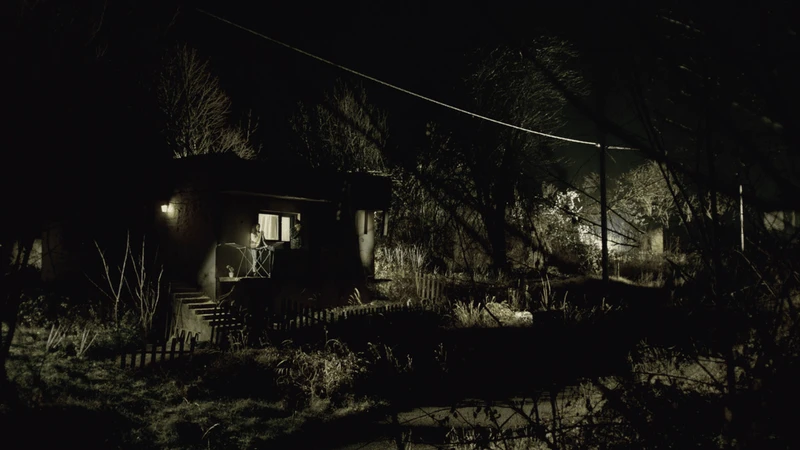
Amid all this, Opera, by Igor Zelić, is perhaps the most intimately cinephilic work. A film consisting of a single shot and a single fixed frame, it becomes a study of light and shadow, time and space, the very foundations of photography and the cinematic art. A film with its own sense of time, requiring a willingness to immerse oneself in it, like someone standing still before a Goya painting, allowing themselves to be mesmerised.
Opera, too, is a painting. Yet it moves, through changes in lighting produced by a single source. It is a dynamic painting, like Brian Eno’s digital paintings, and it also reminded me of Béla Tarr and certain moments in the work of Portuguese filmmaker André Gil Mata. The film could be framed and hung in a gallery, playing on a loop, suggesting a cyclical existence. It needs neither a beginning nor an end. All it asks is that we stay awhile.
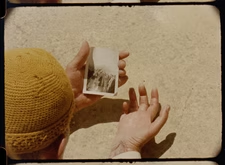
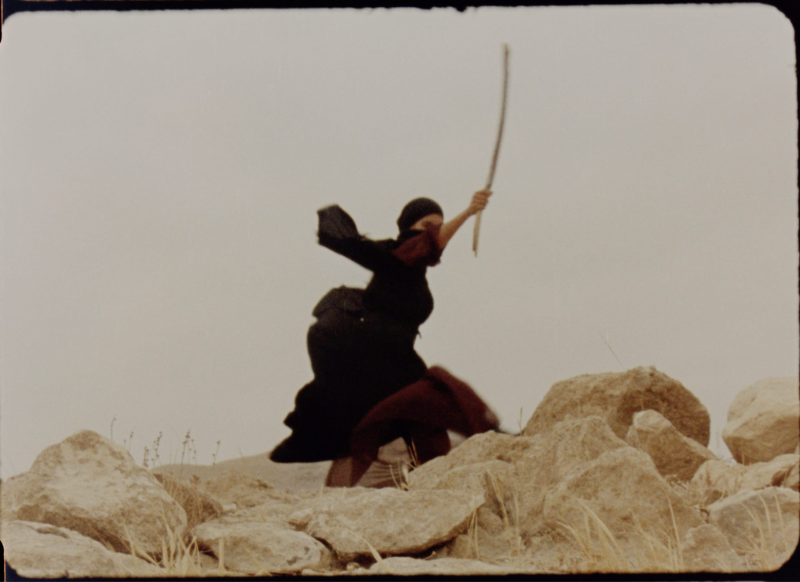
The most fascinating work comes from Palestine. A Night We Held Between, by Noor Abed, does not plunge into the horrors of war, intensified by the genocide perpetrated under Netanyahu. It is something far more performative and allegorical. It seems to unfold in a time outside time, belonging more to the past or the future than to the present.
The film takes as its starting point a musical recording entitled Song for the Fighters, found in the sound archive of the Popular Art Centre in Palestine. It begins with a procession of memories and mourning for a martyr, before transforming into an urgent call to resist, through symbolic elements rooted in an ancestral tradition.
The setting is a desert landscape, a kind of primordial space, a place of origins where communities come together to rebuild themselves. Shot on 16mm, with stunning photography and choreography, it is a deeply mystical and poetic film, devoted to preserving memory and projecting it into the future. A sublime affirmation of existence and endurance through art.
GodCocteauTheory (2026) Directed by Neil Harvey and Jon Hammerbeck. USA. 8 min 20 sec. Experimental short film.
Organising Principles of Experience (2025) Directed by Gabriela Tropia. Brazil / UK. 13 min. Experimental short film.
Opera (2026) Directed by Igor Zelić. Croatia. 19 min. Experimental short film.
A Night We Held Between (2024) Directed by Noor Abed. Palestine. 30 min. Experimental short film, shot on 16mm.