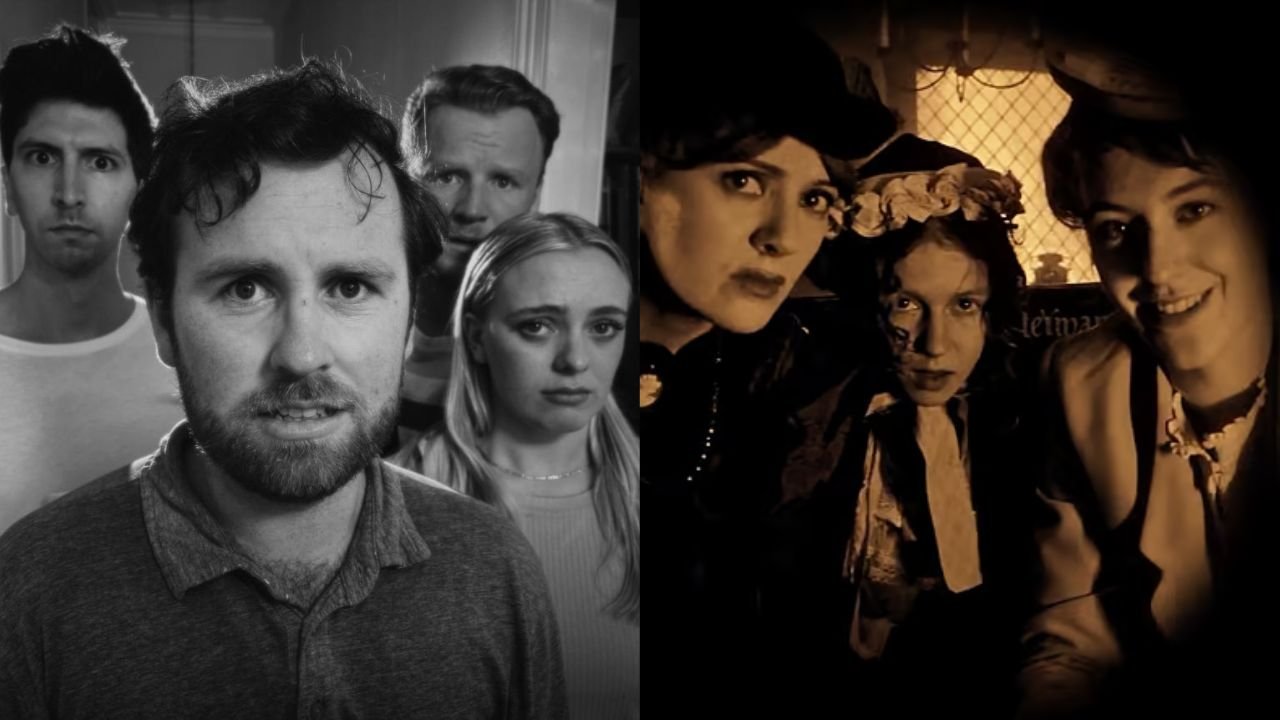

Two films from distant parts of the world pay tribute to cinema’s own history, reviving languages or formats from the past and embracing the playful nature of the gesture. Both are debut works, which makes the choice all the more significant: there is something in it of the traditional learning process of the art student, who begins by imitating the masters in search of a language of their own. This is despite the fact that both films have already moved beyond the idea of pure imitation.
We are talking about The Ungrateful Tenant, by New Zealand filmmaker Conor Bowden, a pastiche of German Expressionism that premiered at the New Zealand International Film Festival and has not, so far, had a significant international run; and Snapshot, by Joseph Archer, a fantasy woven around pre-cinema that premiered at the Edinburgh International Film Festival and has apparently yet to venture beyond the United Kingdom. The films also share a horror setting that veers, more or less deliberately, towards comedy, as well as independent means of production.
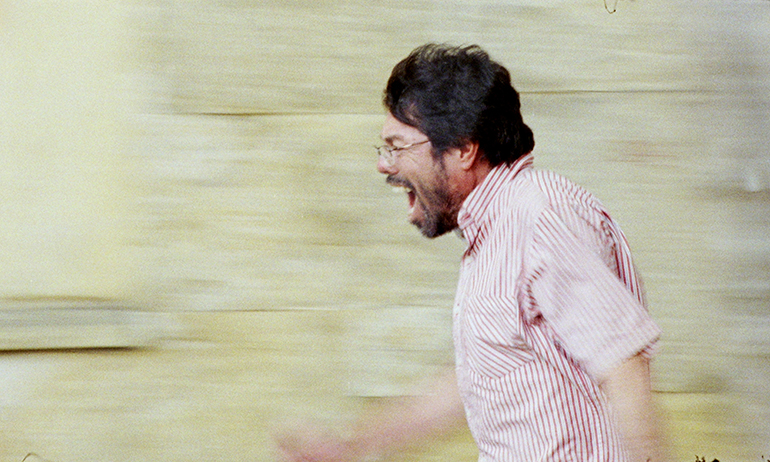
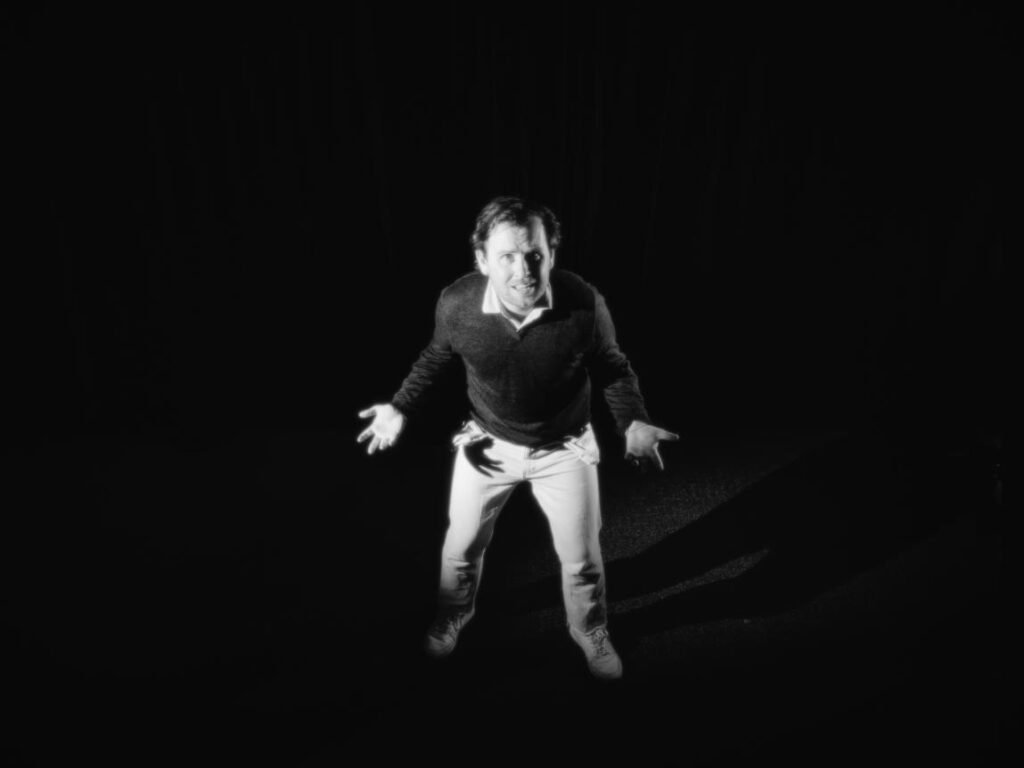
In The Ungrateful Tenant, the German Expressionist school of the 1920s is used as a stylistic grammar. Cinema is full of missing links, and Conor Bowden attempts to recover this particular one, drawing it into his own universe and adding traces of a more political, Chaplinesque form of slapstick. The film has no voices, but is accompanied by an extraordinary score composed by Joshua Worthington-Church, which works as a single, jazz-inflected composition, full of variations and designed to convey the intended emotions at every turn. In the context of a silent film, with written onomatopoeia bursting out of the images as it does in comic books, one has the impression that the score was added a posteriori for a live-scored screening at a film festival.
The Ungrateful Tenant has a political subject: it addresses Auckland’s housing crisis, with its highly specific and particularly unusual characteristics, and presents the millennial generation as the primary victim of this systemic failure.
Humour dominates the action, and the genre justifies the coincidences of space and time. The film tackles a serious social problem with courage and wit, with the director himself taking on the leading role as both antihero and clown. Amid all this, it also tells a love story.
Even when it overexplains its twists and turns, the film ultimately succeeds. It succeeds in the sense that its chosen language serves and emphasises the story Bowden wants to tell. Nor is this an innocuous or empty story: it concerns a real problem afflicting his generation, in New Zealand as in many other parts of the world. The film becomes an almost punk and revolutionary object when it suggests, in some way, a struggle against landlords — a class struggle, almost hand-to-hand — while setting aside the role of a state that ought to be more effective in protecting the most vulnerable. If it does not exactly call for a revolution, it calls for revolt in its most elementary sense: not against the state, but against those who use their power to make others succumb.
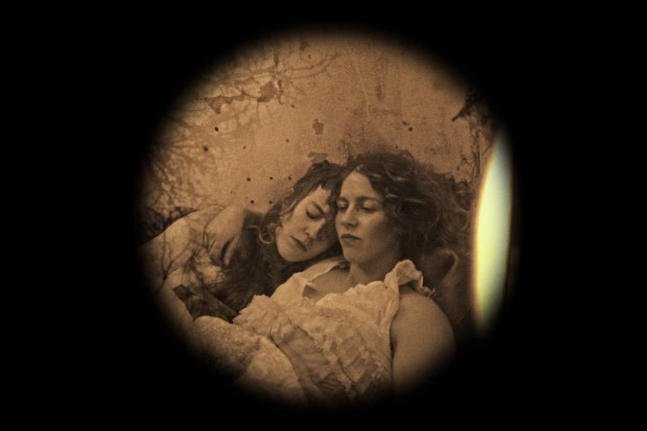
Snapshot takes a different aesthetic path. It is a mockumentary centred on Jack the Ripper. It imagines the invention, during the age of pre-cinema, of a modified pinhole camera fitted with wax cylinders and capable of recording moving images with synchronised sound, at a quality comparable or superior to that of 1930s cinema. And all this in the nineteenth century. The entire film unfolds within a circular frame, as though we were watching it through the peephole of a door.
If, in The Ungrateful Tenant, a style serves and accentuates the narrative, heightening its emotions as Expressionism once did, in Snapshot the format takes over, relegating everything else to the background. It does so partly because of its bizarre, albeit deliberate, anachronism: this is not simply a matter of imagining that someone leapt from the magic lantern to The Jazz Singer without passing through The Arrival of a Train at La Ciotat Station. It is a matter of imagining that the leap went straight to digital, with perfectly synchronised sound and image and an entirely naturalised attitude towards the camera on the part of its fake non-actors — even when they pretend to be surprised by the device. Snapshot tries, unsuccessfully, to convince us that someone in the nineteenth century, during the age of pre-cinema, invented a portable camera with the same technical capabilities as a digital camera, the only differences being its circular frame and sepia-toned images.
The camera itself becomes the film’s protagonist. Not merely the camera as a visible, communicative and almost omnipresent object, but the apparatus itself. The film is dominated by its circular window. The screen overwhelms everything else. The exercise becomes playful above all, like those creative-writing challenges in which students are asked to avoid using the letter A.
This makes Snapshot somewhat innocuous, despite its apparent originality. The problem lies not in the narrative game built around the myth of Jack the Ripper, superfluous though it may be, but in Archer’s failure to extend the playful concept to the film’s cinematic language in a deeper way. Since we are playing with the classics, Snapshot should have attempted to recreate or reinvent the language of pre-cinema, however fancifully.
Nevertheless, the audacity of both films is refreshing. They move against the current, looking to the past for lessons for the present and the future, and doing so quite unapologetically. From that perspective, Archer, by presenting an entire film within a circle, displays an even greater degree of courage.
THE UNGRATEFUL TENANT
New Zealand, 2026, 78 min.
Director and screenwriter: Conor Bowden
Producers: Conor Bowden, Annabel Kean and Callum Devlin
Editors: Conor Bowden and Kerri Roggio
Production designer: Annabel Kean
Composer: Joshua Worthington-Church
Cast: Conor Bowden, Tim Earl, Conan Hayes, Carmel McGlone, Justin Rogers and Rhiannon McCall
SNAPSHOT
United Kingdom, 2026, 86 min.
Director, cinematographer and editor: Joseph Archer
Screenplay: Cathy Wippell
Producers: Joseph Archer, Cathy Wippell, Chippy Babu, Mario Stefan and Serge Cedrick
Cast: Tom Stourton, Cathy Wippell, Hazel Ann Rogers, Lydia Helen, Nadia Lamin and Rosie Bella-Johnson