
Echoes of the wars in the Middle East and Ukraine run through three auteur films presented at Doclisboa, each shaped by a deeply personal perspective. Ghassan Salhab’s Noli me tangere had its world premiere at the festival and depicts a besieged Beirut. Rayna Teneva’s Geography Is Destiny follows the director’s return to her hometown to uncover a world of roses and weapons. And in Wild Asparagus, Avi Mograbi revisits footage shot for Once I Entered a Garden (2012), accompanying his Arabic teacher to the ruins of the village in Galilee where he was born.
A Soundtrack for Beirut
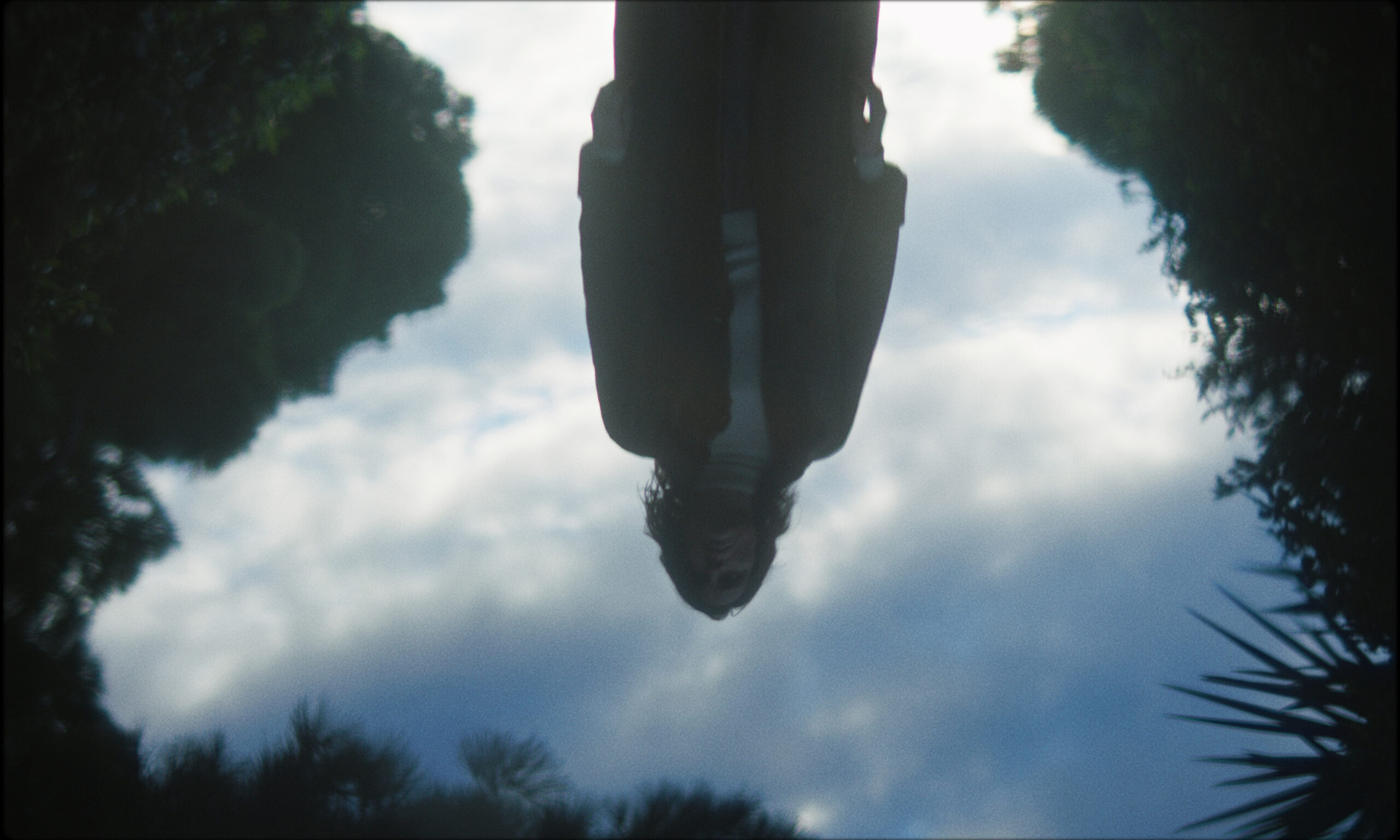
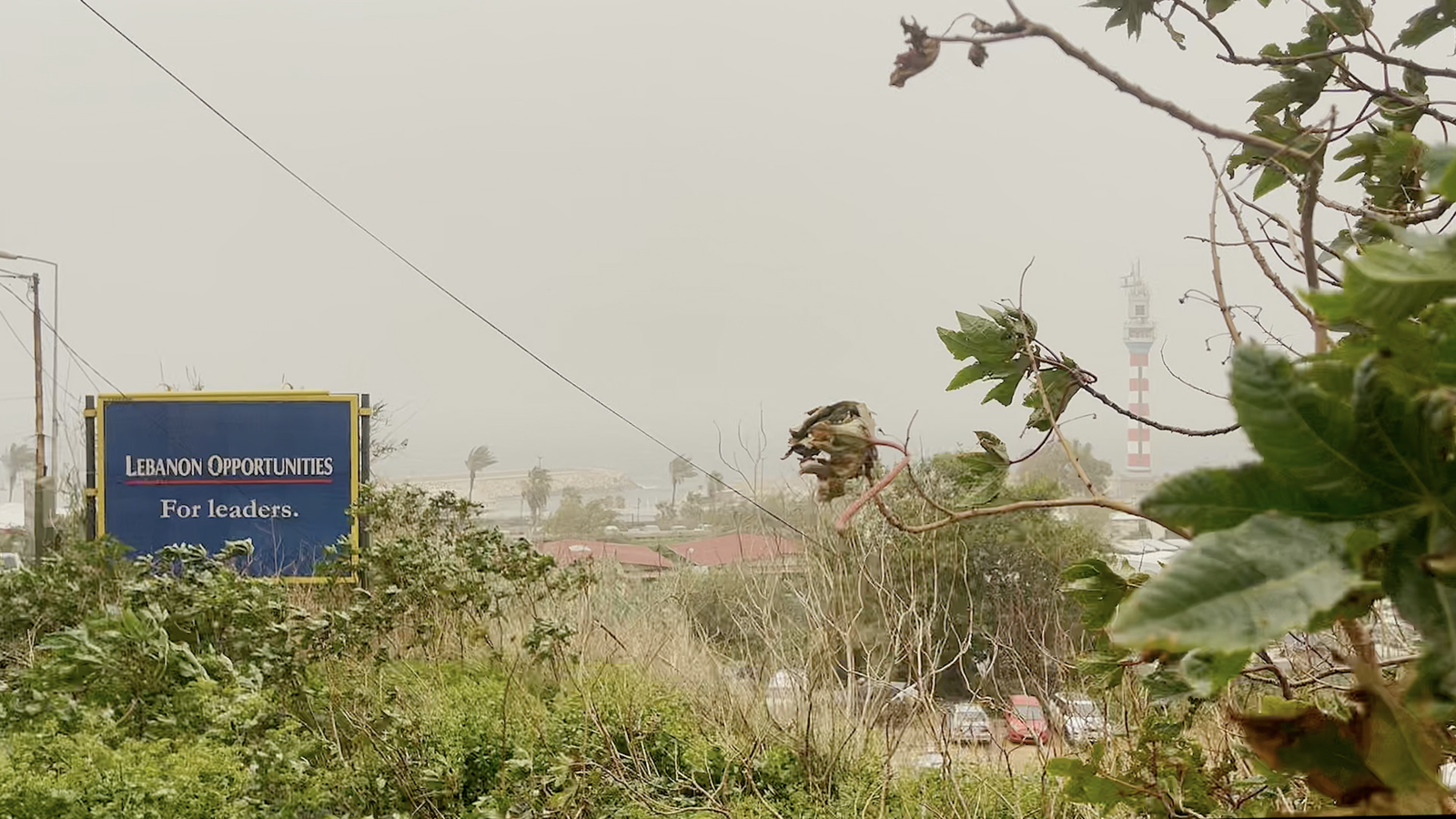
Noli me tangere is a film of a strange essence, as rudimentary as it is effective. It is a war film without a single visible explosion or fragment of shrapnel. War is primarily something heard, amid the terrifying uncertainty of never knowing where the next bomb will fall. The fragmentation of a world, the frustration at injustice, find expression through a quiet gesture of resistance rather than a cry: switching on a mobile phone camera, revealing the solitude of an empty space and the possibility of another presence.
A regular presence at Doclisboa, Ghassan Salhab was preparing to shoot a film when war broke out. He made, so to speak, the film he could. A film about the impossibility of cinema and, at the same time, its absolute necessity, its reinvention of its own existence.
The film takes the form of an audiovisual essay. Much of it consists of murky images, enigmatic framing and long, static shots that convey the anguish of solitude and waiting. Fear and uncertainty, too. It does not venture outside with the gaze of a war reporter. It offers the opposite: a mirror of an inner world, in which sound asserts itself over image, creating a kind of emotional confinement. The intrusive, overwhelming noise outside gradually gives way to the music the filmmaker himself listens to. Elsewhere, as we travel by car through the wreckage, we encounter a society seething with restrained anger, seeking to regroup. The filmmaker simply passes through. That exterior world serves no investigative purpose; it merely gives form to his inner world and an abstract sense of collective experience.
Art, in this case music, is the great vehicle for a transcendence sought and yearned for, almost as an instinct for survival. This finds sublime expression in two moments: first, in a song sung by a female voice; later, in an entire choir. In contrast to the rest of the film, the musical scenes are shot in high resolution, as though evoking a utopia.
Noli me tangere is a striking, experimental work that leaves us unsettled and awestruck, without needing to repeat slogans of revolt.
Guns’n’Roses
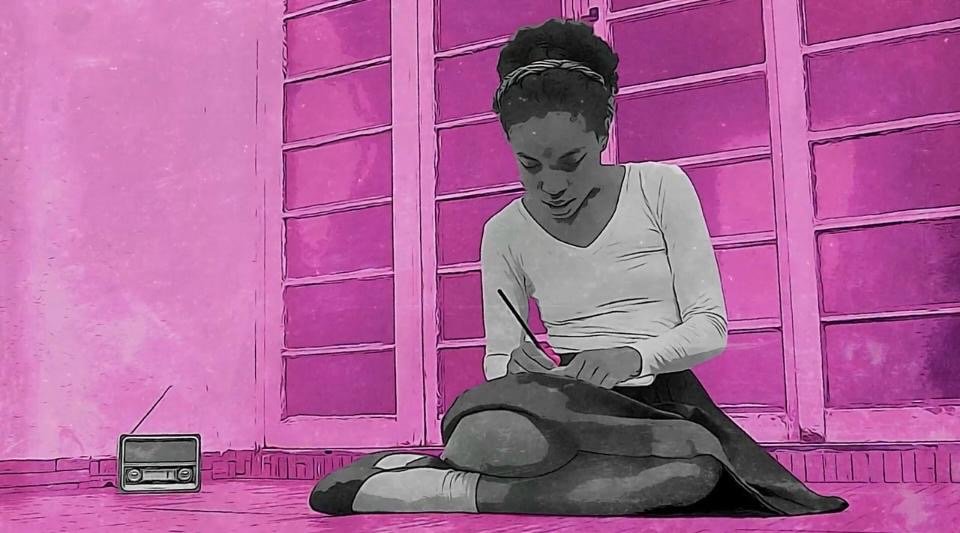
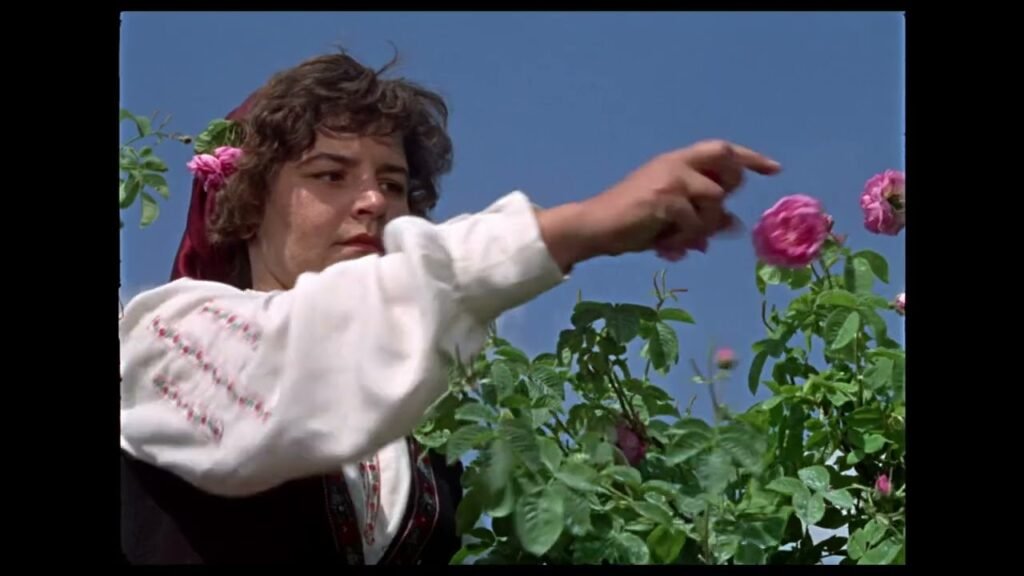
From Bulgaria comes Rayna Teneva’s Geography Is Destiny, a documentary in a more conventional mould that nonetheless reveals a reality full of contrasts. We follow the filmmaker herself as she returns to her hometown in the Rose Valley, in the Kazanlak region, seeking to uncover a bizarre reality.
The film includes an American promotional video from the 1980s. Bulgaria is one of the world’s major rose producers. Rather than ornamental flowers, its roses are primarily a raw material for the cosmetics industry: perfumes, soaps, creams…
Geography Is Destiny unfolds in several layers. The first is personal: the filmmaker’s own story, as she becomes involved and investigates, returning to her roots in a spirit of anything but acceptance.
Then comes the question of labour. The film explores the exploitation of workers in the rose fields. It is gruelling, poorly paid work, carried out predominantly by Roma people. There is a symbolic contrast here: the rose, a flower associated with love and beauty, is seen from the thorny side, through the exploitative conditions under which it is picked. Teneva listens to and records the workers’ grievances, seeking an ethical way to film them.
This blanket of roses conceals another layer. Camouflaged within the valley stands the Arsenal arms factory, whose history predates the Iron Curtain and which continues to manufacture weapons, now also for the war in Ukraine.
The filmmaker, too, goes undercover, posing as a jobseeker to learn more about how the factory operates. It is almost the work of a plain-clothes detective.
The film moves between these two worlds: the workers who pick roses to survive and the filmmaker exploring the arms industry through this factory. Throughout, it displays a strong cinematic sensibility, with a free-roaming, unconventional camera that hovers in search of angles and subjects, never losing sight of the humanity of those it encounters.
The film also features in the Bulgarian pavilion at the Venice Art Biennale.
The Taste of Asparagus
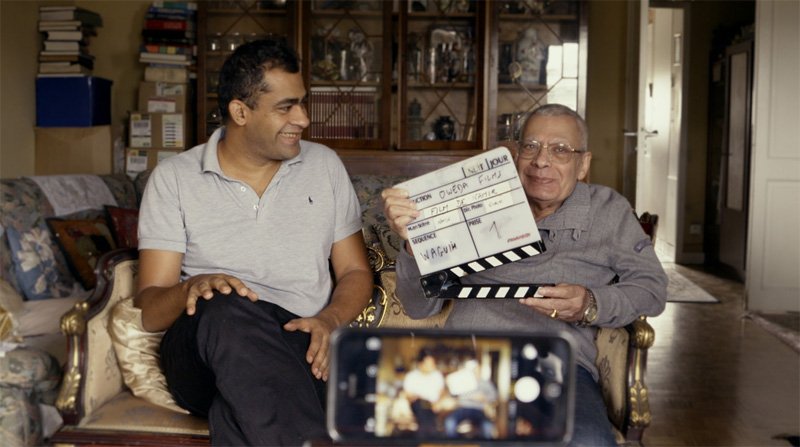
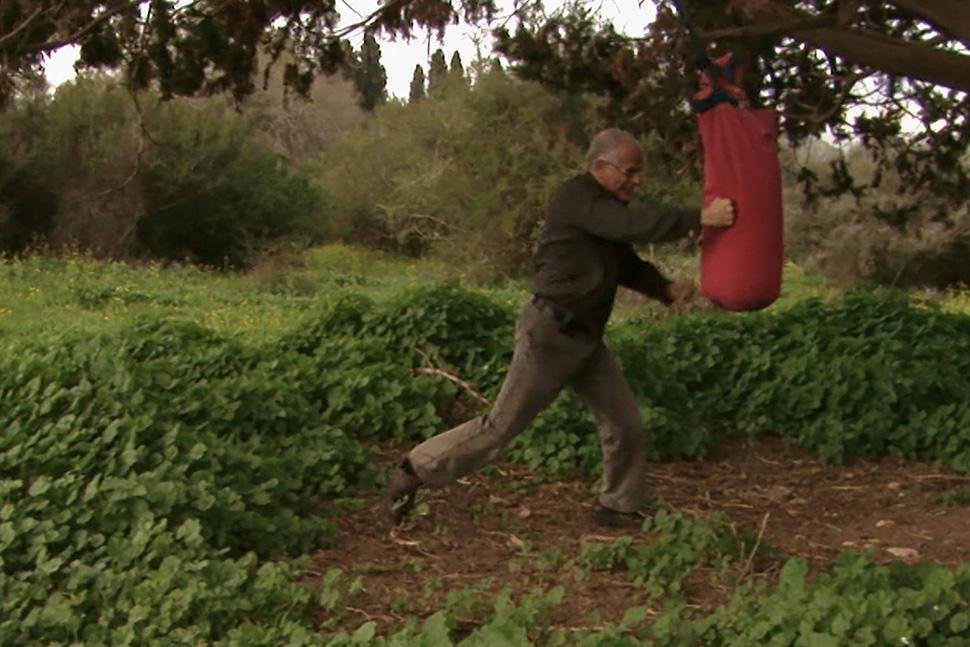
Avi Mograbi’s short film is sublime. The pro-Palestinian Israeli filmmaker revisits footage shot for Once I Entered a Garden (2012) to create a coherent, self-contained work of intoxicating beauty. In Wild Asparagus, Mograbi accompanies his Arabic teacher, Ali Al Azhari, as he searches for traces of Saffuriya, his birthplace, from which he was expelled during the Nakba of 1948. It is a place of ruins. Where houses once stood, plants now clothe the destruction.
Most beautiful of all is the way Ali delights in the smells and flavours of all this vegetation, with an almost childlike enthusiasm, as though becoming a boy again. Accompanied by the camera operator and boom operator, he wanders through the site, eagerly and voraciously tasting the herbs and shoots, on a happy, nostalgic journey back to childhood. At one point, he says: “I want to live in Saffuriya again.” The others laugh. Ali continues on his way, in a constant state of discovery and wonder: aromatic herbs here, wild asparagus there. He pulls them from the ground and eats. He eats and offers some to his companions, who enter quite naturally into the film they are making.
Everything there has vanished; only smells and flavours remain. Yet they are enough to rekindle memory and bring it into the present, with a sense of belonging. All of this takes on a symbolic dimension in the face of the massacre of the Palestinian people. As long as wild asparagus sprouts from that soil, memory will not be erased.
Noli me tangere — Ghassan Salhab · Líbano · 2026 · 72 min.
Geography Is Destiny (Geografiyata e Sadba) — Rayna Teneva · Alemanha, Bulgária, Áustria · 2026 · 69 min.
Wild Asparagus (Halayon) — Avi Mograbi · Portugal, França · 2026 · 25 min.