


Immediately after Women on the Verge of a Nervous Breakdown, Pedro Almodóvar released Tie Me Up! Tie Me Down! in 1990, a controversial and visceral film whose tagline was “A love story… with strings attached”. It tells the story of a psychiatric patient who kidnaps and ties up a pornographic film actress to convince her to love him and marry him. The biggest moral problem is that the strategy works. The synopsis conceals a toxic and dangerous philosophy: a celebration of Stockholm syndrome, of imprisoning another person as the ultimate gesture of love. It says: if you hold the person you love captive, they will eventually grow to love you.
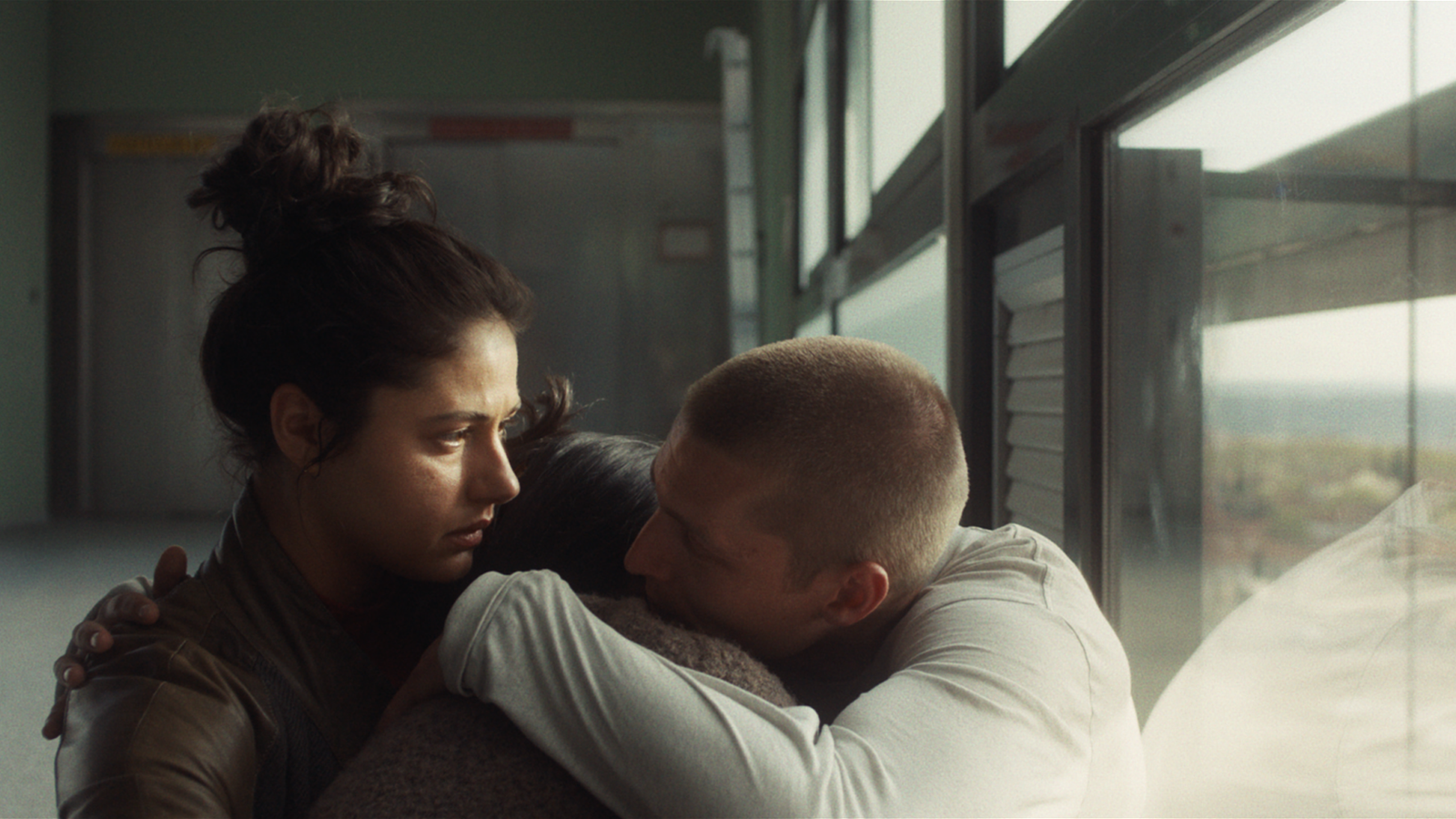
In this sense, Body of Glass, the debut feature by German director Naëmi Ada, begins almost as a resounding Untie Me!. Tian, a German dancer living away from home in Marseille, is bound by her partner, Felix, the choreographer and director of the company. These are not physical ropes, like Almodóvar’s, but psychological restraints, tightened until her wrists hurt. Felix has a compulsive need for control, exploiting Tian’s fragile personality, compounded by her professional dependence on him and her situation as an immigrant without an effective support network in the city. Tian complains above all about a lack of space, an emotional claustrophobia. This lack of space is illustrated by the intrusive moment when he pushes the door ajar while she is sitting on the toilet.
Their arguments are violent, escalating to physical assault, but always accompanied by psychological intimidation that keeps the restraints taut, leaving no slack for a real escape.
Then Tian seizes an opportunity and ties him up. Literally: she binds him to the bed and gags him. Unlike Almodóvar’s character, who ties up the woman he loves to bind her to himself, Tian ties Felix up to free herself, to gain space. This potentially toxic gesture is a violent response to the other person’s subtler toxicity.
This difference becomes decisive not only for the narrative but also for the film’s setting. While Almodóvar makes a film of interiors to explore the relationship between captor and captive, Body of Glass becomes a film of exteriors, making Marseille its setting of choice and finding another story for Tian to inhabit. And this story is narratively as compelling as that of the bound man she leaves at home.
Again, through a chance encounter, she glimpses the possibility of living someone else’s life, posing as the new girlfriend of a young man who died in an accident. These chance occurrences do not have the texture of the improbable yet acceptable coincidences of Almodóvar’s comedies: they arise plausibly within their own context. Tian finds no room to breathe within her own life, which unfolds in a closed circuit connected to the world of contemporary dance and far from her roots. So she invents a place for herself in the lives of others.
The game is risky and morally reprehensible. A game of deception, particularly towards the dead man’s sister and brother-in-law. She is accepted because themselves make room for the character she plays. In some way, they need her to compensate for the frustration of losing a loved one. Here, once again, we enter dangerous territory: Tian’s reckless gesture may have both good intentions and positive consequences for others, but it remains a moral obscenity.
Tian’s life takes shape between two major lies: concealing her partner, who remains tied to the bed, and playing the widow of a man she never knew. This world of illusion contradicts the traits of a very well-drawn character who is extraordinarily candid, sometimes almost disconcertingly so. It is as though she were unaware of her enormous lies, or sought to normalise them through a logical sequence of thoughts: he wouldn’t give me space, so I tied him up.
It feels reductive to view Body of Glass as merely a feminist cry, although domestic violence cuts across society and disproportionately affects women. The film is instead a psychological and physical plunge into the abyss of the human soul. It functions as a counterpoint to Almodóvar’s dangerous proposition, as though Felix were, from the outset, a sophisticated version of the male character created by the Spanish director, and Tian embodied the justified response.
Two important elements add to this. First, the presence of the city. Marseille is one of the film’s protagonists, filmed with a distinctive eye, far removed from familiar clichés. Cinematographer Selma von Polheim Gravesen did a great job. Second, dance, a world the director knows well, having studied contemporary dance at the Northern School of Contemporary Dance in Leeds, appears in a particularly subtle way. Dance is more context than text. It is the world through which the characters move, with all its everyday difficulties and even its potential for toxicity, rather than a realm of bodily expression that metaphorically interprets their inner turmoil. In this sense, the film almost works as an antidote to cliché, dismantling that familiar notion. Even so, it presents dance as a space in which the fragility of souls and bodies is particularly exposed.
Body of Glass (Germany/France, 2026, 90 min)
Director / Screenplay: Naëmi Ada · Cinematography: Selma von Polheim Gravesen · Editing: Elena Weihe · Music: Ralph Heidel · Sound: Azadeh Zandieh, Lorenz Fischer · Cast: Soma Pysall, Manuel Severi, Élise Tilloloy, Younès Boucif · Production: Soilfilms, Soldats Features · Languages: French, German, English · International Sales: Alpha Violet.