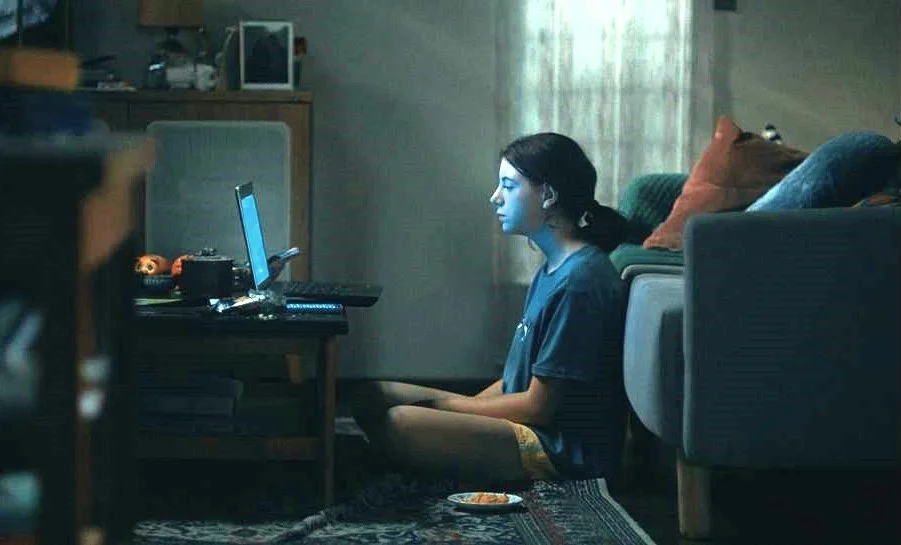


When Damien Hauser was asked, during the Festival de Cine Africano Tarifa-Tangier, what the budget was for his film, Memory of Princess Mumbi, he laughed. Then he concluded: it was almost as if there had been no budget at all. The actress Shandra Apondi, who was also present at the Q&A with the audience, confirmed the precarious conditions: the film was made with very little money — we even ended up all sleeping in the same hotel room; there was no one there to assist me.
This budgetary void gives the film a rebellious, almost punk style that it would hardly have achieved with another kind of production. And, as happens with many independent projects, the money to pay the technical and artistic crew only arrived after shooting had been completed, through awards and distribution deals. This is not an argument in favour of low-budget films as a matter of principle, but Damien is one of those cases in which a filmmaker has managed to turn his condition to artistic advantage. To such an extent that the film, made in an absolutely independent way, has attracted worldwide curiosity and secured a presence at relevant festivals.
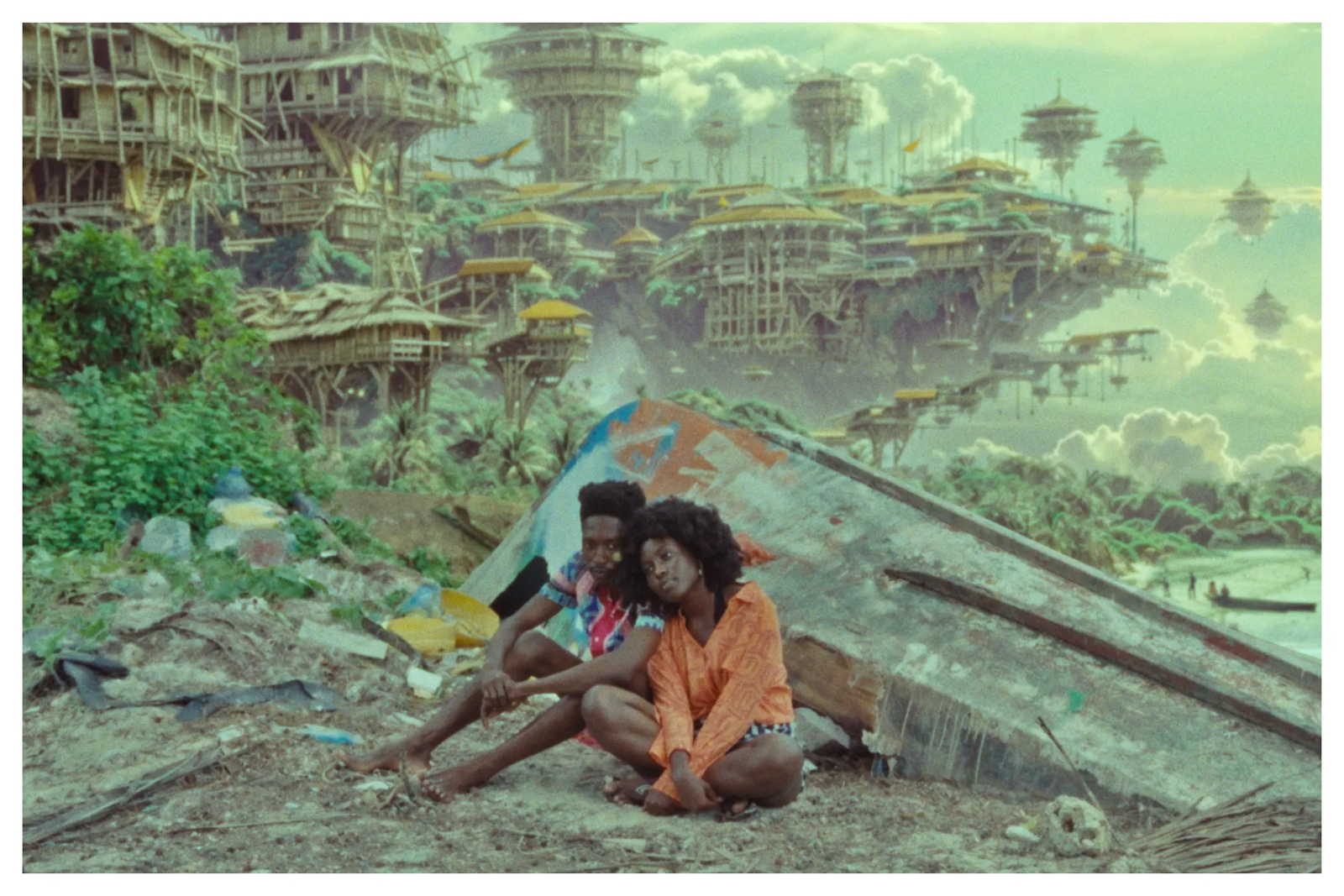
Memory of Princess Mumbi is a mockumentary set in a future of its own, one that contains multiple layers. There is a constant gaze at the present through the future, taking as its starting point a fictional war, or a “Great War”, which reorganised that imaginary African world. Between utopia and dystopia, without clearly choosing either path. It has the freshness of a community film, a film made among friends — in the best sense — dismantling from the outset its own structure and fragilities, converting them into aesthetic and artistic virtues. It is always a film about the film that is being made.
That is why, when one asks: for whom was the film made? For African audiences or for European festival audiences? In this case, the answer is simple and is explicitly addressed within the film’s own narrative. The film was made for that specific community, so that that group of people could become present. And, symptomatically, this will be Damien’s first film with a release scheduled in Kenya, reconciling local representativeness with consecration within the elite of European festivals.
In Memory of Princess Mumbi, Damien draws on the African capacity for fabulation and transforms it, while at the same time affirming his unequivocal passion for cinema itself, which leads him to experiment with formats.
It is precisely within this passion for cinema and its formats, somewhere between kitsch and vintage, that the use of AI emerges. Without AI, the film simply would not have been possible, since Damien uses the technology to recreate futuristic scenes, almost in a sci-fi mode. Its use is ethical in the sense that all the scenes that resort to this device are immediately identified. But they would hardly need to be. AI is the new kitsch. Its aesthetic attire is immediately recognisable, just like the 3D version of the Creature from the Black Lagoon. And part of the question lies precisely there: like the Portuguese filmmaker Edgar Pêra, Damien manages to find an authorial language within the aesthetic limitations of AI.
Some may argue that Damien sold his soul to the devil. And that the devil always comes back to collect his debts. Will AI kill or democratise auteur cinema? In this case, it is more like sleeping with the enemy. For now, AI has saved him, making the film possible and granting him freedom. But that is due, above all, to the director’s authorial intelligence.