
Much has already been written about NAZA, by Israeli filmmakers Yuval Abraham and Rachel Szor, a film that has become a phenomenon through its exposure of the Israeli military’s actions in Gaza, where more than 70,000 Palestinian deaths have been recorded, including at least 20,000 children. What matters most to the filmmakers is presumably that the film should be seen and discussed beyond activist circles, particularly within Israeli society. NAZA is an urgent film with a powerful cause, but it also champions the cause of cinema. We consider it from ten perspectives.
1
NAZA is a film of denunciation. It draws on an extensive journalistic investigation involving more than a hundred sources with knowledge of the military systems used in Gaza. In the film, we hear from 24 Israeli military personnel and intelligence officers, many from elite units. This is not an audiovisual work designed to manipulate information in support of an idea, like a political campaign. Rather, it is a series of interviews with people involved in the operations who agreed to speak about their actions. Their own voices incriminate them. They expose their methods and the mass killing of civilians through accounts that give substance to the Cambridge Dictionary definition of genocide: “the crime of intentionally destroying part or all of a national, ethnic, racial, or religious group […]”.
2
The genocide against the Palestinian people is evident without this film having to demonstrate it. Yet NAZA exposes the process with particular restraint and force. The testimonies reveal an awareness of the acts committed and describe how attacks that kill civilians are deliberately planned as part of a larger strategy of destruction. They detail the sophistication of Israeli methods and could even contribute to a future trial. Only those unwilling to see can fail to see. The film’s objective seems clear: to mobilise public opinion to end the bombing of civilians and halt the genocide.
3
One of NAZA’s strengths is its chosen perspective. The filmmakers had already co-directed No Other Land, which centred on the victims’ experiences. This time, they remain in Tel Aviv and confront the perpetrators with their actions. Cinematically, this is a rare and illuminating perspective. Except for the final scene, we do not see the consequences of the actions described: we remain alongside those responsible for them. We are not confronted with explicit images of violence. But the violence evoked by words can be equally shocking and devastating.
4
In his conversations with Israeli military personnel, Yuval Abraham tries to understand how it is possible to bomb places where they know civilians are present, including children and even babies. He asks himself, and he asks them. He makes an effort to understand the other person: how can these people, with their human faces, sitting beside him, be capable of such atrocities? Yet no explanation can justify them. It is a bewilderment akin to that provoked by Nazi Germany: how was the perpetration of genocidal acts normalised? Signs of a similar normalisation emerge in NAZA’s testimonies, summed up in the phrase: “I was only following orders.”
5
The terrorist attack of 7 October 2023 is neither ignored nor downplayed: the film refers to it as a reprehensible crime. At no point does the documentary defend or justify the Hamas attack. Instead, NAZA exposes the genocide against the Palestinian people, for which the October attacks served as a pretext. These Israeli filmmakers are, in fact, denouncing the war crimes of their own state, the country they come from.
6
Among the Israeli authorities’ first responses was a threat against the filmmakers themselves. Following the film’s premiere in Venice, where it received the Special Jury Prize, Israel’s culture minister threatened to seek the revocation of their citizenship, accusing them of betraying their country. This threat to the filmmakers’ citizenship is revealing in itself. Israel presents itself as the Middle East’s only democracy, yet the quality of that democracy is becoming increasingly questionable.
7
Yuval Abraham and Rachel Szor’s heroic film—yes, they are heroes!—reminds us that not all Israelis, much less Jewish people generally, are complicit in the massacres of Palestinians. Numerous Jewish individuals and groups, both within and outside Israel, have spoken out against the genocide perpetrated by Benjamin Netanyahu’s government. Netanyahu frequently promotes the conflation of the Israeli government with Judaism as a propaganda strategy, but the two are by no means synonymous.
8
NAZA is a film with an explicit and powerful cause. It is urgent cinema that believes change is possible. That is why, following its appearance at the Venice Film Festival, it quickly reached cinemas in several countries. From November, it will be available free of charge on the website of The Guardian, which produced the film. There is a sense that NAZA must be seen as soon as possible by as many people as possible, because crimes against civilians continue in Gaza.
9
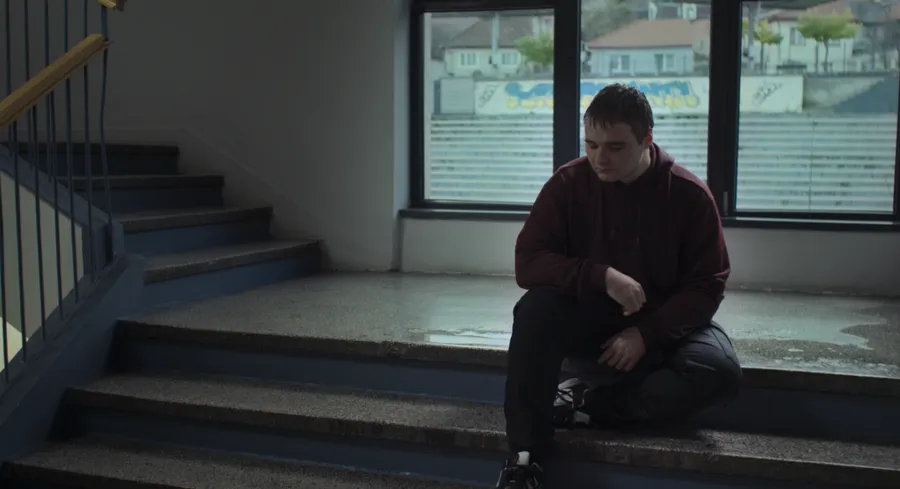
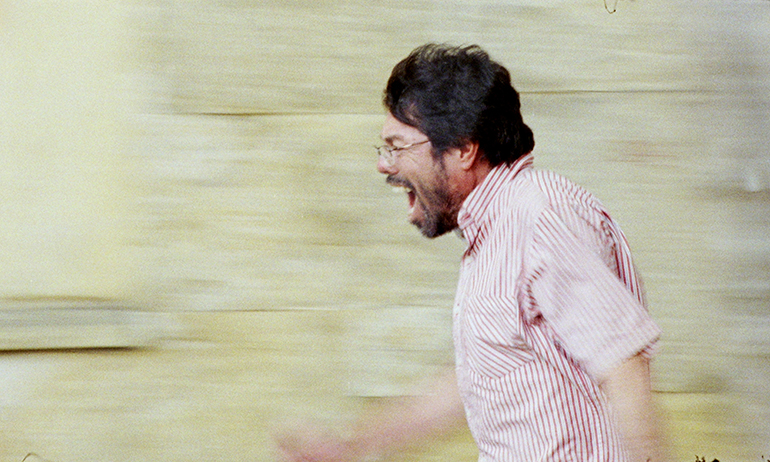
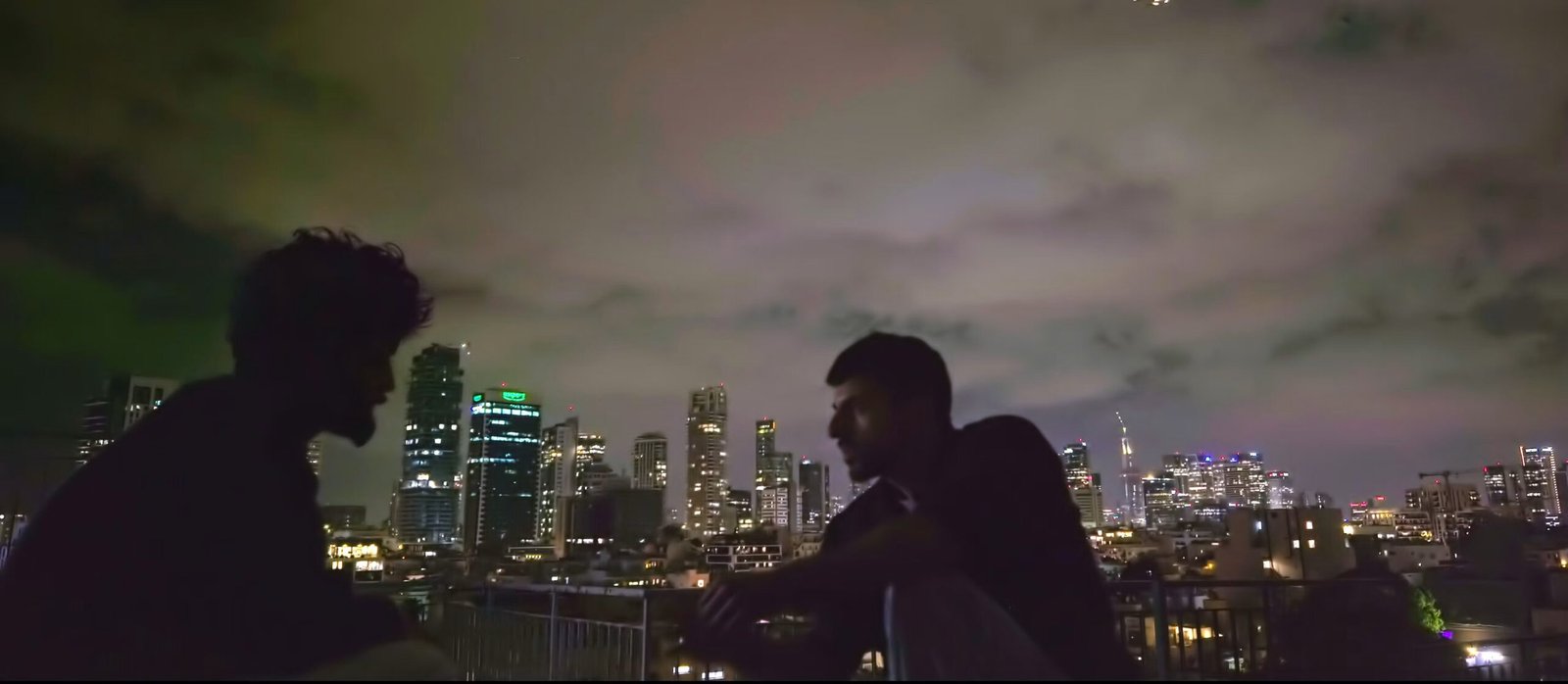
NAZA is fundamentally a work of journalism, so one might have expected it to go directly to television or streaming platforms, like other investigative reports, rather than receive a theatrical release. But there is an affirmation of cinema here. Yuval Abraham and Rachel Szor are filmmakers and, as such, they have made a film. A film with tangible, accomplished cinematic qualities, evident in its concept, its carefully considered mise-en-scène, its framing and its editing… An entire cinematic language is at work, despite the restrictions imposed by the circumstances: much of the film is shot in near-darkness on Tel Aviv rooftops. For the duo, what is said matters, but so does how it is said. This is cinema.
10
By asserting itself as cinema, the film also champions the cause of cinema: showing films in appropriate conditions, preferably in a cinema, at a time when theatrical exhibition is losing ground to streaming platforms. It goes further still: NAZA is an expression of faith in cinema’s ability to change the world.
NAZA (UK, 2026, 80 min)
Directors / Screenplay: Yuval Abraham, Rachel Szor · Cinematography: Rachel Szor · Editing: Yuval Abraham, Rachel Szor · Sound: Lars Ginzel, Benjamin Hörbe, Rob Farr · Producers: Harry Davies, Lindsay Poulton, James Wilson · Executive Producer: Jonathan Glazer · Production: The Guardian, JW Films · Languages: Hebrew, English · International Sales: mk2 Films
Special Jury Prize, Venice Film Festival 2026